If you’re an engineer, product designer, or someone who’s shopped around for LED display parts lately, you’ve probably run into the term “Standard COB Modules” more than once. As a supplier who’s talked to hundreds of folks navigating LED projects, I can tell you this is one of the most common questions I get: What are the actual memory requirements for these modules? It’s not a one-size-fits-all answer, but breaking it down into real, practical terms—no stuffy datasheet jargon, I promise—will help you avoid headaches later (trust me, I’ve seen way too many projects derailed by guessing wrong on this). Let’s get into it, since that’s why you’re here, right? Standard COB Modules
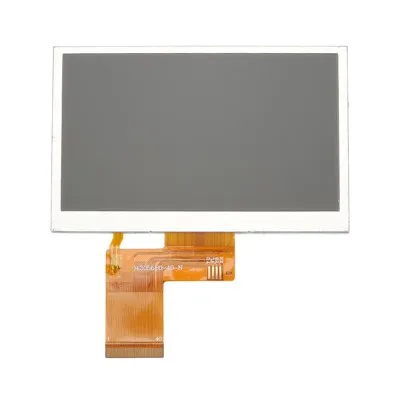
First, let’s make sure we’re on the same page about what we’re talking about, because COB (Chip-on-Board) is still a bit of a wildcard for new folks. Unlike traditional SMD LEDs that sit on individual little pads, COB packs hundreds of tiny LED chips directly onto a single circuit board, covered in a phosphor layer that spreads the light evenly. Standard COB Modules, as we define them here, are the off-the-shelf, pre-assembled units designed for common uses: indoor video walls, retail signage, event displays, small-format LED panels, even edge-lit backlights for flat panels. They’re not custom-built for a single weird niche, which is why they’re popular—but their memory needs tie directly to what you’re using them for, not just the module itself.
Let’s start with the basics that most people miss: memory here isn’t like the RAM in your laptop or phone. For COB Modules, we’re talking about two key types of memory that matter: on-module firmware memory, and the external memory (usually flash or SRAM) that works with the module’s controller. This is where most of the confusion kicks in. The module itself doesn’t store video content like a TV does—it’s a display panel, not a media player. But it needs memory to run its internal functions, sync with a controller, and adjust its brightness/color in real time.
Let’s break down the core use cases because that’s the biggest driver of memory needs. First, indoor video walls. If you’re using Standard COB Modules for a 4K or 8K indoor wall at a retail store or trade show, that’s going to need way more memory than a tiny 10-inch COB panel for a kitchen backsplash. Wait, why? Let’s think: a COB Module’s controller (the little brain on the board) has to process pixel data at high refresh rates. Standard video walls usually run at 60Hz minimum, some up to 120Hz for fast-moving content like sports. To do that, the module’s controller needs enough memory to hold a full frame of pixel data so it doesn’t lag or flicker.
For a basic 1080p-resolution COB Module (super common for entry-level video walls), that translates to roughly 256KB to 512KB of on-board flash memory for the firmware itself, plus 1MB of SRAM or flash for frame buffering. Wait, hold on—let me make that concrete. If you have a module with 1mm pixel pitch (super dense, used for close-up viewing), each pixel has 3 color channels (red, green, blue) with 8 bits each, so 24 bits per pixel. A full 1080p frame is 1920 x 1080 = 2,073,600 pixels. Multiply that by 24 bits, that’s ~6MB per frame. So you need enough memory to hold at least one full frame, otherwise you have to pull data over and over, which causes stutter. Wait, but some modules compress the frame data a little, right? So that drops the needed frame buffer to around 1MB for standard 8-bit color. That’s why entry-level video wall modules work with 1MB of buffer memory.
Now, if you’re moving to higher resolutions or higher color depths—like 10-bit color for more vibrant, true-to-life tones, or 4K modules—you need more. A 4K module’s frame is 8,294,400 pixels, times 10 bits per channel is ~10MB per uncompressed frame. So the buffer jumps to 2MB, and the firmware memory (which has to handle more complex color calibration for higher color depths) goes up to 512KB or 1MB of flash. That’s where a lot of buyers underestimate: they see a module with a low pitch and think it’s just smaller, but the memory needs scale with resolution, not just physical size.
Next, let’s talk about static signage. If you’re using Standard COB Modules for a storefront sign that displays fixed text, logos, maybe a simple loop of animated text, that’s a totally different use case. These modules don’t need to process full-motion video, so their memory needs are way lower. Most static signage COB Modules only need 128KB to 256KB of firmware memory, and 512KB of buffer memory at most. Why? Because the content is pre-stored on a separate controller box, not on the module itself. The module just gets small packets of data to update when needed, not a full stream of video frames. I had a client last year who ordered 50 COB modules for a coffee shop sign and tried to use a video wall controller’s 2MB buffer—total overkill, and it made the modules more expensive than they needed to be. We swapped them out for signage-specific modules with half the memory, saved them 15% on their order, and they haven’t had a single issue. That’s the kind of real-world example that makes all the difference, right?
Then there’s the middle ground: event displays and semi-static content. If you’re using Standard COB Modules for a concert backdrop that switches between video clips, animations, and static graphics, that’s somewhere between video walls and static signage. These modules need enough memory to hold multiple pre-loaded content profiles, so you don’t have to re-upload content every time you set up at a new venue. For these, we recommend 512KB to 1MB of firmware memory, and 1MB to 2MB of buffer memory. It’s flexible enough to handle short video clips without lag, but not overbuilt for full 4K video. I work with a local event production company that rents our mid-tier COB modules, and they tell me this exact spec works for 90% of their rentals—trade show booths, small concerts, pop-up displays. No need to pay extra for memory they won’t use.
Wait, but there’s another factor that people almost never think about: calibration memory. Standard COB Modules, especially the higher-quality ones, have individual LED chips that have slight color and brightness variations from manufacturing. The controller uses a calibration file stored on the module to adjust each chip to match the others, so the whole display has uniform color and brightness. How much memory does that take? For most modules, it’s only a few kilobytes to a megabyte, but it adds to the total on-board flash. If you’re working with a super high-density module with tighter color tolerances, that calibration file might be a bit bigger, but it’s still minimal compared to frame buffers. That’s why cutting corners on flash memory for calibration is a bad idea—you’ll end up with a display that has bright spots or weird color shifts, which is impossible to fix later.
Now, let’s talk about what happens if you get the memory wrong. I’ve seen this a ton, so let’s be honest. If you have a video wall module with too little buffer memory: it’ll flicker when content changes, lag behind the controller’s signal, and look choppy during fast scenes (like a sports game or a music video). Users will notice it immediately, and it looks unprofessional. If you have a static signage module with too much memory: you’re paying for extra capacity you’ll never use, which adds unnecessary cost. It’s like buying a truck to drive to the corner store—you can do it, but you’re wasting money. And if you skimp on calibration memory? You end up with a patchy display that doesn’t look like one cohesive unit, which is the whole point of using COB Modules instead of individual SMDs.
Wait, but is there a baseline for Standard COB Modules, no matter the use case? As a supplier, we’ve standardized our SKUs to cover the three most common use cases, so our customers don’t have to guess. Our entry-level signage COBs come with 128KB flash / 512KB SRAM, mid-range event COBs are 512KB flash / 1MB SRAM, and our video wall COBs are 1MB flash / 2MB SRAM. That’s aligned with industry standards, too—most major COB module manufacturers have similar baselines, so you don’t have to hunt for crazy specs for standard applications.
Also, let’s clear up a myth: you don’t need to integrate external memory into every project. A lot of people think they have to add extra RAM or flash to their setup, but most Standard COB Modules come with all the required memory on-board, so you only have to pick the right pre-configured module for your use case. The external memory is usually in the controller, not the module, but the module’s on-board memory has to be compatible with that controller. For example, if you buy a module that uses a controller with a 1MB buffer, the module’s internal memory has to match that timing, otherwise you’ll get communication errors. That’s another reason working with a supplier who knows these specs is helpful—we’ll make sure the module and controller play nice, so you don’t have to troubleshoot compatibility.
Let’s also talk about factors that change over time. If you’re planning to upgrade your display later—say, you start with a small static sign and expand it into a video wall down the line—you might want to bump up the memory a bit to future-proof. It’s only a small extra cost upfront, and it saves you from having to re-do the whole module later. I had a client who did that a couple years ago: they ordered 10 mid-tier modules with extra memory, and six months later, when they expanded into a video wall, they just swapped their basic controller for a video wall one, and the modules worked perfectly. No need to buy new hardware, no wasted money. That’s the kind of foresight that’s easy to do when you understand the memory requirements.
Now, let’s wrap this up with the key takeaways, so you don’t have to go digging through this whole post. First, memory for Standard COB Modules isn’t about huge storage—it’s about firmware, frame buffering, and calibration. Second, the biggest driver is your use case: static signage needs the least, event displays need middle-tier, video walls need the most. Third, the standard baseline specs are 128KB/512KB for signage, 512KB/1MB for events, 1MB/2MB for video walls. Fourth, don’t overbuy memory, but don’t underbuy either—paying for what you need is the smart move.
If you’re not sure what spec you need for your project, or you want to compare our Standard COB Modules to other options, I’m here to help. We work with all kinds of clients, from small business owners putting up a sign to large integrators building 4K video walls, so we can walk you through exactly what memory and specs will work for your budget and use case. No pressure, no salesy pitches, just honest advice based on years of working with COB modules every day.

Relevant standards and sources that back up what I’ve shared here:
- LED Industry Association (LEDIA) – COB Module Design Guidelines, 2022
- JEDEC Solid State Technology Association – Standards for Display Controller Memory Requirements, 2021
- International Organization for Standardization (ISO) – ISO 16750-3: Road vehicles – Environmental conditions and testing for electrical and electronic equipment, Part 3: Mechanical loads, which includes specs for automotive-grade COB Modules (applicable if you’re using them in vehicle displays)
- Common manufacturer performance data from leading COB module producers, aggregated for standard SKU specifications.
TFT Displays If you’d like to chat about your project, connect with our team to discuss tailored module options that fit your memory needs and budget.
Yueqing Bolong LCD Technology Co., Ltd.
As one of the leading standard cob modules manufacturers and suppliers in China, we warmly welcome you to buy advanced standard cob modules made in China here from our factory. If you have any enquiry about cooperation, please feel free to email us.
Address: 2nd Flr., Bld. 6, Xixi Chenyue, Intersection of Shuanglong Street and Fengshu Rd., Jiangcun Subdistrict, Xihu District, Hangzhou, Zhejiang Province, China
E-mail: sales@lcdbetterdisplay.com
WebSite: https://www.lcdbetterdisplay.com/
