If you’re an engineer, project manager, or anyone sourcing open die forgings, you know that picking the wrong steel for a part can turn a $5,000 forging job into a costly headache—missed deadlines, part failure, even safety risks. I’ve been running a steel open die forgings shop for 12 years now, and I’ve seen it all: a client who went with a cheap carbon steel for a high-temp turbine rotor that cracked during testing, another who picked too hard a alloy for a crane hook that ended up too brittle for heavy lift. Today, I’m breaking down what actually works, straight from the shop floor—no textbook jargon, just stuff we’ve learned from thousands of forgings that rolled out of our press. Steel Open Die Forgings

First, let’s cut through the noise: open die forgings aren’t your standard off-the-shelf bolt. These parts are forged one at a time, usually with big, raw stock, and they’re made to take extreme loads—think nuclear reactor parts, mining gear, wind turbine shafts. So when choosing steel, it’s not just about strength; it’s about matching the steel’s properties to exactly what your part will deal with. Here’s the step-by-step we walk every client through before we even fire up the furnace.
Start with the “what’s it doing?” test. Before you even think about steel grades, answer two basic questions: What environment will this part live in, and what stress will it take day in and day out? Let’s use examples we deal with all the time. If it’s a wind turbine main shaft, that part will spin constantly, take twisting (torsion) loads, and sit outside in rain, cold, and heat. If it’s a mining shovel tooth, it’s gonna slam into rock, deal with abrasion, and might get covered in mud that’s corrosive. If it’s a pump component at an oil refinery, it’s exposed to high temps and salty, acidic fluids. Your answers here will narrow down the steel list faster than anything else.
Let’s talk about the main steel groups we work with daily, and when to use each. I see so many clients default to A36 carbon steel because it’s cheap, but that’s almost always the wrong call for open die forgings. Wait—hold up, A36 is great for structural beams, but it’s too soft for high-stress parts. Let’s go one by one:
Carbon steels are the workhorses of open die forgings. We use grades like 1045, 4140 (wait, 4140 is alloy, hold on, I’ll separate that), no—1020, 1035, 1045 are plain carbon. Their strength comes from how much carbon they have: the more carbon, the harder it gets when we quench it (cool it fast after forging), but too much and it gets brittle. When do we use carbon steels? For parts that need good strength without extreme temp or corrosion exposure—like crane hooks (wait, no, 4140 is often better for hooks), no, basic shafts, gear blanks that spin at moderate speeds, structural supports for equipment. The big win here is cost: carbon steels are way cheaper than alloys, easy to machine, and our team knows exactly how to forge them to avoid cracks. The catch? If you need this part to survive 500°F+ heat, or resist rust, carbon steel will fail eventually. We once had a client who used 1045 for a boiler support bracket that cracked after 6 months—turns out, boiler temps hit 650°F, and carbon steel loses half its strength that hot.
Alloy steels (like 4140, 4340, 8620) are where we get the “tough but not brittle” sweet spot. These have small amounts of chromium, molybdenum, nickel added to carbon, which makes the steel stronger at depth (not just the surface), more resistant to high temps, and way less likely to snap under sudden load. 4140 is our bread and butter—we use it for 70% of our custom forgings. It’s perfect for turbine shafts, gear hubs, mining crusher components, parts that take twisting and impact. The reason it’s so popular? It’s forgeable (no super fancy techniques needed), easy to heat treat, and the price isn’t through the roof. The next step up is 4340—harder, stronger, for parts that deal with even more stress, like offshore rig drill components that get slammed by waves. 4340 is tough enough that you can drop a 500lb forging on it and it won’t chip, but you have to be careful with machining it because it’s hard. The downside of alloy steels? They’re pricier than carbon, and if you forge them wrong (like too slow of a cool after forging), they can get a weird grain structure that ruins their strength. That’s why our shop has a strict 3-step cool-down process—we learned that the hard way with a bad 4340 rotor blank 8 years ago.
Then there’s stainless steel—304, 316, 17-4 PH. This is for parts that need corrosion resistance, plain and simple. If your part is sitting in saltwater (offshore), acidic chemicals (chemical processing), or just in a really humid, rust-prone area, stainless is the way to go. 304 is the standard, good for general corrosion, like food processing equipment parts. 316 is a step up—resists saltwater and strong acids, so we use it for desalination plant components. 17-4 PH is a precipitation-hardening stainless, which means we can heat treat it to get super high strength without making it brittle. We use that for pump shafts in oil refineries that deal with crude oil’s corrosive properties. The catch with stainless? It’s way harder to forge than carbon or alloy. You can’t just heat it up and bang it into shape—we have to control the heat way more, and the material is more prone to cracking if we rush it. Also, it’s way more expensive, so we only recommend it if corrosion is non-negotiable.
Now, let’s skip the grade numbers for a sec—what’s the stuff that actually breaks steel for forgings? I can’t tell you how many times a client says “I need strong steel” but doesn’t realize “strong” means different things. Strength can be tensile (pull-apart strength), yield (how much load it can take before permanent bend), impact (how much sudden load it can take without breaking). For example, a high-tensile steel is great for a crane hook, but if it has low impact strength, it’ll snap when the hook catches a load wrong. That’s why 4140 is so good—it balances tensile and impact strength. Another big one: weldability. Wait, open die forgings often get welded to other parts, right? If you pick a steel with bad weldability, the weld joint will be weaker than the base metal, and it’ll crack. Carbon steels under 0.30% carbon weld great, but higher carbon (like 1045, which is 0.45% carbon) needs pre-heating before welding to avoid cracks. Alloy steels like 4140 are manageable, but you have to follow specific weld procedures. Stainless? Some grades (like 304) weld fine, but others (like 17-4 PH) need post-weld heat treatment to keep their strength. We always ask clients if their part will be welded before we suggest a steel grade—way easier to sort that early than fix a cracked weld later.
Another mistake we see clients make: over-specifying steel. A few years back, a wind farm client came to us wanting 4340 for a 6-inch shaft blank. We asked what the load was—turns out, it was only for a small auxiliary turbine, not the main rotor. 4340 is 2x stronger than needed, and 3x more expensive. We recommended 4140, which worked just as well, saved them $12,000, and was machined 3x faster. Over-specifying isn’t just a waste of money—it can actually hurt performance. Super hard steel is tough, but it’s also harder to machine, so if you’re trying to get a tight tolerance on a part, that extra hardness will slow you down and lead to mistakes. We call this the “gold-plating” mistake—going overboard on properties you don’t need. On the flip side, under-specifying is worse, but we talk about that enough.
Wait, let’s throw in a real example from our shop to make this concrete. Last year, a mining company reached out with a request for a 12-inch crusher rotor blank. They initially asked for A36 carbon steel. We told them A36 isn’t gonna work—crusher rotors take constant impact from rock, and A36 is too soft, will wear out in 3 months. We suggested 1045 carbon, which is higher carbon, stronger, and cheaper than alloy. They went with it, and it lasted 18 months. Then another mining client came a month later with a similar rotor, but this one was for a mine that had silica dust, which is super abrasive. We suggested 4140, which has a harder surface when heat treated, and it’s lasted 22 months so far. Same part, same load, different environment—different steel, perfect fit.
What about heat treatment? A lot of people forget that the steel grade is just the starting point—how you heat treat it after forging makes all the difference. Quenching (cooling fast in water or oil) and tempering (heating again to reduce brittleness) adjust the strength and toughness. For a crane hook, we temper 4140 at a lower temp to get high yield strength. For a wind shaft, we temper at a higher temp to get better impact resistance, so it doesn’t snap in cold weather. That’s why working with a forging shop that controls the heat treatment process is non-negotiable—they can tweak the steel’s properties to match your exact needs, not just a off-the-shelf grade.
Now, let’s wrap this up with a quick checklist you can use right now when sourcing open die forgings:
- What’s the part’s primary job? (Twist? Impact? Abrasion? Corrosion?)
- What’s the max temp it will see? (Over 500°F? Go alloy or stainless.)
- Will it be welded or machined to tight tolerances? (Weld = avoid high carbon steel without pre-heat.)
- What’s your budget? (Carbon = cheapest, alloy = mid, stainless = priciest.)
- Ask your forging shop to test a sample if you’re unsure—we do free sample tests for regular clients.
At the end of the day, choosing the right steel isn’t about memorizing grade numbers—it’s about matching the steel’s natural properties to your part’s real-world use. We’ve forged parts for everything from nuclear power plants to food processing equipment, and the #1 rule we live by is: if it can’t survive its job in the shop test run, it’s not worth forging.
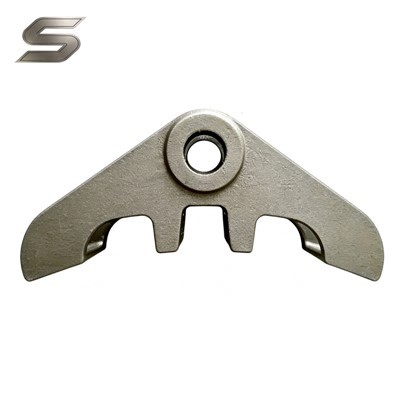
If you’re working on a custom open die forging project, whether it’s a small blank or a 10,000lb part, hit us up to chat. We’ll walk through your specs, help you pick the right steel, and make sure it’s forged to last, not just to check a box. No sales pitches, no confusing jargon—just straight talk from guys who’ve been doing this for decades.
Heat-Resistant Steel Centrifugal Castings References:
ASM International. (2020). Materials Science & Engineering: Carbon and Alloy Steels for Forging.
NACE International. (2019). Corrosion Resistance of Stainless Steels in Industrial Environments.
Open Die Forging Institute. (2021). Best Practices for Steel Selection and Heat Treatment.
Hebei Shata Machinery Co., Ltd.
As one of the most experienced steel open die forgings manufacturers and suppliers in China, we have advanced foundry technique and professional production team. Welcome to buy high-grade steel open die forgings for sale here from our factory. All custom made products are with high quality and competitive price.
Address: No.11 Cangshun Rd., Shijiazhuang, Hebei, China
E-mail: Info@shatamachinery.com
WebSite: https://www.shatamachinery.com/
