Hey there, fellow shippers, small business owners, and anyone stuck staring at air freight quotes between China and Australia—let’s cut to the chase: I’m the person on the other side of the desk when you’re booking China-to-Australia air freight, and I get so many DMs asking, “Can I actually negotiate this shipping price?” The short answer? Hell yes—but only if you know how to work the system, not just spam “best price pls” to every forwarder you find on Alibaba. I’ve been doing this for 7 years, seen every trick in the book, and I’m breaking down exactly when, how, and why you can (or can’t) negotiate that line item without burning bridges or wasting your time. China To Australia Air Freight Line
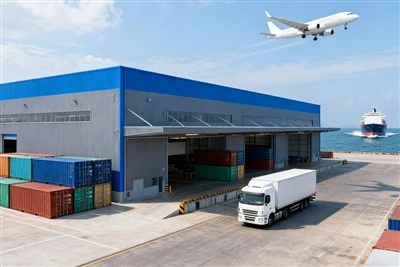
First, let’s get one myth out of the way right now: air freight prices aren’t set in stone like coffee at a chain café. I know it feels like every quote you get is a random number someone pulled out of thin air, but trust me—there’s a lot of moving parts here. The China-to-Australia air freight line is one of the most crowded lanes out there, so we’re all fighting for the same clients, but most people don’t know what actually drives those rates. Fuel surcharges, peak season demands, how heavy your cargo is, where in Australia it’s going—all of that adds up, and none of it is fixed every single day. For example, last month, rates spiked 18% because a major airline pulled 30% of their planes to repair engine issues, and everyone had to scramble for space. That’s when I had regular clients call me and lock in their spot at a discounted rate because they knew the market would bounce back in a month. Newbies would just take the first inflated quote and cry about how “air freight is a scam” without even asking.
Now, let’s talk about when you actually can negotiate—because this is the part most people mess up. Negotiating only works when you’re not wasting someone’s time, so let’s list the scenarios that get you a lower rate, not a cold shoulder. First, volume. If you’re shipping 500kg vs. 50kg, that’s night and day. A 50kg shipment is a tiny part of our week—we might even have to consolidate it with other cargo, so there’s almost no margin to knock off. But if you’re shipping 5,000kg every month? That’s a whole lane for us. We’ll move heaven and earth to get you a better rate because we know that’s recurring business. I had a client last year who ships 10,000kg of furniture parts to Brisbane every single month—we gave them 12% off their rate, no questions asked, because they didn’t have to hunt for new clients every week and we could predict our capacity needs.
Second, timing. This is a big one that so many people ignore. Peak season for China-to-Australia air freight is usually September to November—everyone’s shipping Christmas stock, Black Friday stuff, back-to-school goods. During that time, space is tight, rates are high, and there’s literally no room to negotiate. But if you’re shipping in January, February, or mid-July? That’s dead season. Airlines have extra space, forwarders are begging for business, and you can easily knock 8-10% off the rate just by asking. I had a small fashion client who used to ship all her new collections in August and get ripped off—last year, she shifted to shipping half in June and half in January, and saved almost $2,000 on one shipment alone. She didn’t even have to argue, just said, “I’m flexible on timing if you can do a better rate,” and we agreed.
Third, cargo type and packaging. If your cargo is standard, no special handling, no temperature control, no fragile stuff? That’s way easier to work with than if you’re shipping a bunch of glassware that requires extra padding, or pharmaceuticals that need to stay at 2 degrees Celsius. Special cargo adds more work, more risk, so rates are already higher. But if your cargo is plain cardboard boxes of clothes or electronics, no issues, that’s the kind of stuff we love. I once had a client shipping custom machinery parts that required crating and tracking every step—we quoted them a high rate, but when she said, “Next month I’ll be shipping three more crates like this but no special handling needed,” we worked out a deal. Also, packaging matters—if your boxes are too big and we have to charge for dimensional weight instead of actual weight, that’s a cost we can adjust for if you fix the packaging. Most people don’t realize that a 1m x 1m x 1m box that weighs 10kg costs the same as a 100kg box that’s 50cm x 50cm x 50cm. Trim your packaging, and you might not even need to negotiate—you’ll save money on the rate itself.
Now, let’s talk about what not to do. These are the mistakes that make forwarders like me roll our eyes and ignore your request. First, don’t send a generic email that says “Can you give me the cheapest air freight rate from China to Australia?” That tells me you haven’t done any research, you’re comparing 20 forwarders, and you’re not serious about actually booking anything. Be specific: “I need 3,000kg of women’s t-shirts from Guangzhou to Sydney, ready to ship October 15, door to door, no extra services like pickup or customs clearance.” That gives me enough info to give you an accurate quote, and I’m way more likely to work with you. Second, don’t lowball. If I quote you $8 per kg, don’t reply with “Can you do $5?” That’s insulting. My costs are higher than that—fuel, airport fees, customs brokerage, insurance, my team’s time. A 5-10% discount is reasonable, but anything more than that makes me think you’re not going to follow through. Third, don’t play games. If you get a quote from me and go to another forwarder and say “X told me they’ll do it for $1 less, can you match that?” That’s petty and we can see right through it. Either commit to booking with me, or don’t waste my time. I had a client do that last month, and I told him to go ahead—he ended up paying $2 more per kg because the other forwarder hid fuel surcharges. Lesson learned.
Wait, but what about the fine print? Even if you do negotiate a lower rate, make sure you get everything in writing. A lot of people make the mistake of agreeing to a rate over the phone, then showing up and getting charged extra for “unknown fees.” The China-to-Australia lane has way more extra costs than most people think: terminal handling charges, customs inspection fees, insurance, delivery to your door vs. just airport pickup. When you negotiate, make sure you’re clear on exactly what’s included. For example, if I quote you $7 per kg, is that just the air freight, or is it door to door in Sydney? Is insurance included? Is customs clearance included? I once had a client who negotiated a $1 per kg discount, but it only applied to the air freight part—he still had to pay $300 in customs fees on a $500 shipment, and he thought we’d covered that. Always double-check the breakdown, no matter how good the rate sounds.
Another thing: if you’re a returning customer, use that to your advantage. I give my regular shippers better rates because they don’t make my life hard. They book on time, their cargo is consistent, they don’t cause customs delays. If you book with me three times a year, you’re way more likely to get a discount than someone who books once and disappears. I have a small business client in Melbourne who books every other month, and last quarter she asked for a discount because she was expanding and ordering more stock. I gave her 10% off because I trust her, I know she’ll come back, and I don’t have to spend time finding new clients. That’s the kind of relationship negotiation works on—mutual trust, not just haggling over numbers.
Let’s also address the times when negotiation isn’t worth it. If you’re shipping less than 50kg, the margin is so small that knocking off a dollar doesn’t even matter—we’re basically breaking even on tiny shipments anyway. If you need urgent shipping, like you have a last-minute order that needs to get to Australia in 3 days, space is limited and rates are sky-high, so negotiating is pointless. You just need to get the cargo there, so don’t waste your time asking for a better rate. And if you’re shipping super special cargo—like live animals, hazardous materials, or oversized machinery—that’s a whole different process, and rates are set by the airline, not us, so there’s almost no room to negotiate there.
Wait, let’s throw in a real example to make this concrete. Last week, I got an email from a guy in Perth who ships pet supplies for a small pet store. He was shipping 80kg from Yiwu to Perth, ready to go the next week. His first quote was $12 per kg, door to door. He replied, “I can do $10 per kg, ready to ship every month if we work this out.” I checked the market—dead season, a whole airline had extra space, so that was doable. I agreed, and he ended up saving $160 on that shipment, and he books every month now. He didn’t lowball, he was specific, he had recurring business, and it was off-peak. That’s exactly how it’s supposed to work. Another example: a guy in Shanghai who ships 20kg of custom mugs to Brisbane. He emailed me a generic “cheapest rate” question, no details. I sent him a quote, he replied “can you do $5 cheaper?” I told him no, because 20kg is such a small shipment, my margin is only $0.50 per kg anyway. He went to another forwarder, paid $7 per kg, then got hit with $150 in customs fees, so he actually paid more than my original quote. Ouch.
China To Australia Consolidation Shipping So, to wrap this up, is it possible to negotiate shipping price on the China to Australia air freight line? Absolutely, but only if you play by the rules. Don’t waste people’s time, be specific, play to your strengths (volume, timing, being a good client), and get everything in writing. The worst thing you can do is assume that all rates are non-negotiable—this lane is competitive, and forwarders need business too. The best thing you can do is build a real relationship with someone you trust, not just send 20 emails a day asking for quotes. If you’re ready to lock in a rate that actually works for you, hit up the right people and be clear about what you need. Don’t be that person who overpays because they didn’t ask, or underpay and get hidden fees. At the end of the day, air freight is a service, not a commodity—and negotiation is part of that service, if you do it right.
Shenzhen Kuaihui International Logistics Co., Ltd.
Shenzhen Kuaihui International Logistics Co., Ltd. is a leading China-Australia dedicated logistics service provider in China. As a professional agent and platform, we are committed to providing high quality china to australia air freight line with low price. Welcome to contact us for pricelist.
Address: 3rd Floor, Building 6, Nanbiantou Industrial Zone, Xifang, Songgang Street, Bao’an District, Shenzhen City, Guangdong Province
E-mail: info@kkhwl.com
WebSite: https://www.kuaihuiexp.com/
