If you’ve ever stood beside an industrial loading bay watching viscous motor oil slurp into a tanker, or seen a chemical processing line dose precise, unchanging volumes of corrosive acid, you’ve been watching a positive displacement pump at work. As someone who’s spent the last 12 years supplying these pumps to factories, refineries, food processing plants, and even municipal water treatment sites, I hear the same question a hundred times a month: “How does a piston positive displacement pump actually work?” It’s a good question, too—because while they look simple enough from the outside, their design is what makes them the workhorses of applications that would bring centrifugal pumps to a grinding halt. Positive Displacement Pump
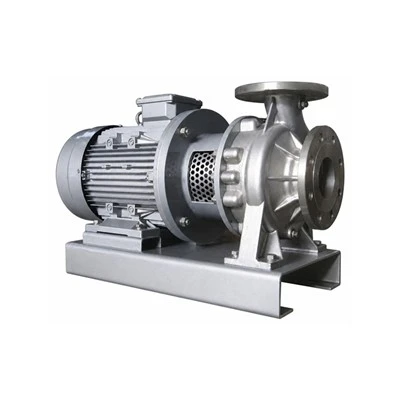
Let’s start with the basics: a positive displacement pump (PDP) is any pump that moves fluid by trapping a fixed volume of it and forcing that volume out of the pump’s chamber, no matter the pressure it’s pushing against. That’s the key difference from centrifugal pumps, which move fluid by spinning an impeller to create velocity and pressure. If a centrifugal pump is sized wrong or forced to push too much fluid, it can overheat, cavitate, or even seize up. A piston PDP? It just keeps pushing that fixed volume, steadily, no matter what the back pressure is. That’s why they’re non-negotiable for jobs like metering high-precision chemical batches, moving thick adhesives for packaging, or pumping sludge that would clog any impeller.
A piston positive displacement pump, in particular, uses a reciprocating piston (think the back-and-forthing cylinder part in your car engine, minus the explosion) as the trapping chamber. Let’s walk through how that works, step by step, because every part has a job, and skipping even one leads to the pump not doing its job right.
First, you need the core parts, and they’re simple enough that a good maintenance tech can replace most of them on a site, no fancy specialized tools required. There’s a pump body, usually made of cast iron, stainless steel, or even Hastelloy for super corrosive fluids, that has two ports: a suction port where fluid comes in, and a discharge port where it goes out. Inside the pump body is the piston, a cylindrical metal piece that fits snugly (but not so tight it scrapes) into a hollow cylinder called the cylinder bore. The piston connects to a drive shaft, usually via a crankshaft or an eccentric cam, that turns rotary motion (from an electric motor, diesel engine, or even a hydraulic pump) into back-and-forth, or reciprocating, motion.
Then, the two most critical parts that make this work: the suction valve and the discharge valve. These are one-way check valves—they only open one way, and they close tight when pressure pushes against the wrong side. If they leak, the entire pump’s efficiency drops, which is why we supply them with high-grade Buna-N, Viton, or PTFE seals depending on the fluid being pumped. No two ways about it: those valves are the gatekeepers, and if they’re not sealed properly, the piston just moves fluid back and forth in the cylinder, not out to your process.
Now, let’s walk through the cycle, because that’s where the magic happens, and where people often get confused. The pump’s drive shaft starts turning, pulling the piston all the way back, away from the discharge port, into the rear of the cylinder. As the piston moves back, it creates a partial vacuum in the space between the piston and the suction side of the cylinder. That vacuum is what pulls fluid from the suction line, through the suction port, and past the open suction valve into the cylinder. Why does the suction valve open? Because the pressure on the suction side of the valve is higher than the pressure in the cylinder—fluid always flows from high pressure to low pressure, that’s basic fluid dynamics, and it’s the whole reason these pumps work. As the piston reaches the end of its backward stroke, it stops, the suction valve slams shut (weighted or spring-loaded, depending on the pump’s size), trapping exactly the volume of fluid that filled the cylinder. No more, no less—this is the “positive displacement” part, fixed volume, every time.
Next, the piston reverses direction, moving forward toward the discharge port. Now, the space in front of the piston (where the fluid is trapped) is getting smaller, so pressure builds. That pressure pushes against both valves. The suction valve is already tight, so no fluid can go back out the suction port. The discharge valve? It’s designed to open when the pressure from the piston’s forward stroke is just a little higher than the pressure on the discharge side. That’s why we size the valves correctly for each application—too low a pressure and the discharge valve won’t open, too high and it causes unnecessary wear. Once the discharge valve pops open, the trapped volume of fluid is pushed out of the cylinder, through the discharge port, and into your process line. The piston keeps moving forward until it reaches the end of its stroke, where the discharge valve slams shut, and the whole cycle starts over.
Wait, hold on—for a lot of industrial applications, that single piston cycle is too jerky, right? If you have a process that needs a steady, uninterrupted flow (like dosing food and beverage ingredients, where uneven flow can throw off recipe ratios), a single piston pump will pulse every time it pushes fluid out. That’s why we also supply double-acting piston pumps, or triplex piston pumps. Let’s clear that up: a double-acting piston pump has suction and discharge ports on both sides of the piston, so when the piston moves back, it pulls fluid into one side and pushes fluid out the opposite side on the forward stroke. That means you have flow on both the back and forth strokes, almost eliminating pulsing. A triplex piston pump has three pistons, each offset so their cycles overlap, resulting in a flow that’s almost completely steady—perfect for metering applications where even a 5% flow fluctuation is a problem.
Now, let’s talk about what makes these pumps versatile, and where they shine, because that’s why my team and I sell more piston PDPs than any other type of pump. They can handle extremely viscous fluids—like 100,000 centistoke motor oil, or even thick, chunky tomato paste that would clog a centrifugal pump in 10 minutes—because the piston doesn’t rely on fluid velocity to move it, it just moves fixed volumes regardless of viscosity. They can handle high pressures: some of the piston pumps we supply go up to 5,000 PSI, which is way higher than most centrifugal pumps can manage without significant modification. They’re highly accurate for metering: because each cycle moves a fixed volume, you can calibrate the pump’s stroke length and speed to deliver exact, repeatable flow rates, down to milliliters per hour, which is critical for pharmaceutical manufacturing or specialty chemical blending.
But here’s the thing I always tell new customers: piston PDPs aren’t for every job. They move slower than centrifugal pumps, so if you need to move thousands of gallons per minute of thin water, a centrifugal pump will be cheaper and more efficient. They also can’t run against a closed discharge valve—if you block the discharge port, the pump will keep building pressure until something breaks, so you need a pressure relief valve in line with any piston PDP installation. And they have moving parts (the piston, valves, seals) that wear out over time, so you need regular maintenance, which is why we offer 24/7 support to help customers with that.
Over the years, I’ve seen a lot of misinformation about piston positive displacement pumps online. People mix them up with diaphragm pumps, which are a type of PDP but use a flexible membrane instead of a piston. I’ve heard customers say “piston pumps are too old, we should use something newer,” but last year, we supplied 12 triplex piston pumps to a refinery that was upgrading their acid dosing system, and they told us it saved them $120,000 a year in downtime and maintenance compared to the centrifugal pumps they were using before. That’s the reality of this equipment—they’re proven, reliable, and when sized and installed correctly, they outlast almost any other type of pump.
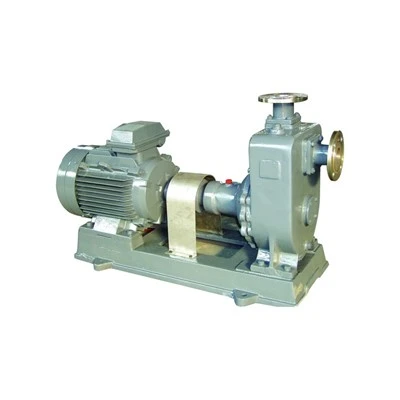
If you’re working on an application where you need consistent, precise flow, especially with viscous, corrosive, or abrasive fluids, a piston positive displacement pump is almost certainly the right choice. My team and I don’t just sell pumps—we help customers figure out exactly what size, material, and configuration they need, whether it’s a single piston pump for a small lab, a double-acting pump for a food processing line, or a triplex pump for high-pressure industrial use. If you’re looking to upgrade your pump system, or just want to learn more about how a piston positive displacement pump could work for your process, reach out to our team to connect for a purchasing consultation. We’re here to answer questions, help with sizing, and make sure you get the right pump for your specific needs.
Sewage Pump References
Chemical Processing Magazine. (2022). Positive Displacement Pumps: A Guide to Selection and Application.
Karassik, I. J., Messina, J. P., Cooper, P., & Heald, C. C. (2007). Pump Handbook (4th ed.). McGraw-Hill.
Pump Industry Association. (2021). Positive Displacement Pump Design and Operation Standards.
Zhejiang Kaicheng Pump Valve Co., Ltd.
Zhejiang Kaicheng Pump Valve Co., Ltd. is one of the most professional positive displacement pump manufacturers and suppliers in China, also supports customized service. We warmly welcome you to buy advanced positive displacement pump made in China here and get quotation from our factory. For price consultation, contact us.
Address: No.501 Zhangbao North Road, Dong ou Industrial Park, Oubei town, Yongjia, Zhejiang Province, China
E-mail: sales@cnkcmp.com
WebSite: https://www.kcmpumps.com/
