If you’re a plant manager, food processing owner, or chemical handler working with stainless steel tanks, you’ve probably spent hours refining every detail of your setup to keep operations safe, efficient, and compliant. One question I get nearly every week from new and existing clients alike is this: “Do stainless steel tanks need to be anchored?” It’s not a trivial question—improper anchoring can lead to costly spills, structural damage, or even workplace safety incidents, while over-anchoring wastes time and money. As a stainless steel tanks supplier who’s been designing, manufacturing, and installing these systems for 12 years, I’ve navigated this debate with hundreds of customers, and today I’m breaking down the science, the scenarios, and the rules to help you make the right choice for your setup. Stainless Steel Tanks
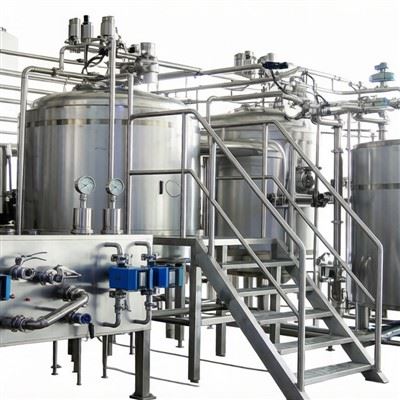
First, let’s start with what anchoring actually does, because it’s not just a “bolt it down” afterthought. Anchoring a tank means securing it to a solid base (usually a concrete foundation, but sometimes structural steel) to resist specific forces that could move or tip the tank. For stainless steel tanks, the material itself is strong and corrosion-resistant, but that doesn’t make them immune to external or internal forces that can act against them. Let’s walk through the key forces that matter here.
Internal forces are the ones most people associate with tank movement: hydrostatic pressure from the liquid inside. When a tank is filled, the liquid exerts outward pressure on the walls and downward force on the base. For small tanks (think 50 to 500 gallons) holding non-hazardous liquids like water or mild syrup, this downward force is often more than enough to keep the tank grounded—you can lift a 100-gallon stainless steel water tank empty, but once it’s full of water, it weighs around 834 pounds, which is a lot of downward pressure on the base. That’s why small, low-volume tanks often sit directly on a flat, level pad without any anchoring. But scale that up, and internal forces can flip. For tanks 1,000 gallons and larger, especially those holding viscous liquids or under pressure, the combination of hydrostatic pressure and any sloshing (called surge loading) during filling, emptying, or pumping can create a lifting force or a tipping moment that exceeds the base weight. Surge loading is a big one for process tanks that get filled quickly—if you’re pumping 500 gallons a minute into a 5,000-gallon tank, the momentum of the incoming liquid can push the tank off-center, creating a force that wants to tip it sideways.
Then there are external forces, which are often overlooked until it’s too late. Wind load is a major factor, especially for outdoor tanks, or tanks in facilities with high-volume ventilation systems. The National Fire Protection Association (NFPA) has standards for wind pressure on industrial structures, and for a 10,000-gallon vertical stainless steel tank, a 50 mph wind can exert a lateral force of around 1,200 pounds. That’s enough to slide a tank sitting on a smooth pad, or even tip a tank if it’s not weighted heavily enough. Seismic activity is another external force—if you’re in a zone with moderate to high earthquake risk, unanchored tanks can shift, collide with other equipment, or rupture. I’ve worked with clients in California and the Pacific Northwest who initially skipped anchoring to save money, only to retroactively add it after a small seismic event caused a tank to shift 18 inches and crack a connecting pipe. Even something as simple as a cleaning process: pressure washing the base of the tank, or high-flow pumps creating vibration, can gradually loosen a tank on an un-secured pad over months or years.
Now, let’s get specific about when anchoring is non-negotiable, and when it’s a choice you can make based on your setup. I always categorize tanks by use case because that’s the easiest way to frame the decision:
-
Hazardous Material Tanks: If your stainless steel tank holds chemicals, flammable liquids, or toxic substances, anchoring is almost always required by regulatory bodies like OSHA, EPA, and local fire codes. These tanks need to be anchored not just to prevent movement, but to prevent spills that could contaminate soil, harm employees, or trigger environmental fines. For example, a 2022 case I handled involved a small manufacturing plant that stored isopropyl alcohol in a 3,000-gallon unanchored tank; during a routine pump operation, the tank slid off its pad, spilled 200 gallons of alcohol, and led to a $15,000 EPA fine. That’s a cost far higher than the $800 it would have cost to anchor the tank to a concrete base.
-
Large Volume and Pressure Tanks: Any tank over 1,000 gallons, or any pressure vessel rated for PSI higher than 15, needs anchoring. Pressure tanks have sealed, pressurized internal spaces that can create upward force if there’s a failure in the pressure relief valve, or if the tank is being filled too quickly. I recently manufactured a 12,000-gallon jacketed stainless steel tank for a food processing plant that holds heated shortening; the plant’s engineering team initially wanted to skip anchoring, but our team ran load calculations and found that when the tank is heated to 350°F, the expansion of the oil creates a 2,000-pound lateral force that would shift an unanchored tank. We added anchor bolts to a reinforced concrete pad, and that tank has performed without issues for three years.
-
Outdoor or Open-Air Tanks: As I mentioned earlier, wind load is a big risk here. For tanks installed outdoors, regardless of volume, anchoring is recommended. Even a small 500-gallon tank sitting on a rooftop (common in some commercial buildings) needs to be anchored—rooftop wind can be 20-30% stronger than ground-level wind, and a small tank can become a projectile during a storm. I had a client in Florida lose two unanchored 750-gallon water tanks during Hurricane Irma; they were blown into a nearby fence, causing $4,000 in damage, and the water supply was down for two days while replacements were installed. Anchoring would have cost less than $500 total for both tanks.
Now, what about tanks where anchoring feels like a hassle, or you’re on a tight budget? There are alternatives that are just as effective, if not better, than traditional anchor bolts. For example, weighted bases: adding steel plates or concrete counterweights around the base of small to medium tanks can create enough downward force to resist lateral and tipping forces. I’ve worked with craft breweries that use 1,500-gallon fermenters; instead of drilling into their epoxy-coated floor (which can cause maintenance issues for cleaning), they add 1,000 pounds of steel counterweights around the base, which is enough to keep the tank grounded during fermentation and carbonation. Another alternative is friction pads: heavy-duty rubber or composite pads installed between the tank base and the pad increase friction, so the tank can’t slide. These are great for low-vibration indoor tanks, but they don’t work for tanks under high surge load or wind.
Wait, but let’s address a common misconception: some people think that because stainless steel is lighter than carbon steel, it’s more likely to tip. That’s not exactly true—stainless steel has a similar tensile strength to carbon steel, so the structural integrity is the same, but the empty weight is lower. A 5,000-gallon carbon steel tank might weigh 2,500 pounds empty, while a stainless steel tank of the same size weighs around 1,800 pounds empty. So when empty, the stainless steel tank has less weight to keep it grounded, which means that for empty tanks, anchoring is even more important. For example, if you need to move a tank for maintenance, you might empty it first, and an empty unanchored stainless steel tank can be easily tipped by a gust of wind or a forklift nearby. That’s why even if you only move tanks occasionally, anchoring is a good precaution.
I also want to mention regulatory standards, because following these isn’t just about safety—it’s about compliance. The American Society of Mechanical Engineers (ASME) has Boiler and Pressure Vessel Code (BPVC) guidelines that specify anchoring requirements for pressure vessels. The Food and Drug Administration (FDA) has standards for food-grade stainless steel tanks, which include anchoring requirements to prevent movement that could damage seals or contaminate products. And OSHA’s Process Safety Management (PSM) standard requires employers to assess the risks of tank movement for any tank handling hazardous materials, which almost always includes anchoring.
Now, let’s talk about the process of anchoring a tank, because it’s not just drilling a few bolts into the pad. As a supplier, I work closely with clients to do load calculations before we manufacture the tank, so we can design the tank base flange to accommodate the right number and size of anchor bolts. The key here is that the base needs to be compatible with both the tank and the anchor bolts—if your tank has a 12-inch base flange, you can’t use anchor bolts that are too long or too wide, because they’ll interfere with the flange. We also recommend using galvanized or stainless steel anchor bolts for outdoor tanks, because regular steel bolts can corrode over time, leading to loose anchors.
I’ve seen too many customers cut corners on anchoring to save a few hundred dollars, only to end up paying far more in repairs, fines, or downtime. Last year, a client in a small midwest town called me in a panic—their unanchored 4,000-gallon chemical tank had shifted 2 feet during a routine pump cycle, ruptured a 6-inch pipe, and spilled 1,500 gallons of a mild acid solution. The cleanup cost $22,000, and they were out of production for a week. The total cost to anchor that tank when it was installed would have been $1,200. That’s a clear example of why the small investment in anchoring is worth it.
But I also don’t want to make it sound like every single stainless steel tank needs to be anchored. For small, indoor tanks holding non-hazardous liquids (like a 200-gallon tank for a coffee shop’s hot water supply, or a 500-gallon tank for a residential pool), anchoring is usually overkill. The tank’s own weight when full is more than enough to keep it grounded, and there’s minimal risk of movement. For these setups, a level pad and a few small grip pads to prevent sliding are more than sufficient.
So how do you know which category your tank falls into? Let’s make a quick checklist, which I give to all my clients when they’re ordering a tank:
- Is your tank holding hazardous, flammable, or toxic materials? → If yes, anchor.
- Is your tank 1,000 gallons or larger, or is it a pressure vessel (over 15 PSI)? → If yes, anchor.
- Is your tank installed outdoors, on a rooftop, or in a high-vibration area (near pumps, fans, or manufacturing equipment)? → If yes, anchor.
- If none of the above apply: weigh the tank when full, calculate the lateral force from wind or surge (you can use online load calculators, or ask our team to help), and see if your tank’s base weight is enough to counter that force. If not, add a small amount of counterweight or friction pads.
As a stainless steel tanks supplier, my goal isn’t just to sell you a tank—it’s to make sure it works for your operation, safely and efficiently, for years to come. Anchoring is a small part of that, but it’s a critical one. I’ve installed thousands of tanks over the years, and the ones that last the longest are the ones where we sat down with the customer early, ran the calculations, and designed the right anchoring (or alternative) for their specific setup.
If you’re currently shopping for a stainless steel tank, or you have an existing tank that you’re wondering if it’s properly anchored, feel free to reach out. Our team can help you assess your setup, run the necessary load calculations, and recommend the right anchoring solution to fit your budget and needs. Don’t wait until a small issue turns into a costly incident—let’s make sure your tanks are secure, compliant, and ready to support your operations.
Brewhouse System References
American Society of Mechanical Engineers. (2023). Boiler and Pressure Vessel Code, Section VIII: Pressure Vessels.
National Fire Protection Association. (2022). NFPA 30: Flammable and Combustible Liquids Code.
Occupational Safety and Health Administration. (2021). Process Safety Management of Highly Hazardous Chemicals (29 CFR 1910.119).
Food and Drug Administration. (2022). Food Equipment Standards for Stainless Steel Tanks and Vessels.
Wenzhou Jinggong Machinery Equipment Co., Ltd.
We are one of the most professional stainless steel tanks manufacturers and suppliers in China. With abundant experience, we warmly welcome you to buy customized stainless steel tanks at competitive price from our factory. If you have any enquiry about quotation, please feel free to email us.
Address: No.Jiadi Industrial Zone, Yaoxi Town, Longwan District, Wenzhou City, China.
E-mail: jinggong2026@163.com
WebSite: https://www.jg-ind.com/
