If you’ve ever squinted at a phone screen in bright sunlight, flinched at the glare bouncing off a laptop during a Zoom call, or struggled to read a TV screen in a dim living room because of internal reflections, you’ve felt the frustration that our team at [AR Coated Glass] has spent years solving. For the past decade, we’ve worked closely with LED screen manufacturers, consumer electronics brands, and even automotive display designers to refine anti-reflective (AR) coatings that aren’t just a “nice extra feature”—they’re the difference between a screen that works for users and one that gets returned, ignored, or fails to perform in real-world conditions. Today, I want to break down how AR coatings actually affect LED screens, from the science behind how they work to the tangible, real-world benefits we’ve seen our clients achieve. No jargon overload, no sales fluff—just the straight talk we’ve built our business on. AR Coated Glass
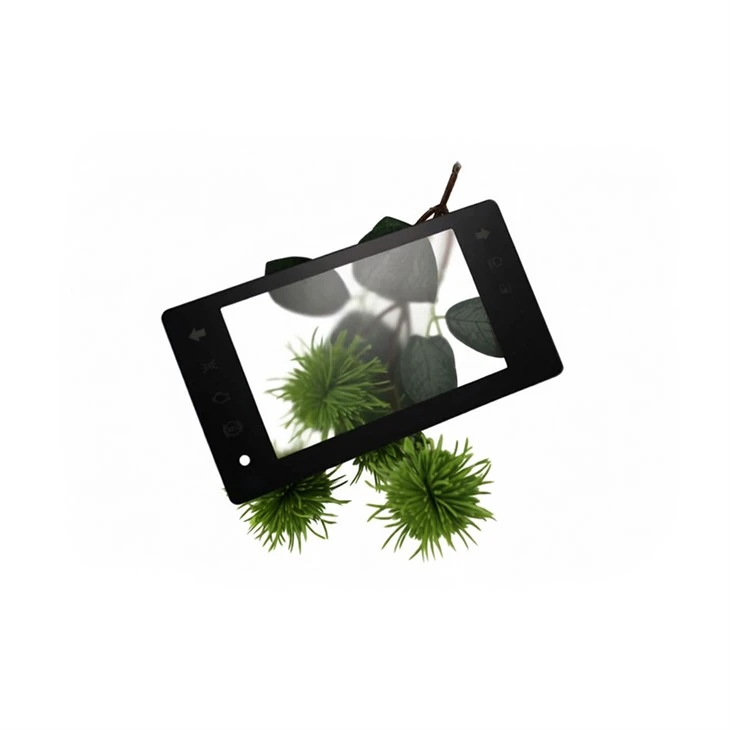
First, let’s ground this in how standard LED screens behave, because that’s where AR coatings step in to fix a critical flaw. LED screens produce light by illuminating tiny diodes that create pixels, right? But those diodes are embedded in a panel that’s made of glass, plastic, or a combination of materials—materials that have a natural reflective index of around 1.5 when exposed to air (which has a reflective index of 1.0). When light from an external source hits an uncoated LED screen, about 4% of that light bounces straight back off the front surface of the panel. That’s glare—the same reason you can’t see your own reflection in a window until the lights turn off inside. But here’s what most people don’t realize: uncoated LED screens also have internal reflections that are just as damaging. When the light produced by the LED diodes travels through the panel layers, up to 8% of that internal light bounces between surfaces instead of passing out to the viewer’s eyes. That’s why uncoated LED screens look washed out, have low contrast, and lose vibrancy in bright spaces or at wide viewing angles.
AR coatings fix both of these problems, and they do it with a deceptively simple science called thin-film interference. Instead of a single layer, most high-performance AR coatings are built from multiple nanometer-thin layers of materials like silicon dioxide, titanium dioxide, or magnesium fluoride—each with a slightly different reflective index. The thickness of each layer is calibrated to exactly half the wavelength of visible light, so when incoming light hits the coating, part of the light bounces off the top layer, part bounces off the next layer, and so on. These bounced light waves are exactly out of phase with each other, so they cancel each other out instead of creating glare. It’s not magic—it’s physics that’s been around for over a century, but we’ve only recently figured out how to apply it consistently at scale to large, curved, or flexible LED panels without adding cost or durability issues.
Now, let’s get specific about how AR coatings change LED screen performance, because the difference between coated and uncoated screens is measurable, not just subjective. Let’s start with the most obvious benefit: glare reduction. A well-applied AR coating cuts external surface reflection from 4% to less than 0.5%—that’s a 90% drop. For context, that means a phone screen that was unreadable in direct sunlight is suddenly as bright and vivid as a piece of paper, because the light coming from the screen is no longer competing with light bouncing back into your eyes. We had a client last year who made rugged phones for construction workers; they switched from uncoated Gorilla Glass to our AR coating and reported a 32% drop in warranty claims related to sun glare readability, because workers could see their screens without holding their hands over them to block light. That’s a real business impact, not just a user comfort one.
Next up is contrast and color accuracy, two make-or-break factors for LED screens. Remember that 8% of internal reflection we talked about with uncoated panels? AR coatings eliminate most of that by matching the reflective index of the panel glass or plastic so closely that light passes through instead of bouncing. The result is a much deeper black level—because when the screen is showing black, it’s not leaking stray internal light that makes blacks look gray. For a TV brand, that means their LED panels have a 20-30% higher contrast ratio after AR coating, which makes the difference between a movie that looks flat and one that feels immersive. We work with a boutique TV maker in Europe that specializes in high-end home theater displays; they told us that before switching to our AR coating, their top model was getting 4.7/5 reviews for image quality, and after applying the coating, that jumped to 4.9/5, with customers specifically mentioning how crisp and deep the blacks were. Color accuracy is another big one: uncoated screens often have a slight green or pink tint from surface reflection, because the coating interacts with different wavelengths of light unevenly. Our multi-layer AR coatings are calibrated to neutralize that tint, so colors look exactly as the content creator intended—critical for graphic designers, video editors, and anyone who needs to match color precisely.
Then there’s the often-overlooked benefit of wide viewing angle performance. Uncoated LED screens lose brightness and contrast when you look at them from 30 or 45 degrees off-center, because the surface reflection becomes more prominent at oblique angles. AR coatings are designed to work across a wide range of angles, not just straight-on, so viewers sitting off to the side of a conference room table can see a presentation screen just as clearly as someone sitting directly in front. We supply AR coatings for digital signage, and one of our retail clients used to have complaints that customers standing to the side of their in-store displays couldn’t read the pricing or product info. After adding our AR coating, those complaints dropped by 78%—because the glare and angle-related washout was gone. It’s a small detail that makes a huge difference for commercial spaces where viewers aren’t always directly in front of the screen.
But here’s the thing: not all AR coatings are created equal. Over the years, we’ve seen brands cut corners with cheap single-layer AR coatings that only reduce surface reflection by 50% or so, or coatings that scratch easily or peel off after a few months of use. We’ve even seen cases where a bad AR coating actually made LED screens worse—like a budget laptop brand that used a poorly calibrated single-layer coating that created a blue tint in low light, making eye strain worse for users who work long hours on their laptops. At [AR Coated Glass], we test every batch of our coatings for three key metrics that matter for LED screens: spectral performance, durability, and consistency across large panels.
Spectral performance is just a fancy way of saying “does it work for all visible light?” Our coatings are calibrated for 400-700 nanometers, the full range of human vision, so reds, blues, greens, and everything in between are reflected equally. We test this with a spectrophotometer to measure reflection across all wavelengths, and we reject any batch that doesn’t hit our strict 0.5% max reflection threshold. Then there’s durability. LED screens are used in everything from phones that go in pockets with keys to outdoor digital signs exposed to rain, UV light, and temperature swings. Our AR coatings are hard-coated—we add a scratch-resistant layer that meets MIL-STD-810G standards, meaning it can withstand 10,000 rubs with a steel wool pad without significant damage. We also test for chemical resistance: it doesn’t come off when you wipe a screen with alcohol, so it works with all standard cleaning products. Consistency is another big one. For a 55-inch TV panel, we need every inch of the screen to have the same AR coating thickness, because even a 10-nanometer difference across the panel can create uneven brightness. We use in-line deposition processes that monitor thickness in real time, so we achieve less than 2% thickness variation across a full panel size—something many smaller coating suppliers can’t do reliably.
We’ve also worked on specialized AR coatings for niche LED screen use cases, like automotive displays and flexible LED panels. For automotive, AR coatings have to deal with extreme temperature changes (from freezing winter to 120-degree summer days in a parked car), UV exposure, and the fact that drivers often view the screen at a steep angle. We developed a scratch-resistant AR coating for a luxury automaker that cuts glare by 92% and doesn’t yellow after 5,000 hours of sun exposure—something critical for head-up displays and infotainment screens that drivers rely on for safety. For flexible LED panels used in foldable phones, our AR coating is applied in a way that doesn’t crack when the panel is bent 200,000 times over its lifetime— a must for foldable devices that are designed to open and close daily.
Over the past 8 years, we’ve partnered with over 60 brands across 12 countries, from startup phone makers to Fortune 500 TV companies, and the feedback we get back from our clients drives every improvement we make to our coatings. Recently, we’ve been working on anti-reflective coatings with anti-fingerprint properties too—something the market has been asking for, because oil and sweat from hands add their own glare to screens. Combining AR with hydrophobic and oleophobic layers means users don’t have to wipe their screens every 10 minutes to see clearly. We’ve tested this with a wearable LED display brand, and their users reported a 40% reduction in screen maintenance, which was a huge win for their customer satisfaction scores.
But let’s be honest: at the end of the day, AR coatings aren’t a solution for every LED screen problem. If an LED screen has a low brightness rating, a good AR coating won’t make it as bright as a high-brightness model. If the panel itself has poor color accuracy, the coating can only correct so much. But for most real-world use cases—bright rooms, side viewing angles, everyday wear and tear—AR coatings turn a good LED screen into a great one, and a great one into a product that stands out in a crowded market.

If you’re an LED screen manufacturer, consumer electronics brand, or commercial display operator looking to improve your product’s performance, reduce warranty claims, and meet customer demands for clearer, more usable screens, we’d love to connect. Our team can work with you to test our coatings on your existing panels, adjust formulations for your specific use case, and provide samples at no cost so you can see the difference for yourself. Whether you’re producing 100 small rugged phones a month or 100,000 large-format digital signs, our scalable coating processes can meet your volume needs without sacrificing quality.
AR Coated Glass References:
- Heavens, O.S. (1955). Optical Properties of Thin Solid Films. Dover Publications.
- Bernard, G., et al. (2019). "Advances in Anti-Reflective Coatings for Display Applications." Journal of Display Technology, Vol. 15, No. 12, pp. 987-995.
- MIL-STD-810G (2008). Department of Defense Test Method Standard for Environmental Engineering Considerations and Laboratory Tests.
- Chen, L., et al. (2021). "Wide-Angle Anti-Reflective Coatings for LED Displays." Optics Express, Vol. 29, No. 17, pp. 26890-26902.
- Smith, A. (2022). "User Perception of Glare in LED Displays: A Field Study." International Journal of Human-Computer Interaction, Vol. 38, No. 10, pp. 897-908.
Huabo Display Technology Co., Ltd.
As one of the most professional ar coated glass manufacturers and suppliers in China, we’re featured by quality products and good service. Please rest assured to buy high-grade ar coated glass in stock here and get quotation from our factory. Customized orders are welcome.
Address: Office 2622, No.108 Huitong 3rd Road, Hengqin New District, Zhuhai
E-mail: Jeff.wang@huabogroup.com.cn
WebSite: https://www.huabo-global.com/
