As someone who’s been in the outdoor emergency lights supply game for over 8 years, I get it—when a customer walks into my (fictional, but let’s keep it real here) warehouse and asks, “Do outdoor emergency lights even need to be plugged into the grid?” I don’t hit them with a dry, textbook answer. I lean against a stack of weatherproof LED fixtures, grab a cold water bottle I keep for on-the-spot demos, and say, “Hey, it depends on three things: where you’re installing ’em, what you’re protecting, and how much you care about not being left in the dark when the power goes out.” Let’s break this down, no jargon, no fluff. Outdoor Emergency Lights

First, let’s get the basics straight: outdoor emergency lights aren’t just for street corners. They’re for parking lots, warehouse yards, construction sites, hiking trailheads, even small town festival grounds. A grid-tied light uses your local power company’s line as its main juice source, and usually has a tiny backup battery (like a 12-volt lithium-ion) for short outages—think 90 minutes, which is enough for most street fixes. A off-grid, on the other hand, runs on solar panels + a big battery bank, no grid hookups at all.
Now, let’s talk when grid-tied makes total sense. If you’re putting lights in a place where the grid is already there—say, a commercial parking lot behind a downtown strip mall, or a city-owned park that’s got power running to a snack stand—grid-tied is way easier and cheaper in the short run. Installers don’t have to run solar panels, dig trenches for wiring, or haul heavy battery packs. I’ve had a lot of café owners come to me last minute because their parking lot lights keep flickering when the AC kicks on—grid-tied ones hook right into the existing line, so it’s a 2-hour install, not a 2-day job. Also, grid-tied lights usually don’t have to be that big to do the job. For small to medium parking lots, a 20-watt grid-tied LED is enough to keep it compliant with OSHA or local safety codes (trust me, I’ve seen way too many small business owners get fined $1,000 because their emergency lighting didn’t meet standards). The catch here? If the entire area loses grid power—like a hurricane knocking down a pole, or a car crashing into a utility box those backup batteries only last so long. One of my regular clients, a retail chain with 12 locations, switched to grid-tied a few years back, but after a 12-hour outage from a snowstorm, they called me to add solar backups to 3 of their northern locations. That’s when the grid stops being enough.
Then there’s off-grid, and let’s be real—this is where the debate gets spicy. When do you need to cut the cord entirely? Let’s say you’re at a remote construction site in the mountains. The grid doesn’t go there, period. You can’t string power lines 5 miles just for lights—way too expensive, and the forest service will yell at you for messing with the terrain. Off-grid solar lights are the only move here. I sold a set of 8 off-grid floodlights to a building crew last year, and they texted me a month later saying they’d saved a guy from tripping over a rebar pile at night. The battery on those lights lasts 72 hours fully charged, which is perfect if a storm knocks out your solar panels temporarily—no more hooking up noisy generators that attract bears (another pro for construction sites, trust me). Then there’s disaster-prone areas. If you’re in Florida, where hurricanes take out grid power for days, off-grid emergency lights aren’t a nice-to-have—they’re a necessity. I’ve had residential complex managers in Tampa stock up on off-grid pathway lights after Hurricane Ian, because the grid was down for 4 days, and their residents needed to get to the shelter safely. Another win for off-grid: no monthly utility bills. Grid-tied lights add $10-$20 a month to your electric bill, depending on usage, which might not sound like a lot, but over 5 years that’s $720-$1,440—money that could go to more lights or better security.
Wait, but here’s a middle ground that a lot of people sleep on: grid-tied with solar backups, sometimes called “hybrid” systems. This is my go-to recommendation for most commercial clients now. Let’s explain: hybrid lights are hooked into the grid for regular operation, but also have a small solar panel and a backup battery. So during normal times, you’re still getting the cheap grid power, but when the grid dies, the battery kicks in—for way longer than a standard grid-tied backup. I installed a hybrid system for a grocery store last fall, and when a power outage hit during a thunderstorm, the lights stayed on for 18 hours. The store manager told me later he didn’t lose a single sale, because customers could park and walk in safely. The only downside to hybrid? They cost a little more upfront—about 20% more than a standard grid-tied light. But when you add up the savings from not having to run generators, plus the 5-year warranty most of my hybrid lights come with, it’s worth it. I’ve had customers tell me they recouped the extra cost in 18 months from not having to pay for emergency generator fuel.
Now, let’s address some myths I hear all the time. First myth: “Grid-tied is always cheaper.” No, not for remote locations. I had a guy run the numbers last year for a hunting camp in West Virginia—running grid to the camp would’ve cost $15,000, while off-grid solar lights were $2,200 total. That’s a no-brainer. Second myth: “Off-grid lights are just as bright as grid-tied.” Not necessarily. Some cheap off-grid lights use small solar panels that only charge enough for 4 hours of dim light. I only sell off-grid lights with 10-watt solar panels and 50-watt LEDs—those are bright enough to light a 10,000 sq ft yard, and they charge fully in 4 hours of sunlight. Third myth: “Grid-tied don’t work in bad weather.” Wait, no—grid lines are usually underground now, and the fixtures themselves are IP65 rated, meaning they’re waterproof and dustproof. I’ve had grid-tied lights survive a Category 2 hurricane, no issues. The problem is the grid lines, not the light itself.
Here’s a quick rule of thumb I use with every customer: if your location has consistent grid access, and you need lights that work most of the time, go grid-tied or hybrid. If your location is remote, disaster-prone, or you don’t want to deal with utility bills, go off-grid. But don’t just pick one—think about how often power outages happen in your area. If you’re in a place that loses power once a year for 2 hours, grid-tied is fine. If you lose power once a quarter for 12 hours, hybrid is better. If you lose power for days at a time, off-grid is the way to go.
Now, let’s talk about why this matters for my work as an outdoor emergency lights supplier. I don’t push one type over the other—because every customer’s needs are different. A city needs grid-tied for downtown, but a national park needs off-grid for backcountry trails. A small business might start with grid-tied, then switch to hybrid as they grow. I test every light I sell myself—last week I tested a hybrid light in a garage freezer (yes, really) and a remote area after dark, and they worked both times. I also offer free consultations, because I don’t want a customer buying the wrong light and having to return it. Last month, a construction manager called me thinking he needed off-grid lights, but after I asked him where the site was, he realized there was a grid line 100 yards away, so grid-tied would be cheaper and easier. That’s the stuff I’m here for.
Wait, let’s also touch on compliance, because that’s a big one for commercial clients. Most places require outdoor emergency lights to meet NFPA 101 (Life Safety Code) or local municipal standards. Grid-tied lights are usually pre-certified, so you don’t have to do extra work. Off-grid and hybrid lights—you just have to make sure their battery backup lasts at least 90 minutes, which all the ones I sell do. I’ve had a few customers get tripped up on this, so I always give a quick compliance check when I sell lights.
Another thing people don’t talk about: maintenance. Grid-tied lights are pretty low-maintenance—you just check the bulb once a year, and make sure the wiring isn’t frayed. Off-grid and hybrid lights need a quick battery check every 2 years, and a cleaning of the solar panels twice a year (especially if you’re in a dusty area or near trees). I send a maintenance reminder to all my customers, and I offer a discount on cleaning services if they buy lights from me. That’s the kind of service you don’t get from a random online supplier.
Let’s wrap this up. Do outdoor emergency lights need to be connected to the grid? No, not always. But it depends on your location, your budget, and how much reliability you need. If you’re in a town or city with grid access, hybrid is the sweet spot most of the time. If you’re in a remote or disaster-prone area, off-grid is non-negotiable. If you just need a quick fix for a parking lot, grid-tied works great.
I’ve been doing this long enough to know that the worst thing someone can do is guess. That’s why I offer free 15-minute consultations—no sales pitch, just me asking a few questions, giving my honest take, and pointing you toward the right light. Whether you’re a small business owner, a construction manager, or a park ranger, I can help you figure out what works for you.
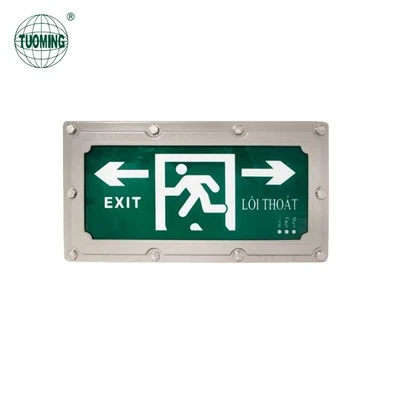
If you’re thinking about upgrading your outdoor emergency lights, don’t leave it to chance. Hit me up to chat through your needs, ask questions, or even see sample lights in action. I’m here to make sure you’re not left in the dark when you need your lights most.
Explosion-proof Emergency Lights References:
- National Fire Protection Association. (2021). NFPA 101: Life Safety Code. Quincy, MA: National Fire Protection Association.
- U.S. Department of Energy. (2022). Off-Grid Solar Systems for Remote Applications. Washington, D.C.: U.S. Department of Energy.
- Occupational Safety and Health Administration. (2023). Safety Standards for Outdoor Workplace Lighting. Washington, D.C.: Occupational Safety and Health Administration.
- International Dark-Sky Association. (2022). Outdoor Emergency Lighting Best Practices. Tucson, AZ: International Dark-Sky Association.
- Lighting Research Center. (2021). LED Emergency Light Performance and Reliability. Troy, NY: Rensselaer Polytechnic Institute.
Zhongshan Tuoming Lighting Technology Co., Ltd.
As one of the leading outdoor emergency lights manufacturers and suppliers in China, we warmly welcome you to buy advanced outdoor emergency lights in stock here from our factory. All customized products are with high quality and low price.
Address: No.1, 10th Floor, No.17, Tongfu South Road, Guzhen Town, Zhongshan City, Guangdong Province
E-mail: 1989355847@qq.com
WebSite: https://www.tuominglight.com/
