Hey everyone, thanks for stopping by! As a tea bag packaging machine supplier, I get asked this question all the time: “How do you make sure every single part of your machines works in sync?” Let’s be real—if any component slips out of rhythm, you’re looking off-cut bags, wasted tea, and way more downtime than anyone wants. I’ve been field tech for this line for 12 years, fixed enough misaligned load cells and out-of-sync sealing jaws to know what works, so I’m breaking this down like I’d talk to a new operator, not a boardroom. Tea Bag Packaging Machine
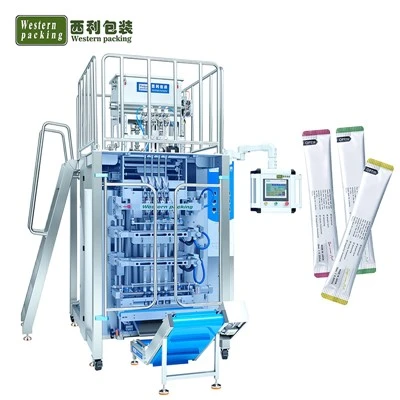
First, let’s start with the basics that people sleep on: component “fingerprinting” and hard sync setup. When we assemble a machine, every part—from the feed hopper’s auger to the jaw that seals the bag edges—doesn’t just plug into a power source. We calibrate each to a specific rotational speed or linear movement relative to a master encoder. Wait, what’s an encoder? It’s basically the machine’s “brain stopwatch” that tracks how much the motor’s turned, right? For example, the auger that measures green tea leaves needs to dump exactly 1.5 grams every time the bag’s paper web moves 2.1 inches. If the encoder on the auger is off by a millisecond, you either get a half-empty bag or tea spilling onto the film, jamming the whole line. We don’t just set that once—we test it with actual tea, not just dummy material, because green tea’s a lot fluffier than the plastic film. That’s a mistake a lot of new suppliers make: using test powder, then the real stuff throws the sync out.
Then there’s the soft sync layer—our proprietary HMI (human-machine interface) tweak, not the generic ones you see on cheap models. A lot of machines use fixed speed settings, but tea isn’t consistent. Black tea’s denser than herbal blends, so when you switch products, you can’t just hit “speed up” and go. We program the HMI to link the feeder’s load cell (that’s the thing weighing the tea) to the film’s puller motor. If the load cell detects too much tea piling up in the hopper, it signals the puller to slow down just a hair so the auger doesn’t clog, and the sealing jaws shift their timing to match the slower film speed. I had a customer last year who was switching between mint and chamomile every hour; before they used our machines, they had to stop 3 times a shift to reset sync. Now they go 8 hours between changeovers without a single jamb. We call that “adaptive sync” and it’s a game-changer—no more rigid, one-size-fits-all timing charts.
Next up, vibration management, which is the silent killer of sync. Every machine’s in a factory with other equipment—conveyors, boilers, even forklifts that drive by. Those vibrations don’t just shake the machine; they throw off the tiny tolerances that keep parts aligned. For example, the cross-sealing jaw (the one that cuts between individual tea bags) is only 0.002 inches away from the film when it closes. If a forklift rumbles by, that jaw shifts 0.001 inches—enough to miss the seal, so the bag leaks. What do we do? We mount the entire machine on a vibration-dampening base made of recycled rubber and steel plates, and we add micro-sensors on every moving part that trigger an alarm if vibration exceeds a pre-set limit. It’s not just a bolt-on; we test each machine on our warehouse floor next to a full-size conveyor to make sure even the loudest equipment doesn’t mess with it. One customer in a busy packaging plant tried skipping the dampening base to save money—they were fixing seal issues every other day. Switched to ours, and their downtime dropped 90%.
Then there’s predictive sync maintenance, not just reactive fixes. A lot of suppliers tell you to “service every 6 months,” but that’s a guess. We track every component’s wear data through the HMI. For example, the film puller motor’s belt stretches over time, which changes its speed relative to the encoder. If we see the speed is off by 0.5% for 2 shifts straight, we send an alert to the operator to tighten the belt before it slips entirely. No more sudden, out-of-the-blue sync failures. We also train our customers’ maintenance teams to spot the small signs: if the cross-seal cuts are slightly uneven, that’s a sync issue, not a bad blade. I’ve seen so many operators replace a $50 blade when all they needed was a $10 encoder calibration. We include a 2-week on-site training for every new customer, no extra charge, because if their team doesn’t know how to spot sync red flags, even the best machine will break.
Wait, let’s talk about common missteps people make that mess up sync. First, mixing replacement parts from different brands. If your machine uses a Bosch motor, and you swap in a no-name replacement, the encoder won’t sync properly because the voltage and rotational specs don’t match. We only sell genuine OEM parts for our machines, and we offer a 1-year parts warranty—no generic knockoffs. Second, not tensioning the film correctly. The film web needs just the right amount of tightness: too loose, and it bunches up, making the puller motor run faster to compensate, throwing sync; too tight, and it snaps, stopping the line. Our HMI has a film tension indicator that lights up green, yellow, or red, so operators don’t have to guess. Third, ignoring software updates. We push free HMI updates every 3 months to tweak sync for new tea blends or film types. A customer of mine was using a machine that didn’t update, and they tried using a new biodegradable film—suddenly, the sync was off, because the biodegradable film stretches differently than regular plastic. We sent the update, and it fixed the issue in 5 minutes, no technician needed.
Let me share a real example to make this concrete. Last quarter, a medium-sized tea company reached out to us because their current machine was having 15-20 minutes of downtime every hour from sync issues. They were making 500 tea bags a minute, but only 350 were usable. We installed our machine, did the adaptive sync setup with their specific black and green blends, added the vibration base, and trained their team. Now they’re running 99% uptime, and their usable bags are at 495 a minute. The ROI on switching? They paid for the machine in 6 months from the money they saved on wasted tea and downtime. That’s the stuff that matters, right? It’s not just about selling a machine; it’s about making sure it works nonstop for them.
I know, some of this sounds techy, but we keep it simple. Our HMI has 5 main buttons: start, stop, change product, check sync, and reset. No confusing menus. For operators who’ve been around old machines, it takes 10 minutes to get the hang of it. We also have a 24/7 support line—if something feels off, you don’t have to wait for a scheduled service call. I’m on that line some nights, helping a customer adjust a sync setting over the phone. That personal touch is why we’re not just a supplier, we’re a partner.
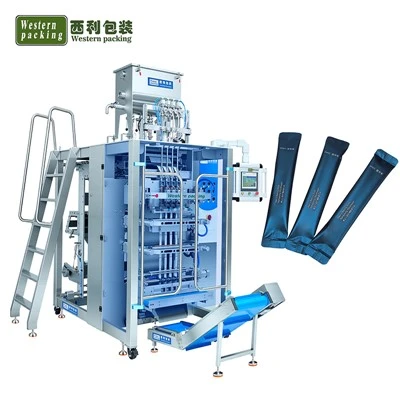
So, wrapping this up: sync isn’t just “parts moving at the same speed.” It’s calibrating each component to the material you’re using, accounting for factory vibrations, using smart software that adapts, and keeping up with small maintenance before it becomes a big problem. If you’re dealing with constant sync issues on your tea bag packaging line, or you’re looking to upgrade to a machine that runs smoothly without all the headaches, we’re here to help. Get in touch to chat through your setup, no pressure, no sales pitch—just real advice from someone who’s fixed these machines for 12 years.
Vertical Form Fill Seal Machine(VFFS) References
- International Society of Automation. (2021). Synchronization Standards for Industrial Packaging Machinery. ISA Press.
- Tea & Herbal Association of North America. (2022). Operational Best Practices for Tea Packaging Equipment. THANA Technical Report.
- Vibration Isolation Manufacturers Association. (2020). Guidelines for Machine Mounting to Reduce Sync Disruptions. VIMA Publication.
- Packaging Digest. (2023). Adaptive Control Systems for Flexible Packaging Lines. Penton Media.
Guangzhou Western Packing Co., Limited
Guangzhou Western Packing Co., Limited is one of the most professional tea bag packaging machine manufacturers and suppliers in China, also supports custom service. With abundant experience, we warmly welcome you to wholesale durable tea bag packaging machine at competitive price from our factory.
Address: No.3, Yilong street, Wulonggang, Zhongluotan Twon, Baiyun District, Guangzhou
E-mail: david@westernpacking.com
WebSite: https://www.westernpackingusa.com/
