Hey everyone, thanks for stopping by! If you’ve ever shopped for quilts lately, you’ve probably seen the term “Jacquard quilt” popping up a lot – especially if you’re into the fancy, textured ones that look like they have more personality than your basic bedspread. But here’s a question I get ALL the time from customers: “Do Jacquard quilts have a smooth surface?” It’s such a good question, and honestly, it’s one that made total sense to me when I first started learning about these fabrics too. I run a small quilt supply shop, and I chat with hundreds of folks (from homeowners to boutique designers) every week, so I thought I’d break this down real simply, no jargon, no fancy stuff – just what I know from both working with the material day-to-day and answering these exact questions. Jacquard Quilt
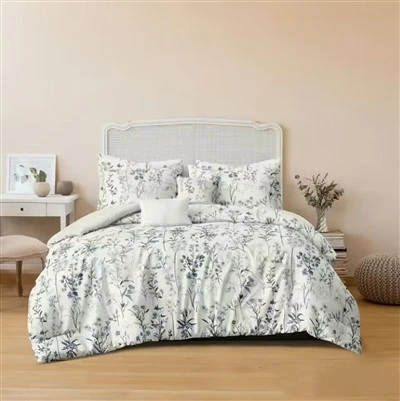
First off, let’s get on the same page about what a Jacquard quilt actually is, because a lot of people mix up the fabric part with the type of quilt. Jacquard isn’t a brand or a style of quilt – it’s a weaving technique. Way back in the 1800s, there was this guy named Joseph Marie Jacquard who invented a loom that used punched cards to weave super intricate patterns, right? Before that, patterns on fabrics were mostly just stripes or dots, super simple. His loom let weavers make detailed designs – like flowers, paisleys, even whole scenes – without having to hand-stitch every little part. That technique stuck around, and now “Jacquard” just refers to fabric woven on those looms. So a Jacquard quilt is a quilt where at least the top layer (the decorative part) is made with that woven Jacquard fabric, not printed or appliqued.
Okay, back to the big question: smooth surface? The short answer? It depends. But not in a confusing way – it all comes down to two main things: how the Jacquard weave is structured, and what materials we use to make the actual quilt. Let’s start with the weave, because that’s the root of it all.
See, regular plain weave (like the cotton bed sheet you probably sleep on) is threads going over and under each other in a super simple, even grid. That’s why it’s so flat and smooth – no bumps, just even tension across the whole fabric. Jacquard weaves are different because of those intricate patterns. When a weaver uses the Jacquard loom, they can lift individual threads (called warp and weft threads, don’t panic about the names) to make parts of the pattern sit up a little higher than others. Those little raised areas are called “floats” in weaving terms. So if your Jacquard quilt has a pattern with big, solid shapes or deep details, those floats are going to be more noticeable – so the surface will have a little texture, a little depth, not totally smooth.
But wait, here’s the thing – not all Jacquard patterns are the same. I’ll give you an example. Last year, we ordered a batch of Jacquard quilts with tiny, subtle motifs – like little roses no bigger than a pencil eraser, scattered evenly across the top. The floats on those were super small, only a millimeter or so high. When customers felt them, most said they were almost as smooth as a plain cotton quilt, just with a tiny, almost unnoticeable texture that feels soft, not rough. Then we did a run of quilts with bigger paisley patterns, each paisley about 3 inches wide, with thick, bold outlines. Those had way more prominent floats – the parts of the paisley that were raised sat up a lot more, so when you ran your hand over it, you could feel each little ridge. So that one felt less smooth, more textured, but in a good way – it felt rich, not scratchy.
Now, the material of the threads matters too. We’ve tried a bunch of different threads over the years, and that makes a huge difference. We use 100% long-staple cotton for most of our Jacquard quilts, because it’s soft and durable. But even within cotton, there’s difference – regular cotton thread vs. mercerized cotton. Mercerization is a process where you treat cotton with caustic soda to make it stronger and shinier. When we use mercerized thread for Jacquard weaves, the floats lay flatter, right? The treated thread is a little stiffer, so it doesn’t puff up as much as regular cotton thread. So quilts made with mercerized cotton Jacquard will feel smoother than ones with unmercerized cotton, all else being equal. We also tried polyester threads once, for a custom order – those were even smoother, but a lot less breathable, so customers didn’t love sleeping under them, so we stuck with cotton.
Another big factor is how the quilt is constructed, not just the top fabric. A lot of people forget that a quilt has three layers: the top decorative layer, a middle batting layer (the fluffy stuff that keeps you warm), and the bottom layer (usually called the backing). If the batting is really thick or fluffy, that can make the whole quilt puffy, so any texture on the top fabric will feel more pronounced, right? Like, if your top fabric has a tiny bump, a thick batting will push that bump up, making it feel more noticeable. If you use a thin, low-loft batting (that’s industry speak for how thick it is), then the surface lays flatter, so the weave’s texture is softer, less intense. That’s a trick we learned early on – if a customer wants a smooth surface but still loves the Jacquard pattern, we suggest a thinner batting, and it works perfectly.
Wait, let’s also talk about the difference between visual smoothness and tactile smoothness. Like, a Jacquard quilt can look smooth from a distance, but feel textured when you touch it, or vice versa. A lot of customers come in saying they want a “smooth” quilt because they hate that scratchy, bumpy feel, but they don’t realize that Jacquard’s texture is usually soft, not scratchy. I had a customer last month who bought a Jacquard quilt, and she emailed me a week later saying it was too textured, but when she brought it back, she felt it and realized she just didn’t like that there was any texture at all – even soft texture. So that’s a personal preference thing, not a flaw in the quilt.
We also get questions about cleaning, right? Does washing affect the smoothness? Yeah, a little, but not in a bad way. When you wash a new Jacquard quilt, the threads relax a tiny bit, so the floats lay a little flatter, making the surface smoother over time. Wait, that’s actually a plus! A lot of our customers say after the first wash, their quilt feels way softer and smoother than when it was new. We always recommend washing Jacquard quilts in cold water on a gentle cycle, no harsh detergents, and air-drying or low heat – that keeps the threads from getting fuzzy or puffy, so the surface stays nice. We had one customer who washed hers 10 times, and she said it’s smoother now than when she first unboxed it. That’s a testament to how the material relaxes.
Let me also address a common myth I hear a lot: people think Jacquard quilts are scratchy because they’re woven with tight looms. No, not really. Tighter weaves are actually smoother, because the threads are packed closer together. The scratchy feeling you might have heard about is usually from cheap, low-quality Jacquard fabric where they used thin, low-grade threads and a super tight, uneven weave. Those are the ones that feel rough, not the good ones we sell. We source our Jacquard fabrics from family-run mills in Portugal that have been making textiles for 50+ years, so their looms are calibrated perfectly, the threads are consistent, so the weave is even, no rough spots. That’s why our customers almost always comment on how soft our Jacquard quilts are, even the ones with patterns.
Wait, let’s share a real customer story to make this concrete. A few months back, a customer named Mia reached out to us because she was replacing her old guest room quilt. She said she’d had a plain microfiber quilt for years, it was super smooth, but it looked too plain for her guest room, so she wanted a Jacquard one but was worried about texture. She ordered our small-flower Jacquard quilt with thin cotton batting, and when it arrived, she texted me a photo saying “This is way smoother than I thought it would be! I can barely feel the pattern at all, it just looks pretty.” That’s exactly the sweet spot we aim for with most of our standard Jacquard quilts – they have that subtle texture that adds depth, but isn’t so prominent that it feels rough or bumpy.
On the flip side, if someone wants a more textured, less smooth Jacquard quilt? We have those too, for people who love that cozy, woven feel. Our paisley and damask Jacquard quilts have a little more surface texture, and customers love them because they feel rich, not flat. One interior designer we work with uses these for accent pieces in living rooms, not just beds, because the texture catches the light and makes the room feel warmer. So it’s not that “smooth” is better – it’s just different for different needs.
So to wrap this up, do Jacquard quilts have a smooth surface? Let’s sum it up real quick:
- If it’s a small-pattern, tight-weave Jacquard with thin batting and mercerized cotton threads? Yeah, it’ll feel almost as smooth as a plain cotton quilt, with just a hint of soft texture.
- If it’s a large-pattern, bold Jacquard with thick batting? It’ll have more noticeable surface texture, less smooth, but still soft – not scratchy.
- The quality of the fabric and weave is the biggest factor: cheap Jacquard will be rough, high-quality Jacquard will be soft, no matter the pattern.
Now, if you’re in the market for a Jacquard quilt and you’re worried about the surface, just reach out! I know it can be overwhelming picking a quilt online, where you can’t feel it first. We’ve got sample swatches you can order for just a few bucks, so you can run your hand over the weave before you commit. We also have a ton of photos on our site with close-ups of the quilt surfaces, so you can see the texture too. Whether you want something super smooth for a guest room or a little textured for your master bedroom, we can help you pick the right one. If you have any questions about materials, construction, or even care tips, just shoot us a message – I reply to every inquiry personally, no automated bots here.

At the end of the day, Jacquard quilts are such a great choice because they’re both beautiful and functional. Their texture is part of their charm, not a flaw, and when you get a high-quality one, it’ll last for years, keep you warm, and look good in your space. No more guessing about the surface – just ask, and I’ll tell you exactly what to expect.
Printed Quilt References:
- Collier, B., & Tortora, P. G. (2020). Understanding Textiles (11th ed.). Pearson.
- European Textile Machinery Association. (2019. Textile Weaving: Jacquard Technology and Applications. ETMA Technical Report.
- Cotton Council International. (2021. The Benefits of Mercerized Cotton for Home Textiles. CCI Consumer Guide.
Haining Jiahao Supply Chain Co., Ltd.
As one of the most professional jacquard quilt manufacturers in China, we have world-leading production equipment and strong manufacturing capabilities. Welcome to wholesale bulk cheap jacquard quilt in stock here and get quotation from our factory. Customized orders are welcome.
Address: Room 903, Building 4, Hongxiang Life Plaza, No. 267, Nongfeng Road, Haining City, Zhejiang Province, China
E-mail: cecilia@jiahao-hn.com
WebSite: https://www.jiahaotextiles.com/
