If you’ve ever spent time on a working oilfield – the kind where dust coats every surface, heavy equipment rumbles from dawn till dusk, and pipelines stretch out over parched, unforgiving terrain – you’ve likely seen a pump that looks nothing like the ones at your local car wash, the tiny fountain in a city park, or even the sump pump that keeps your basement dry. As someone who’s supplied oilfield pumps for over a decade, I’ve lost count of how many times potential customers (from small onshore drilling crews to large offshore platform operators) have asked me, “What makes your oilfield pump so different from the one I used in manufacturing or water treatment?” The short answer isn’t just size, though oilfield pumps are definitely bigger. It’s a combination of engineered adaptations to extreme, unforgiving conditions that no other pump type has to face every single day. Let’s break down what sets them apart, why those differences matter, and why skimping on a true oilfield pump is a risky mistake no project needs to make. Oilfield Pump

First, let’s talk about the core job of any pump: moving fluids from one point to another, whether that’s pumping water from a well, moving fuel through a refinery, or draining floodwater from a basement. But oilfield fluids are nothing like plain water – that’s where the first big difference kicks in. Most industrial pumps are designed for consistent, clean or mildly contaminated fluids. A water treatment pump, for example, is built to move mostly water with tiny amounts of sediment, and a sump pump handles rainwater or mild groundwater with small debris. Oilfield pumps? They deal with a slurry of crude oil, natural gas, sand, drilling mud, and sometimes even solid rock fragments that get stirred up during drilling. Let me give you a real example: a few years back, I worked with a drilling crew in West Texas who tried to use a standard centrifugal pump meant for municipal water to move drilling mud from their well to a holding tank. Within two days, the pump’s impeller (the rotating part that pushes fluid through the pump) was worn down to half its original size from the silica sand mixed in the mud. That pump would’ve failed mid-drill, costing them an estimated $120,000 in lost rig time, not to mention the cost of a replacement pump on a remote site. Oilfield pumps are built with materials that can handle that kind of abrasion – high-chrome alloys, hardened stainless steel, and sometimes even ceramic linings that resist wear from sand and rock. Other pumps don’t need that level of abrasion resistance, because they rarely encounter that kind of solid debris on a daily basis.
Next up: pressure and temperature extremes that would make ordinary pumps quit immediately. On an oilfield, you’re dealing with pressures that can reach thousands of pounds per square inch (PSI) – think about the pressure required to push oil up from a well that’s two miles deep, or the pressure needed to inject water into a reservoir to force more oil out. A standard pool pump, for comparison, operates at around 15 to 50 PSI. Even heavy-duty industrial pumps for manufacturing typically max out at 1,000 PSI, give or take. Oilfield pumps, particularly those used for hydraulic fracking or well stimulation, can operate at pressures over 15,000 PSI. That means every part of the pump – the casing, the shafts, the seals, the bolts holding it together – has to be engineered to withstand that kind of force without leaking or failing. Then there’s temperature: in a desert oilfield, temperatures can hit 120°F (49°C) during the day and drop to near freezing at night. Offshore, you have icy seawater at the pump’s intake and hot, volatile hydrocarbons moving through the pump itself. Ordinary pumps are usually rated for narrow temperature ranges, maybe 32°F to 180°F. Oilfield pumps have to handle -20°F (-29°C) in arctic onshore operations and up to 300°F (149°C) when moving hot, viscous crude oil. The seals on these pumps, for example, aren’t the rubber or plastic ones you see on a kitchen faucet – they’re mechanical seals made of corrosion-resistant metal that can expand and contract without cracking when temperatures swing wildly, and they’re designed to handle high pressure to prevent leaks of flammable, toxic hydrocarbons. That’s a critical point I can’t stress enough: other pumps rarely handle fluids that are both high-pressure, high-temperature, and flammable. A leak on a standard water pump might cause a mess; a leak on an oilfield pump can cause an explosion, a fire, or an environmental disaster that shut down an entire operation.
Another key difference is versatility with fluid viscosity and mixed phases. Let’s define viscosity: that’s a fluid’s resistance to flow. Honey has high viscosity, water has low viscosity. Crude oil, especially heavy crude from Canadian oil sands or old onshore wells, is extremely viscous – some types are almost as thick as molasses. Moving that kind of fluid isn’t the same as moving water. Most centrifugal pumps (the kind used in most factories and homes) work best with low-viscosity, single-phase fluids – meaning just one substance, like water. If you try to move heavy crude with a standard centrifugal pump, it can’t generate enough flow, and the pump will overheat and stall. Oilfield pumps, on the other hand, are designed to handle a huge range of viscosities, from thin drilling mud to heavy crude, and they often have to move multi-phase fluids: oil, gas, and water all mixed together in the same flow. Gas is a problem for many pumps because it can cause cavitation – that’s when low pressure inside the pump creates bubbles of gas that collapse violently, damaging the pump’s internal parts. Oilfield pumps, like reciprocating positive displacement pumps or progressive cavity pumps, are engineered to handle gas entrainment without cavitation, which is essential for flowing from a well where gas is often produced along with oil. I’ve seen a standard pump get “gas-locked” (where gas builds up in the pump and stops fluid flow) on a well in the Gulf of Mexico, leaving the platform without a way to move oil to the processing vessel for four hours. The repair cost over $50,000, not to mention the delay in production. Oilfield pumps are built to avoid that kind of issue, something no other pump type has to address regularly.
Then there’s reliability for remote, harsh operating environments. Most pumps people interact with are indoors, in climate-controlled facilities, or in backyards where they’re easy to access for maintenance. Oilfield pumps? They’re often in locations that are hours away from the nearest service shop, with no easy access to electricity, clean parts, or trained technicians. On a small onshore well pad in rural North Dakota, the nearest major city might be 200 miles away. If your pump fails there, you can’t just run to a hardware store for a replacement part – you have to wait for a specialized service truck to drive out, which could take all day. That means oilfield pumps are designed for minimal maintenance, long run times, and easy field repairs, even with limited tools. A standard commercial pump might require annual service in a controlled shop; an oilfield pump is built to run 24/7 for months at a time, with only routine checks by a crew. Offshore oilfield pumps have the added challenge of being in a corrosive saltwater environment, which eats away at metal parts over time. So oilfield pumps are coated with special corrosion-resistant materials, and their electrical components are sealed to keep out salt spray and moisture. No other pump industry has to deal with that level of remote, 24/7 operation in such hostile conditions.
I also want to address a common misconception: people often think size is the only difference, but that’s not entirely true. Yes, an oilfield pump for a large offshore platform might weigh 20,000 pounds, compared to a sump pump that weighs 20 pounds, but that’s a result of the other design requirements, not the main difference. Some small oilfield pumps used for well testing are actually only slightly bigger than a lawnmower, but they still have all the same core adaptations: abrasion-resistant parts, pressure-rated casings, and gas-handling capabilities. A small, well-testing pump can’t be replaced with a standard water pump, even if it fits in the same space, because it will fail in days under the real conditions of well flow.
Let’s also talk about regulatory and safety requirements, which another industry doesn’t have to navigate. Oil and gas is one of the most heavily regulated industries in the world, with strict rules for equipment that handles flammable fluids, prevents environmental spills, and protects workers. Oilfield pumps have to meet specific standards for explosion protection – their electrical components can’t spark, because a single spark near flammable hydrocarbon vapors can cause a catastrophic explosion. Standard industrial pumps, while they have safety standards, don’t need to meet the same explosion-proof ratings as oilfield pumps. In many countries, operating a non-explosion-proof pump on an oilfield is illegal, because it puts workers and the environment at risk. That’s a non-negotiable difference that separates oilfield pumps from any other type.
Over the years, I’ve had clients come to me after a bad experience: they used a “general purpose” pump from a big box industrial supplier, thinking it would work for their oilfield job, only to have it fail, costing them money, time, and sometimes even fines. One client in Oklahoma tried to save $15,000 on a pump for a workover rig, using a standard centrifugal pump instead of our specialized reciprocating oilfield pump. The pump failed three times in six months, and each failure required a service truck to come out, costing them $8,000 each time, plus lost rig time that ran over $100,000 total. When they finally switched to our pumps, they’ve run without a major failure for four years. That’s the kind of real-world impact that makes the difference clear: oilfield pumps aren’t just bigger versions of other pumps – they’re engineered from the ground up for the exact unique challenges of oil and gas operations.
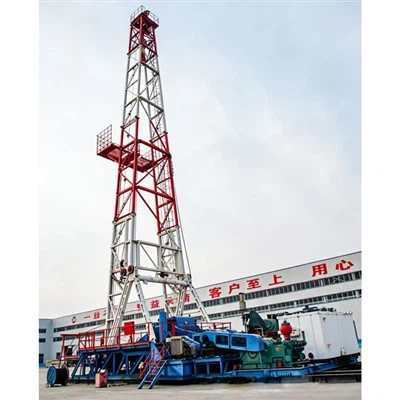
So if you’re working on an oilfield project, whether it’s onshore drilling, offshore production, fracking, or well maintenance, don’t make the mistake of assuming any pump will work. The small upfront savings of a non-specialized pump will almost always end up costing you more in repairs, downtime, and safety risks. If you’re looking for reliable, purpose-built oilfield pumps that can handle abrasive fluids, high pressures, extreme temperatures, and remote operating conditions, we’re here to help. Reach out to our team to discuss your specific needs, get a customized recommendation, and learn how our pumps can keep your operation running safely and efficiently.
Mud Pump References
Hydraulic Institute. (2020). Pump Standards for Petroleum Production and Processing. Hydraulic Institute.
American Petroleum Institute. (2019). API Standard 673: Centrifugal Pumps for Petroleum, Petrochemical, and Natural Gas Industries. American Petroleum Institute.
National Fire Protection Association. (2021). NFPA 70: National Electrical Code, Article 500 (Hazardous (Classified) Locations). National Fire Protection Association.
Messa, G. V., et al. (2018). Abrasive Wear in Centrifugal Pumps for Drilling Fluids: A Review. Wear, 408-409, 1-18.
Shandong Rongli Intelligent Manufacturing Co., Ltd.
We’re well-known as one of the leading oilfield pump manufacturers and suppliers in China, featured by quality products and good price. Please rest assured to wholesale high-grade oilfield pump for sale here from our factory. Also, quotation is available.
Address: No.3336, Haidai North Road, Qingzhou City, Shandong Province, 262515, P.R.C.
E-mail: Support@rongligroup.com
WebSite: https://www.oilequipmentsupply.com/
