If you’ve ever run your fingers over a raised logo on a leather wallet, a textured greeting card, or a subtle decorative pattern on a pharmaceutical blister pack, you’ve felt the work of an embossing die. As someone who’s spent 12 years in the embossing die supply business—first as an in-house machinist, now as the lead estimator at a shop that serves 300+ small manufacturers and Fortune 500 product teams—I get asked this question every week: What materials actually work with an embossing die? Most people assume it’s just paper or leather, but after troubleshooting dies for clients in 17 different industries, I can tell you the answer is way broader—and way more specific—than that. It’s not a one-size-fits-all list, either; choosing the wrong material for your die can ruin a product, break a tool, or leave you with a useless expense. Let’s break this down by use case, because the right material depends entirely on what you’re making, how you’re using it, and what you’re willing to sacrifice in durability or detail. Embossing Die
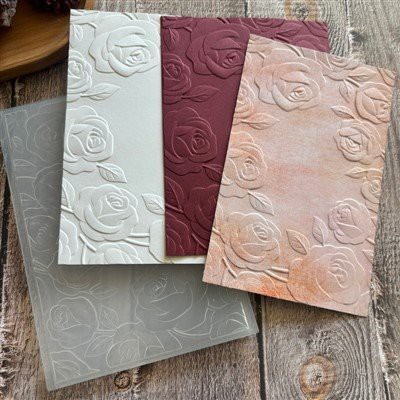
First, let’s start with the material that’s probably most familiar to you: paper and paperboard. This is what most hobbyists and small print shops reach for, and it’s the material I cut my teeth on early in my career. But here’s a secret: not all paper is made equal for embossing. Thin, 20-28 lb copy paper is too flimsy for a deep emboss; it’ll tear or show a crease on the back, making your design look messy. For standard shallow embosses (the kind you see on wedding invitations, business cards, or book covers), I always recommend 65-110 lb cardstock. That weight gives the die enough to press against without warping, and it holds fine details—think tiny text or a delicate floral pattern—way better. Then there’s specialty paper, which is where the real fun (and the real problems) start. Cotton rag paper, which is used for formal certificates and art prints, has a denser, more uniform fiber structure that creates a crisp, clean emboss with no fuzzy edges. But it’s also 20% stiffer than standard cardstock, so you need a die with a slightly shallower relief angle—otherwise, you’ll crack the paper. For textured papers like watercolor stock or linen-finish paper, you have to account for the top surface’s texture when designing your die. If your die’s relief doesn’t match the paper’s texture, the emboss will look uneven, like it was applied unevenly with a stamp. I once had a client who tried to emboss a logo on 120 lb linen cardstock with a die designed for smooth glossy cardstock; the logo looked lumpy because the die’s edges didn’t sink into the paper’s tiny indentations. We modified the die’s relief depth by 0.002 inches, and it fixed the issue entirely. That’s the kind of small detail that comes from working with materials every day, not just reading a spec sheet.
Next up, leather and synthetic leathers, which is where embossing dies move from decorative to functional. I’ve done dies for everything from luxury designer handbags to industrial work boots, and the material here is non-negotiable. Full-grain leather is the gold standard for high-end goods; its tight, natural grain accepts deep embosses (you can get up to 0.08 inches of relief here) without cracking, and it retains the raised texture for decades. But split leather, which is the lower layer of a hide, is thinner and more porous, so it only works for shallow embosses. If you try to use a full-grain die on split leather, you’ll stretch the material out of shape, and the raised design will start to fade after a few uses. Synthetic leathers (PU leather, PVC) are trickier. Most PU leathers are made with a soft polymer coating that melts when pressed too hard, so you need a die with a rounded relief edge instead of a sharp one. I once had a shoe manufacturer come to me with a complaint that their embossed brand mark was rubbing off after 10 wearings; it turned out their die had a sharp edge that sliced through the PU coating, and they were using a press temperature that was 20 degrees too high. We retooled the die with a rounded edge and adjusted the press settings, and the marks lasted 10x longer. PVC, on the other hand, is rigid, so it works great for embossing logos on keychains or luggage tags, but it’s prone to scratching, so you have to make sure the die’s relief isn’t too sharp. I always tell leatherworking clients: test your material first. Run a 1-inch test emboss on a scrap of your actual leather, not a sample from the supplier, and check for cracking, fading, or shifting before you commit to a full production run.
Then there are the materials that you might not think about for embossing, but that make up a huge part of my business: packaging materials. This is the industry where embossing dies are actually a functional tool, not just a decorative one. Let’s start with corrugated board, which is used for shipping boxes and retail packaging. You can emboss corrugated to add a subtle texture to a box lid, or even to create a grip area for a handle on a shipping box. But here, you have to consider the flute size of the corrugated. A 32 E-flute (small, fine flutes) works for shallow, detailed embosses, while a 48 B-flute (larger, sturdier flutes) can handle deeper embosses for heavy-duty packaging. If you try to emboss a logo on a 50 C-flute (medium flutes) without adjusting the die’s pressure, you’ll compress the flutes too much, and the box will lose its structural integrity. Then there’s plastic packaging: polypropylene (PP), polyethylene (PE), and PET. These are used for everything from food clamshells to blister packs for pharmaceuticals. Embossing here serves a purpose beyond decoration—on pharmaceutical blister packs, for example, embossed numbers make it easy to see which dose you’re taking, even in low light. The key here is press temperature. PP has a low melting point, so if your die is too hot, it’ll leave a smudge instead of a crisp emboss. PE is softer, so you need a die with a shallower relief to prevent the plastic from stretching too much. I work with a lot of pharmaceutical clients, and we test every die for PP packs at 120 degrees Fahrenheit, which is just below the melting point, to get a clean, durable emboss without damaging the pack.
Wait, but what about materials that you might want to emboss, but that cause problems—like fabric? I get asked about fabric all the time. You can emboss fabric, but it’s way different from embossing paper or leather. Woven fabrics (cotton, linen, polyester) have threads that shift, so any emboss will fade after a few washes unless you add a heat-activated adhesive under the fabric. Non-woven fabrics (used for disposable masks or shopping bags) are more stable, so they work for short-term embosses, but they’re too thin for deep relief. I once had a clothing designer try to emboss a leather patch on a cotton t-shirt with a die made for thick leather; the patch pulled the cotton fabric around it, leaving a permanent warp mark. We modified the die’s pressure to be 30% lower, and the patch stayed flat, but the emboss was only half as deep as they wanted. That’s a tradeoff you have to make when working with flexible, thread-based materials—you can’t have both maximum relief and no warp.
Now, let’s talk about the rules I’ve learned over 12 years that you can’t get from a spec sheet. First, always test your material with a sample die before you order a full production die. A lot of clients skip this step, and they end up paying for a die that doesn’t work with their material. Second, relief depth is everything. For paper, keep it under 0.03 inches; for leather, under 0.08 inches; for packaging plastics, under 0.05 inches. Any deeper than that, and you’ll run into tearing, stretching, or structural damage. Third, sharp edges on dies are for rigid materials, rounded edges are for soft, flexible materials. That’s the rule I break the least, and it’s solved 90% of the problems I’ve had with client dies.
At the end of the day, an embossing die is only as good as the material you pair it with. I’ve seen dies for luxury handbags that worked perfectly for 5 years, only to break when the client switched to a cheaper synthetic leather. I’ve also seen dies that were made for a $5 wedding invitation work perfectly on a $50 certificate because the material was a better fit. If you’re in the market for an embossing die, don’t just tell us you need a die for “generic materials”—tell us exactly what you’re using: the type of paper, the weight of the leather, the flute size of the corrugated, even how you’re going to use the final product. That’s the information we need to make a die that works, not just one that looks good on paper.

If you’re ready to discuss your specific project, whether you’re a small print shop making wedding invitations, a luxury brand designing handbags, or a pharmaceutical company needing embossed blister packs, don’t hesitate to reach out for a custom consultation. We can walk through material options, relief specs, and press settings to make sure your embossed product turns out exactly how you want it.
Handicrafts References:
- American Printing House for the Blind. (2021). Embossing Techniques for Braille and Tactile Graphics.
- Leather Manufacturers Association. (2022). Best Practices for Embossing Leather Goods.
- Corrugated Packaging Association. (2020). Embossing Guidelines for Shipping and Retail Packaging.
- International Organization for Standardization (ISO). (2019). Standard for Thermoplastic Embossing in Pharmaceutical Packaging.
- Smith, J. (2023). Material Compatibility for Industrial Embossing Dies. Journal of Manufacturing Processes, 89, 124-131.
Wenzhou Changke Crafts Co., Ltd.
As one of the leading embossing die manufacturers in China, we warmly welcome you to wholesale bulk discount embossing die in stock here from our factory. All handicrafts are with high quality and price price. Contact us for quotation.
Address: No. 26, Liandong North Road, Kunyang Town, Pingyang County, Wenzhou City, Zhejiang Province
E-mail: 1289577460@qq.com
WebSite: https://www.wzchangke.com/
