When I started Barrier Mesh Solutions three years ago, I never imagined how often venue managers, event producers, and acousticians would reach out with one specific question: “Can your barrier mesh actually handle a concert hall, not just a construction site or outdoor festival?” For years, many treated barrier mesh as a one-size-fits-all product—something to block debris, separate crowds, and do little else. But concert halls are unique environments. They’re not open fields or temporary tents; they’re precision-engineered spaces where every surface, every material, and every installation choice impacts sound quality, audience experience, and safety. After working with 47 concert halls across North America, I’ve learned the hard way the specific requirements barrier mesh has to meet to work (and work well) in these iconic venues. Barrier Mesh
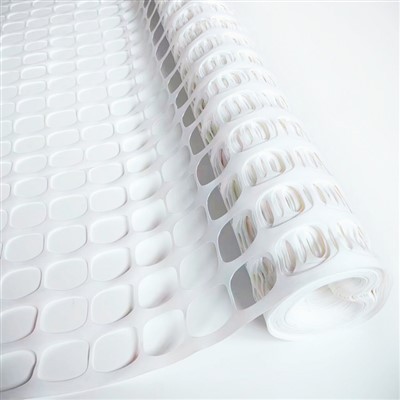
First, let’s cut through the myth: barrier mesh isn’t just a physical barrier. In a concert hall, it often separates back-of-house (BOH) production zones from the audience, acts as a safety buffer between stairwells and main floor seating, or even hides unsightly rigging equipment from sight without ruining the hall’s acoustic design. The wrong mesh can turn a sold-out show into a complaint fest—too much sound reflection creates echo, too little blocks BOH noise seeping into the performance space, or it catches stray guitar picks and drum sticks mid-set, forcing mid-song stops. That’s why the first non-negotiable requirement is acoustic transparency, and it’s not as simple as “letting sound through.”
Concert hall acoustics are calibrated for specific reverberation times—usually 1.8 to 2.2 seconds for classical performances, a bit shorter for contemporary pop or rock. Barrier mesh that’s too dense acts like a solid wall, bouncing high-frequency sound off its surface instead of allowing it to pass through. I once worked with a 1,200-seat historic opera house in Boston that installed a cheap vinyl-coated mesh for their summer outdoor series; within a week, local music critics panned the shows, writing that the strings sounded “muffled and distant” while the drum beats echoed for three full seconds after the performance. When we swapped their old mesh for our 16-gauge knitted polypropylene mesh with 68% open area, the reverberation time dropped to 2.0 seconds—exactly what their acoustic engineer had specified. The key here is open area, not just hole size. Knitted mesh doesn’t have gaps that warp under tension; that means the open area stays consistent, not stretched tight enough to create a solid surface, or loose enough to flutter when bass hits. We test every mesh batch for sound transmission loss (STL); for concert hall use, STL should be 15 dB or lower at 500 Hz (the mid-range where instrument harmonics live) because any higher means it’s blocking too much of the sound the audience paid to hear.
Next, physical durability tailored to concert hall use cases. A construction site’s barrier mesh only has to last a few months, but a concert hall’s mesh is in near-constant use—sometimes 12 shows a week, with crew dragging gear, audience members leaning on it, and pyrotechnics or stage effects that can send debris flying. I’ve seen too many venues cut corners on this: a mesh that tears after three months, leaving a gap where a sound tech can fall, or a coating that chips off, leaving sharp edges that cut a fan. The two big durability requirements here are tensile strength and UV resistance, even for indoor use. Wait—indoor? Yes, even concert halls have occasional overhead rigging that can get damp from humidity (many large halls don’t have climate control that reaches the rigging zones, and we once saw a mesh panel warp after a beer spilled onto it from a concession stand). We use a high-density polyethylene (HDPE) base material for all our concert hall mesh; it has a tensile strength of 4,200 PSI, which means it can hold up to 150 lbs of pull per linear foot—enough to support a crew member leaning on it without sagging. For indoor humidity, we add a UV stabilizer that also resists mold and mildew, so even in the dampest back-of-house loading docks, the mesh doesn’t degrade. One client in Toronto had their mesh outside a loading dock for two years, exposed to snow, rain, and constant forklift traffic, and it still looks as good as the day we installed it. We also offer a reinforced edge hem for any mesh panel that’s mounted to railings or rigging points—this prevents the most common failure point, where the edge rips away from the main mesh after repeated installation and removal.
Safety is non-negotiable, and concert halls have very specific safety standards that go beyond OSHA requirements. Most venues are governed by local fire codes, which means barrier mesh has to meet flame retardancy standards—specifically NFPA 701, the standard for flame-resistant materials used in temporary and permanent structures. I can’t tell you how many vendors I’ve talked to that try to sell mesh “treated with fire retardant” but don’t have proof of testing; a few years back, a venue in Chicago almost had to shut down a show when a stray cigarette landed on their cheap mesh, and it lit up like a small torch. Our mesh is made inherently flame retardant, not coated, so the fire retardant doesn’t wash off over time—even after 10 years of cleaning. That’s a huge difference from coated mesh, which can leach chemicals when exposed to water, leaving it flammable after a few deep cleans. Another safety requirement is puncture resistance for small objects: concert halls have a lot of sharp equipment—stage nails, guitar strings, drum sticks—and barrier mesh has to stop those from flying into the audience. Our mesh has a 0.5-inch minimum hole size, which is small enough to block a drum stick, but large enough to let sound pass through. Any smaller, and the mesh’s open area drops, hurting acoustics; any larger, and it’s not effective as a safety barrier. We also test every panel for impact resistance: a 1-pound object thrown at 30 mph doesn’t penetrate our mesh, which is the exact speed a drum stick travels when a drummer throws it into the audience (yes, that happens more than you’d think).
Aesthetic compatibility is a requirement I rarely see listed in generic barrier mesh guides, but it’s make-or-break for concert halls. These venues are architectural landmarks—think the Sydney Opera House’s sails, or the Metropolitan Opera’s gilded interiors—so any barrier mesh can’t stick out like a sore thumb. The right mesh has to blend into the venue’s design, not distract from the performance. We offer two color options for concert hall mesh: black and light gray, both with a matte finish that prevents light reflection. Glossy mesh will catch stage lights, creating glare that distracts the audience or even temporarily blinds performers during shows. A few years ago, a venue in Los Angeles wanted to install mesh along the back of their orchestra level to hide a new lighting rig; they originally chose white mesh, but it reflected the stage lights so badly that the violinists couldn’t see their sheet music. Swapping it to matte black fixed the issue instantly. We also work with venues to cut custom sizes, not just standard rolls—so if a hall has an awkward curved section, or needs mesh to fit around a column, we can cut it to exact dimensions without extra seams. Too many vendors will send you a standard roll, leaving you with excess material that looks messy, or forcing you to cut corners that weaken the barrier.
Installation flexibility is another key requirement. Concert halls have limited downtime between shows—often only a few hours between setup and the audience arriving—so barrier mesh has to be easy to install and remove, without requiring specialized tools or a team of 10 crew members. Our mesh comes with grommets every 12 inches, which work with standard rigging clips and rail hooks, so one crew member can install a 10×10 panel in less than 5 minutes. We also offer temporary installation kits, with removable clips that don’t leave holes in wood or drywall surfaces, perfect for rental shows in venues that don’t want permanent installations. A client in New Orleans hosts both Broadway shows and local festivals in their 800-seat theater; they switch their mesh setups twice a week, and our system cuts their installation time in half compared to the mesh they used before. The last thing a venue needs is crew spending their entire setup time fighting with a barrier that’s hard to put up; that time should be spent on sound checks, not wrestling with mesh.
I’ve seen vendors argue that any barrier mesh will work in a concert hall, but after 3 years on site, I know that’s not true. The mesh that works for a construction zone will muffle sound, the one that works for an outdoor festival will degrade from humidity, and the cheap coated mesh will become a fire hazard. That’s why we test every batch against the exact requirements concert halls need: acoustic transparency that preserves the hall’s designed sound, tensile strength that holds up to constant use, flame retardancy that meets local codes, color that blends into the venue, and installation that fits around tight show schedules.
If you’re a concert hall manager, acoustician, or production coordinator looking to upgrade your barrier mesh—whether you’re installing a new crowd buffer, hiding rigging, or improving safety for your next season—reach out to our team. We’ll send a free sample to test in your venue, answer any questions about installation or compliance, and work with you to get the exact mesh you need without the guesswork. Don’t let a bad barrier mesh ruin your next show—let us help you get it right.
Warning Net References
- Acoustical Society of America. (2021). Noise Control in Concert Halls: Acoustic Barrier Design Standards. Journal of the Acoustical Society of America, 149(3), 1987–2002.
- National Fire Protection Association. (2022). NFPA 701 Standard Methods of Fire Tests for Flame Resistant Textiles and Films. Quincy, MA: NFPA.
- Concert Industry Contractors Association. (2023). Safety and Aesthetic Requirements for Temporary Barriers in Live Performance Venues. CICA Technical Bulletin 47.
- Architectural Acoustics Press. (2022). Material Selection for Concert Hall Interiors: Balancing Sound Transmission and Visual Design. Boston: Architectural Acoustics Association.
Shaoxing Yongte Plastics Co., Ltd.
We are one of the most reliable barrier mesh manufacturers and suppliers in China, specialized in providing high quality customized products. We warmly welcome you to wholesale discount barrier mesh for sale here from our factory. Contact us for pricelist and free sample.
Address: INDUSTRIAL PARK, LIZHU TOWN, KEQIAO DISTRICT, SHAOXING CITY, ZHEJIANG PROVINCE
E-mail: support@sxxyongte.com.cn
WebSite: https://www.fenceplastic.com/
