Alright, let’s cut to the chase: if you work in PET preform molding, you already know the mold is the star of the show—but let’s be real, even a top-tier, precision-machined PET preform mold won’t spit out consistent, high-quality parts if the operator messing with it isn’t on their A-game. As someone who’s been supplying these molds for over a decade now (I’ve sat through 100+ training sessions with new shop floor folks, trust me), I can tell you most issues I field from clients boil down to operator gaps, not mold defects. Let’s break down exactly what these operators actually need, no jargon, no fluff—just real, on-the-job requirements that keep production running and waste down. PET Preform Mold
First, let’s start with the basics that everyone assumes is common knowledge, but so many new hires skip: deep working knowledge of PET resin and process basics. Wait, not just “I know PET is plastic”—more like, they get that PET isn’t like, say, PP or HDPE. PET has this weird sweet spot for moisture content—like, not too dry, not too wet. If it’s even a tiny bit over 0.02% moisture, you get splay marks on preforms, those faint silvery streaks that make a whole batch get tossed. I once had a client who blamed their new $50k mold for splay, and it turned out their operator had been using the same dryer setting for PP runs, not resetting it for PET. That’s a $2k waste of resin and a whole day of downtime. Good operators don’t just tweak injection pressure—they check resin moisture levels first thing every shift, track how different resin batches (even from the same supplier!) behave, and know to adjust drying time when humidity spikes in the shop (hello, summer in the Southeast US, when my molds deal with that 24/7). They also get that PET has a narrow melt temp window—like, 270°C to 295°C is where you want to be; too low and you get short shots, too high and you get preform degradation, which leads to yellowing and weak bottle walls later. That’s not “machine setup 101”—that’s specialized for PET, which is non-negotiable for preform quality.
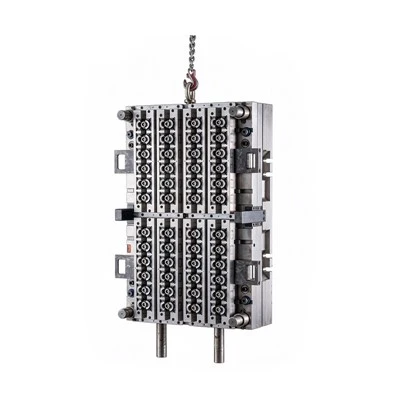
Next up: hands-on proficiency with PET preform mold-specific equipment and maintenance. Let’s be clear, this isn’t running a generic injection mold. PET molds run at higher injection speeds and pressures than other plastics, because you need that melt to fill the thin, long preform cavities before it cools too fast. So the operator needs to know how to adjust the injection profile specifically for PET—like, the first stage is fast to fill the gate area, second stage is controlled to pack material without flash. They can’t just use a one-size-f-all profile from an old PP job. Also, since we supply hot-runner molds (90% of our PET molds are hot-runner now, no cold runners to mess with), the operator has to handle hot runner components correctly. No touching the nozzle tips with bare hands—those are at like 300°C—and they know how to clean the heater coils without damaging them. A bad cleaning job can lead to hot spots in the mold, which cause uneven preform wall thickness. Oh, and routine mold checks—they need to do a visual inspection of the mold’s cavities every 2000 shots, check for any gate wear, flash on the mold parting line, or leaky cooling lines. Last quarter, a client’s operator missed a tiny gate burr on one cavity, and that burr scratched preform necks, leading to 50,000 rejected bottles. So it’s not just “run the machine”—it’s small, daily mold-specific maintenance that prevents big losses.
Then there’s quality control (QC) discipline tailored to PET preforms, not generic plastic parts. I can’t tell you how many operators check a preform for flash and call it good, but miss that the neck dimensions are off by 0.05mm. That might not sound like much, but that neck has to fit perfectly on a bottle blowing machine—too big and it leaks, too small and it snaps off. Good operators don’t just grab a preform and eyeball it. They use a go/no-go gauge for the neck finish, check wall thickness with a micrometer (or even better, an ultrasound gauge) every hour, and test the preform’s parison weight to make sure it’s consistent. Also, they know how to spot inconsistencies that the machine’s sensors might miss—like, a slight variation in preform opacity that could mean resin contamination or mold cooling issues. My go-to clients are the ones who make an operator write down every QC check, not just click a button on a tablet. That paper trail lets us troubleshoot issues fast when something goes wrong.
Wait, here’s a big one that’s often overlooked: problem-solving under pressure, without panicking. PET preform lines are fast—some of our molds run at 12,000 shots per hour. If something goes wrong—like a stuck preform in the mold, a clogged gate, or a cooling line blockage—you don’t have time to call a supervisor and wait. I’ve seen new operators shut down the whole line over a tiny stuck preform, wasting 20 minutes, while a seasoned operator would pop it out with a wooden pick (metal can scratch the cavity) and get back to running in 10 seconds. Also, they know how to troubleshoot common issues without blaming the mold immediately. Is the preform yellowing? Don’t say “your mold is bad”—check the melt temp, check the dryer, check the resin. Is there flash? Don’t say “your mold’s parting line is worn”—check the injection pressure, check the clamping force. Most of the time, it’s a process tweak, not a mold failure—and good operators can figure that out fast.
And let’s not sleep on compliance and safety, specifically for PET molding. Wait, not just general OSHA stuff—PET has specific hazards. When you dry PET, you’re releasing VOCs (volatile organic compounds) that can build up in a closed shop. Good operators make sure the dryer vents are working, not blocked by resin bags. Also, when handling hot molds (during cleaning or maintenance), they use the right PPE—heat-resistant gloves, face shields, not just work gloves. I’ve had clients tell me their operator skipped a face shield and got molten PET in their eye, which shut down production for a week. Also, food-grade PET preforms (the ones for water bottles, soda) need extra compliance—operators have to make sure the mold is cleaned with food-safe agents, not regular solvents, and that they don’t cross-contaminate resin runs (like running a non-food grade resin right before food-grade). That’s not just rules—it’s a big deal for clients who supply major beverage brands, so operators have to take that seriously.
Now, let’s be real: this isn’t entry-level stuff. You can’t train someone with 6 months of generic injection molding experience to be a great PET preform mold operator overnight. The best operators are the ones who get 1-2 years of specific PET experience, who’ve worked on multiple hot-runner molds, who know how to read a mold’s process sheet and tweak it to their line’s conditions. But even new hires can get there if they get the right training from the start.
Here’s the thing: when you invest in a high-quality PET preform mold from us, you don’t just buy a piece of metal and precision machining. You’re counting on that mold to run for millions of shots with minimal downtime, and that starts with the operator. A bad operator can ruin a great mold, but a great operator can make a mid-tier mold perform way above its weight. If you’re struggling with consistent preform quality, high waste, or frequent mold downtime, it might not be the mold—it might be your operator.

If you’re looking to upgrade your PET preform mold or train your team on best practices, don’t hesitate to reach out. We’ve got a team of experts who can walk you through operator training, mold setup, and troubleshooting to make sure your line runs like a well-oiled machine.
Medical Injection Mold REFERENCES
- The Society of the Plastics Industry (SPI). (2021). Guidelines for PET Preform Manufacturing and Process Control.
- International Moldmakers Association (IMA). (2022). Operator Competency Standards for Precision Plastic Molding.
- Dow Chemical. (2020). PET Resin Processing Guide for Packaging Applications.
Taizhou Koni Mould Co., Ltd.
As one of the most professional pet preform mold manufacturers and suppliers in China, we also support customized service. Please feel free to wholesale high quality pet preform mold made in China here from our factory. For pricelist, contact us now.
Address: No. 97 Jinju Road, Chengjiang Subdistrict, Huangyan District, Taizhou City, Zhejiang Province
E-mail: kn@kenimould.com
WebSite: https://www.kenimouid.com/
