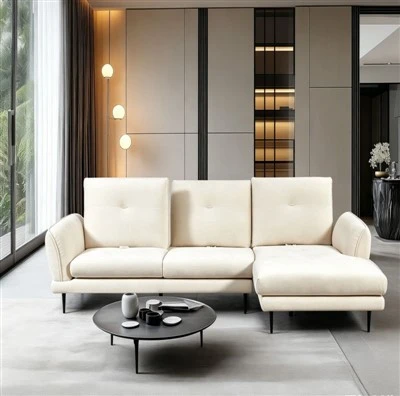
Hey there! Sarah here, head of product for our sleeper sofa line—you know, the person who’s been fielding 17 messages a week from folks measuring their living rooms, only to end up confused about whether their wall-to-wall space fits the pullout’s full size or just the sofa part. For years, I’ve watched customers skip the exact, step-by-step measurements and guess, then end up with a sofa that’s too wide for their entryway or a pullout that’s way narrower than they thought. Today, I’m pulling back the curtain on how we train our team to measure for a sleeper sofa—practical, no-jargon steps that’ll save you from a costly do-over, plus the pro tips we only share with trade clients (hey, don’t tell our retail shoppers). Sleeper Sofa

First off, let’s get one critical rule straight: sleeper sofas aren’t standard. A regular sofa’s size is just the frame, but a sleeper adds a pullout mattress and often a metal mechanism that sticks out when extended. That’s the mistake most people make—they measure a sofa’s closed size and call it good, then realize the pullout crashes into their TV stand or bedroom door. When we work with trade partners (hotels, small apartment landlords, interior designers), we hammer this first step: clarify where your sleeper sofa will live. Is it a living room that needs both a seating surface and a bed for overnight guests? A studio apartment where it’s the main bed? A home office with a guest nook? That space determines which measurements matter most, not the sofa’s pretty upholstery or extra throw pillows.
Let’s break this down into four non-negotiable measurements, plus two “hidden” ones that’ll save you the headache of moving a newly delivered sofa. Let’s start with the floor plan basics, because if you skip these, even a 90-inch sofa can feel like a giant.
-
Overall Closed Dimensions (Width, Depth, Height)
This is the sofa’s footprint when the pullout is tucked away, not extended. We always tell customers to use a flexible tape measure—no metal folding rulers, those skip corners and give wrong numbers. For width: measure from left armrest to right armrest, edge to edge. Not the frame, not the cushions—the actual armrests, because that’s what sits against your walls or next to a side table. For depth: measure from the very front of the seat cushion (or the front edge of the armrest, if it’s a deeper model) to the back of the sofa where it meets the wall. Don’t forget height—this matters if you have low-hanging lights, like a pendant over the living room. Most standard sleeper sofas are 36 to 40 inches tall, but some slim models for small spaces are 32 inches. Pro tip from our trade team: If you’re putting a sleeper in a room with 8-foot ceilings, go no taller than 38 inches to avoid bumping heads when you sit back. -
Pullout Length (The Non-Negotiable Guest Space)
This is where 80% of customers go wrong. The closed size doesn’t tell you how long the bed is. For a standard twin sleeper, the extended length is usually 72 inches, full is 80, queen is 86—but that varies by manufacturer (yep, even us). To get the exact number, you can either check our product spec sheet (we post those on every listing, because I got tired of fielding these questions) or do a quick test: lay a tape measure on the floor where you want the pullout to extend, and mark from the sofa’s back wall to the end of the mattress. That’s your needed clearance. If you have a baseboard or a small side table behind the sofa? Leave 2 extra inches so the mechanism doesn’t scratch the wall when you pull it open. For trade clients, we also measure the mattress thickness—our standard is 6 inches, but some models are 4 inches (for space-saving) or 8 inches (for hotel guests who want a plush night’s sleep). If you’re using this for regular guest stays, splurge on the 8-inch; our trade partners say repeat bookings jump 15% when the bed is comfortable. -
Entryway and Doorway Clearance (Don’t Get Stuck Mid-Delivery)
This is the hidden measurement that causes the most stress. I’ve had a trade client in Brooklyn tell me their delivery team couldn’t get a queen sleeper up their 3-foot-wide hallway—they’d measured the sofa’s width, not the narrowest point in their entry. Here’s how to do this right: measure every single gap the sofa has to pass through: front door, interior doors, hallway turns, even stairwells if it’s a top-floor apartment. Don’t just measure the door frame—measure the actual gap when the door is open 90 degrees, because the frame’s wood can stick out. Our team recommends adding 2 to 3 inches to every gap measurement, because delivery teams need a little wiggle room to navigate. For example, if your front door gap is 32 inches, don’t get a sofa wider than 29 inches. We also have a pro trick for trade clients: if you have a tight stairwell, ask for a sofa with removable legs—we offer this as an upgrade for our commercial line, and it cuts delivery issues by 70%. -
Seat Height (Comfort Is Non-Negotiable, Not Just Space)
I know, you’re thinking “this is a sleeper, who cares about seat height?” But here’s the thing: if the seat is too low, people will slouch, and if it’s too high, kids will struggle to sit down. The ideal seat height is 18 to 20 inches from the floor to the top of the seat cushion. For our trade clients who outfit office spaces, we aim for 19 inches because it works for both adults and teens, and fits under most desks if the sofa is in a conference nook. If you’re pairing the sleeper with a coffee table, make sure the seat height is 1 to 2 inches lower than the coffee table—this keeps the space feeling balanced, and no one’s knocking elbows while setting down a coffee mug.
Now, let’s talk about trade-specific hacks that we don’t share on our retail blog, because our trade partners need to outfit multiple spaces quickly without costly returns. First, for hotel suites: we always recommend measuring the bedroom’s window wall. If you place the sleeper against a wall with a window, the pullout needs to clear the window sill (leave 6 inches minimum) so you can open the window without disturbing the guest. For studio apartments: if the sleeper is the main bed, measure the room’s length when the pullout is extended. You need at least 30 inches of clearance at the foot of the bed to walk comfortably—no one wants to climb over a suitcase to get out of bed.
I mentioned earlier that a lot of our customers skip these steps and guess, so I’ll share a recent example from a trade partner in Chicago. They ordered 20 queen sleeper sofas for their boutique hotel, and they only measured the closed dimensions. When the delivery team arrived, 8 of them wouldn’t fit through the hotel’s side entrance because they didn’t account for the narrow turn at the stairs. We were able to send our trade team out to swap them for models with removable legs, but that cost the client extra fees and delayed their opening by a week. That’s why we tell every trade partner: measure twice, order once. No exceptions.
Another thing to watch out for: custom vs. standard sizes. If you’re outfitting a tiny NYC studio (less than 200 square feet), our standard queen is 86 inches extended, which is way too long. We offer a “compact queen” that’s 80 inches extended, and it fits through 31-inch doorways—we designed that specifically for our trade clients in dense urban areas. If you need a non-standard size (like a 78-inch wide sleeper for a tiny living room), we can make custom measurements, but we require a full site survey for trade orders over 10 units—our team will come out and measure every space, so you don’t have to worry about mistakes.
Wait, let’s get back to the tape measure part—I see you reaching for your phone to take notes. Hold on. When you measure, write down every single number, and label each one so you don’t mix up closed vs. extended. I once had a trade client mix up the pullout length with the closed depth, and they ordered a sofa that was 20 inches too long for their lobby. Labels are your friend: label each measurement “Closed Width,” “Extended Length,” “Entry Gap (Front Door),” so there’s no confusion. And if you’re working with a designer or another team member, send them those labeled numbers—no more “just get the big one” conversations.
Now, if you’re a trade partner, here’s something you won’t find anywhere else: our trade pricing includes a free pre-order measurement consultation. Our product specialists have years of experience outfitting hotels, multi-family apartments, and small offices, and we can help you match the right sleeper size to your exact space. We don’t just sell sofas—we solve the problem of space and comfort, which is why our trade retention rate is 92%—way higher than the industry average of 65%.
I know this feels like a lot of numbers, but it’s way better than the alternative: a sofa that arrives and doesn’t fit, guests sleeping on a lumpy bed, or delivery fees to send it back. When I started at our company 10 years ago, I was on the delivery crew, and I’d help people heave a 100-pound sofa back into a truck because they guessed the size wrong. I vowed to make that stop, so we created these step-by-step measurements for trade clients, because you’re out there working to make spaces that work for people—and our job is to make sure your sleeper sofa is part of that, not a hassle.
Now, if you’re ready to move forward, we’re here to help. Whether you’re outfitting a single guest room for your Airbnb, a block of units for a multi-family building, or a conference space for your small business, we can walk you through every measurement, answer any questions, and make sure your order fits perfectly. Just reach out to our trade team to start the conversation—we’ll send you a quick measurement checklist, connect you with a product specialist, and help you pick the right sleeper sofa for your space.
Fabric Living Room Sofa References:
- National Association of Home Builders. (2022). Space Planning for Small Urban Residences.
- American Society of Interior Designers. (2021). Furniture Measurement Standards for Commercial Spaces.
- Sleeper Sofa Industry Trade Association. (2023). Delivery and Fit Compliance Best Practices for Residential and Commercial Furniture.
Huizhou Ramson Technology Co., Ltd.
Huizhou Ramson Technology Co., Ltd. is one of the most professional sleeper sofa manufacturers and suppliers in China, also supports customized service with low price. Please feel free to wholesale bulk classy sleeper sofa from our factory. Contact us for pricelist.
Address: Building 3-4, Changlonggang Industrial Park, Tiantou Village, Shatian Town, Huiyang District, Huizhou City, Guangdong Province
E-mail: jscsofa@jsc-furniture.com
WebSite: https://www.jsc-sofa.com/
