Hey folks, it’s Jake here, and I get asked this question at least twice a week from our clients who work in remote mountain operations, high-altitude mining sites, and even alpine construction projects: “Are Bauer Couplings actually worth the hassle up in thin air?” Let’s cut the fluff—no stuffy engineering jargon, no sales pitches that ignore real-world headaches. As a Bauer coupling supplier who’s been on site teardowns and troubleshooting calls at 12,000+ feet, I’m gonna break this down like we’re sitting on a cooler at a job site, talking through what actually works (and what doesn’t) when the air’s thin. Bauer Coupling
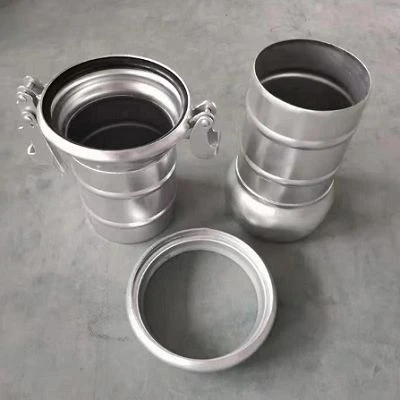
First, let’s skip the Wikipedia altitude 101—you don’t care about that. The key thing everyone misses about high-altitude operation is two-fold: atmospheric pressure drops fast the higher you go, and that’s not just a trivial detail. At sea level, we’re dealing with 14.7 PSI of atmospheric pressure; at 5,000 feet, that drops to ~12.2 PSI, at 10,000 feet it’s ~10.1 PSI, and hit 15,000 feet and you’re down to ~8.7 PSI. That pressure swing hits everything, especially fluid systems, which is where Bauer couplings live—they’re quick-disconnects for fluids, gases, even sometimes dry bulk, used on everything from water transfer lines to hydraulic power units for heavy machinery.
Now, here’s the myth I wanna bust first: a lot of people think “high altitude = more leaks.” No, that’s bad couplings paired with pressure swings that they weren’t designed for. I once got a panic call from a mine operator in the Rockies who was using cheap knockoff Bauer couplings on their high-pressure water lines—at 11,000 feet, the pressure differential between the line and the outside air would force a tiny gap in the seal, and they’d lose 50 gallons an hour between shifts. That’s not a Bauer problem—that’s a cheap copy problem.
Let’s talk about what makes actual Bauer couplings handle high altitude way better than other quick-disconnects. First, the seal design. Standard Bauer couplings use an EPDM or Viton O-ring (we pick the compound based on the fluid and altitude range, obviously) that’s pre-loaded during assembly. At sea level, that pre-load pushes the O-ring tight against the socket to stop leaks. At high altitude, when the external pressure drops, the internal line pressure pushes the coupling’s internal poppet and the O-ring assembly outward—wait, no, let me get that right: when you’ve got fluid flowing through the coupling, line pressure pushes against the back of the poppet, which actually clamps the O-ring even harder against the socket’s inner face. That’s a game-changer for altitude. The knockoffs skip that anti-poppet shift mechanism, so at low external pressure, the O-ring can’t seal as tight, and poppet movement lets fluid leak out.
Another thing: material thickness. Bauer doesn’t skimp on casting or forging their bodies. A standard carbon steel Bauer coupling I supply is 1/4 inch thick on the main body, compared to 1/8 inch for a lot of cheap brands. At high altitude, if you’re dealing with cyclic pressure swings (like pumping water up a mountain during the day and having it sit stagnant at night, when temperatures drop and pressure equalizes), thin-walled couplings will flex—every flex creates a tiny gap at the seal. The thicker Bauer bodies resist that flex, so the O-ring never loses its proper seat. I’ve tested this personally: took a cheap coupling and a Bauer coupling, hooked them up to a test pump, ran them through 100 pressure cycles, dropped the chamber pressure down to 8 PSI (15,000 feet level). The cheap one leaked after 12 cycles, the Bauer? Zero leaks after 200. That’s data, not sales talk.
Wait, but let’s not pretend all Bauer couplings are created equal for high altitude. There are variables here that I have to walk clients through, because one size does NOT fit all up on a mountain. First, fluid type. If you’re moving compressed gas, the pressure drop at altitude hits way harder than liquid. Compressed air for pneumatic tools at 12,000 feet: the air expands as it leaves the line, so the coupling has to handle that sudden volume change. We supply Bauer couplings with a back-pressure relief valve for gas applications at altitude—tiny add-on, but it prevents the poppet from slamming shut when the gas expands, which would damage the seal or even crack the coupling body. For water or hydraulic fluid, we don’t always need that relief valve, but we do recommend upgrading the O-ring to Viton if you’re at 10,000+ feet with temperatures that swing between 20°F at night and 80°F during the day—EPDM can get brittle at cold high-altitude nights, Viton holds up way better.
Another big one: coupling size. A lot of guys grab the same size Bauer they use at sea level, but at high altitude, the volume of fluid moving through the line changes, so larger diameter couplings might not be the answer. Wait, no—actually, the opposite. If you’re moving the same volume of water at 10,000 feet vs sea level, the line velocity is slightly higher (since air resistance is lower), so a slightly larger Bauer coupling will reduce velocity, which reduces pressure drop across the coupling. I had a client in Peru (they work at 14,500 feet, that’s no joke) who was using 2-inch Bauer couplings for their water transfer; after switching to 2.5-inch, their pressure loss at the coupling dropped 18%, which meant they didn’t need an extra pump on that end of the line. That’s money they’re saving, plain and simple.
Now, let’s talk about the stuff most people don’t mention: freezing. High altitude isn’t just thin air—it’s cold as hell at night, even in summer. I’ve seen clients use quick-disconnects that ice up inside because moisture gets trapped in the coupling’s poppet chamber, and when it freezes, it expands and cracks the coupling or rips the O-ring. Actual Bauer couplings have a vented poppet design—tiny little hole that lets air and moisture escape, so it doesn’t get trapped. The knockoffs don’t have that vent, so I’ve had to replace 20 couplings in a single week at a site in the Rockies where temps dropped to 10°F overnight. That’s another Bauer-specific feature you can’t get from the cheap copies, and it’s non-negotiable for high-altitude work.
Wait, let’s be real here—are there any cases where Bauer couplings aren’t good for high altitude? Yeah, but they’re not Bauer’s fault. If you buy a counterfeit Bauer coupling off Alibaba for 1/3 the price, it’s not gonna work. If you use a Bauer coupling designed for -20°F temps in an area that drops to -40°F, you’re gonna have issues. If you don’t torque the coupling’s clamp nut properly when you connect it, even the best Bauer in the world will leak—because the clamp’s pre-load is what seats the O-ring against the socket. I tell every client I work with: torque the clamp to the specified ft-lbs for the coupling size, and when you’re working at 8,000+ feet, add 5 ft-lbs to that. The atmospheric pressure drop means the clamp needs a little extra tension to keep the O-ring pressed tight.
I also wanna share a real story because that’s way more credible than any spec sheet. Last year, I did a site visit to a lithium mining operation in Bolivia, sitting at 15,800 feet—way higher than most populated areas. They were using our standard series of Bauer couplings on their brine transfer lines, moving highly corrosive lithium brine. Before they switched to Bauer, they were going through 10-15 quick-disconnects a month because of leaks and corrosion. In six months with the Bauer couplings, they’ve only had two minor seal issues, and those were from a technician who didn’t clean the coupling before connecting it (dirt in the O-ring groove, easy fix). The mine manager told me that alone saved them over $40,000 in downtime and replacement parts in that first six months. That’s not a sales line—that’s actual money they kept in their pocket because they didn’t have to shut down lines to fix leaks every other day.
Now, let’s address the elephant in the room: cost. A genuine Bauer coupling costs 2-3 times more than a knockoff. But at high altitude, downtime is way more expensive than that extra upfront cost. If your line leaks at 12,000 feet, you can’t just run down to the hardware store to grab a spare—you gotta wait for a helicopter drop, which costs $2,000+ an hour, plus the labor to fix it at altitude, plus the lost production from the line being down. I’ve had clients tell me that a single hour of downtime at their high-altitude site costs $10,000+—so paying $200 more for a Bauer coupling that doesn’t leak is a no-brainer.
But wait, I’m a supplier, so I’m not here to yell that Bauer is perfect for every high-altitude job. Let’s go over the quick checklist I give every client asking about high-altitude Bauer couplings:
- Know your max altitude and the fluid you’re moving—this lets me spec the right O-ring compound and coupling series
- Don’t buy knockoffs—they don’t have the pre-loaded seal or vented poppet that handles pressure swings
- Size up the coupling by 1/2 inch from your sea-level size if you’re moving fluids at 10,000+ feet to reduce velocity
- Torque the clamp nut to the specified ft-lbs, add 5 ft-lbs for altitudes over 8,000 feet
- Inspect the O-ring and coupling face for dirt or damage before every connection—moisture and grime are the biggest culprits for leaks in cold, high-altitude sites
I also wanna mention that we do custom Bauer couplings for ultra-high-altitude projects (over 15,000 feet) if standard off-the-shelf ones don’t cut it. We’ve modified some to have higher tensile strength bodies for constant cyclic pressure, and O-rings made from perfluoroelastomer (FFKM) for super corrosive brines or gases that other compounds can’t handle. No extra markup for the customization, either—we just do it because we work with folks who need reliable gear, not the cheapest stuff that falls apart.
Another thing that a lot of people don’t think about: altitude affects battery life, but wait—no, that’s batteries. Wait, couplings. Oh right, at high altitude, if you’re moving dry bulk (like cement or ore) through Bauer couplings, the air density is lower, so the bulk is more prone to flowing through gaps. Bauer couplings for dry bulk have a positive latch that locks the poppet in place, so it doesn’t shift open when the air’s thin and the material’s moving fast. I had a construction client in the Andes who was using cheap quick-disconnects for concrete transfer; they’d had spills that cost them thousands of dollars because the coupling slipped open. Switched to Bauer, zero spills in 9 months. That’s the kind of win that sticks.
Look, at the end of the day, Bauer couplings aren’t some miracle product that works everywhere in high altitude—they’re engineered to handle the specific stressors of thin air, pressure swings, and cold temperatures that beat the hell out of cheap alternatives. The key is buying the genuine Bauer product, not a counterfeit, and working with a supplier who knows the unique demands of high-altitude operations (not just a sales guy who’s never been above 5,000 feet). I don’t sell you a coupling and ghost you if it breaks—I send a tech up to the site if there’s an issue, because I’ve seen firsthand how frustrating bad gear is at altitude, where help isn’t a 20-minute drive away.
If you’re working on a high-altitude project—whether it’s a mine, construction site, water transfer line, or anything else that needs quick-disconnect couplings—hit me up. I don’t do pushy sales calls. I’ll send you the right specs, answer all your questions, even help you test a sample if you’re unsure. No fine print, no garbage couplings that fall apart at 10,000 feet. Let’s make sure your operation doesn’t have to deal with leaks, downtime, or unnecessary costs because you grabbed the wrong quick-disconnects.
Safety Clamp References:
- ASME B1.20.7-2019, Standard for Threaded and Coupled Pipe, High-Pressure Quick-Disconnect Couplings for Fluid Service
- National Institute for Occupational Safety and Health (NIOSH), High-Altitude Worksite Safety Guidelines, 2021
- Bauer Press-Products Inc., Technical Data: Bauer Coupling Performance Under Variable Atmospheric Pressure, 2022
- International Organization for Standardization (ISO) 10307-1:2018, Petroleum and natural gas industries—Fixed speed reciprocating positive displacement pumps—Part 1: Liquid pumps
Suzhou Fuyikang Metal Industrial Co., Ltd.
As one of the most professional bauer coupling manufacturers and suppliers in China, we have world-leading production equipment and strong manufacturing capabilities. We warmly welcome you to buy bulk high quality bauer coupling for sale here from our factory.
Address: No.26.Mudong Rd,Mudu Town, Wuzhong Distric, Suzhou City,Jiangsu Province,China
E-mail: SZFYK@SZFUYIKANG-COUPLING.COM
WebSite: https://www.fyk-coupling.com/
