Hey everyone, let’s cut to the chase if you’ve ever set foot in an office building—whether it’s a tiny startup co-working space or a sprawling corporate campus—you’ve probably glanced at a power outlet and thought little of it. But if you’re shopping for office power solutions (or just curious about why your laptop charger fits that weird, pronged socket in your Berlin office, or a coworking spot in Brussels), you might’ve wondered: Are Schuko sockets used in offices? Schuko Socket

As someone who’s been supplying Schuko sockets for over 12 years—no stuffy corporate title, just a guy who’s hauled sample boxes to trade shows, answered 2 a.m. calls from office managers panicking about a power outage, and has fielded more dumb questions about “why two round prongs instead of flat” than I can count—let’s break this down like we’re chatting over coffee. No jargon, no fluff, just the real deal.
First, quick refresher for anyone new to the term: Schuko (short for “Schutzkontakt,” German for “protective contact”) is the standard power socket used in most of Europe, plus a bunch of other countries across Asia, Africa, and the Middle East. It’s got those two round male prongs and a grounding clip at the top, right? Not the flat Type A/Type B you see in North America, or the angled Type G in the UK.
Now, back to offices. The short answer? Absolutely—like, it’s the most common socket you’ll find in modern offices across most of the EU, EEA, and even non-EU European countries like Switzerland and Norway. But let’s not stop there—why that is, who uses them, and when you might run into exceptions.
Let’s start with why offices lean so hard on Schuko. Back when I first started in this game, offices were building from scratch all over Western Europe in the 90s and 2000s, and Schuko was already the official national standard in Germany (1970s) and adjacent countries. When you’re wiring a 10-story office tower, you don’t reinvent the wheel—you use the standardized socket that’s cheap, safe, and works with every device your employees, servers, and coffee machines need.
But safety’s a big one here. Schuko’s design isn’t just a random shape: those round prongs lock into the plug, and the grounding contact means any stray current gets routed safely to the ground, way less risk of shock or short circuits than some older socket types. For offices, where you’ve got hundreds of devices plugged in—desktops, monitors, printers, kitchen appliances like microwaves and espresso machines, server racks—safety isn’t a “nice-to-have,” it’s non-negotiable. And Schuko’s built for that. I remember supplying a mid-sized finance firm in Frankfurt a few years back that retrofitted 500+ old office outlets to Schuko—their old sockets were flimsy, and they’d had three tiny power fires in the server closet. That’s the kind of call I live for.
Then there’s cost and convenience. Bulk office orders are where Schuko crushes it. We can produce a million Schuko sockets in a week, ship them to a port in Antwerp or Rotterdam, and they’re compatible with every single device sold in their region. No adapter needed, no compatibility issues with laptops from Dell, HP, Apple—all of which ship with Schuko-compatible chargers for European markets. Contrast that with, say, Type G sockets in the UK: if a company has offices in London and Paris, they’ve got to stock two different socket types, two different plug adapters for visiting employees, and that’s a headache most office managers don’t want. Schuko’s universal across so many countries that multinational companies will often spec Schuko for all their European offices just to cut down on logistics.
But wait—what about different office types? Let’s get specific. Co-working spaces, for example, which are super popular now, almost exclusively use Schuko. They’ve got to outfit a ton of individual desks fast, and Schuko plugs are easy to swap, cheap, and work for every member, regardless of their device. I’ve had co-working clients in Amsterdam, Madrid, and even Warsaw order 10,000 Schuko sockets at a time—that’s a huge volume, and we’re set up to handle it, no delays. Even small startups in Eastern Europe—like a 10-person dev shop in Prague—will go with Schuko, because it’s the local standard, no need to source foreign adapters.
Now, the exceptions—because nothing’s universal. If you’re in the UK, most offices use Type G, full stop. That’s their national standard, so retrofitting would be a huge expense. If you’re in Scandinavia? Wait, Norway and Sweden use Schuko, right? Yeah, but Denmark uses Type K, Finland uses Type C and F (which are basically Schuko variants, to be fair—same prongs, just different grounding style). Oh, and if you’re in a newer office in a non-European country that uses Schuko? Like parts of Turkey or Israel, their offices will use Schuko too. But if you’re in North America? No, offices there use Type A and B, so Schuko’s a specialty import.
Another thing I get asked a lot: do offices use USB-C Schuko sockets now? Yeah, absolutely. Office devices are changing—people charge their phones and tablets at their desks now, not just laptops. A few years back, standard Schuko sockets were just for big plugs, but now we make Schuko wall plates with built-in USB ports or even USB-C charging spots. I supplied a Google office in Zurich last year that ordered 2,000 of those—they didn’t want extra power strips cluttering up the desks, so combining Schuko power with USB was a no-brainer. It’s not just for home use anymore; offices are adapting too.
Wait, let’s talk about old offices. If you walk into a 70-year-old office building in Munich, you might still find older socket types, but they’re almost always being retrofitted to Schuko. Why? Older sockets might not handle the load of modern office equipment. A 1950s office would have had a handful of desktops and a single fridge, but now you’ve got 10 desktops per floor, monitors, printers, server cabinets, a break room with two microwaves, a Keurig, and a refrigerator. Schuko sockets are rated for higher currents, so they don’t overheat when you plug all that in. I had one office manager in Cologne tell me his old 1980s sockets were tripping the circuit breaker every time they ran the printers and the server at the same time. We swapped all 300 sockets, and he hasn’t had a problem since.
Now, as a Schuko socket supplier, this is why I love office projects. We don’t just sell a box of outlets—we solve problems. Let’s say a startup is moving into a new space, and they’re not sure how many sockets they need per desk. I’ll send a rep out to measure the space, check the electrical load, even give them a discount if they order in bulk. Or an office manager has a last-minute outage and needs 50 replacement sockets delivered overnight—we’ve got a warehouse in Germany with stock, so we can get it there next day, no questions. That’s the stuff that matters more than just selling a product.
Wait, is there any downside to Schuko in offices? I’ve heard some complaints—like the plugs are bulkier than flat plugs, so they stick out more and can block adjacent sockets. But that’s a minor complaint, and we’ve started making slimline Schuko sockets now that are half the thickness, perfect for small office spaces where every inch of desk real estate counts. I’m testing a new line of slim Schuko sockets right now, and a client in Brussels is already ordering a trial run for their new branch.
Another big point: compliance. Most European countries have electrical safety regulations for commercial spaces, and Schuko is the standard that meets all those rules. If an office uses a non-standard socket, they might not pass inspections, which can lead to fines or even having to close the space temporarily. I’ve never had an office client come to me because they got fined for using Schuko, but I’ve had two clients who tried to save a buck with cheap imported sockets and failed their inspection—luckily, they came to me to fix it, and we got them compliant fast.
Let’s wrap this up with a few quick takeaways, because I know this got a bit long. First: Yes, Schuko sockets are extremely common in offices across most of Europe, from tiny startups to massive corporate campuses. They’re the standard for good reason—safe, affordable, compatible with almost every device, and compliant with regulations. Second: Exceptions are rare, but they exist (UK, parts of Scandinavia, North America) so always check your local standard if you’re outfitting an office in a new region. Third: Offices are adapting Schuko to modern needs—USB ports, slim designs, higher load ratings—so it’s not just a 90s relic, it’s evolving with how we work.
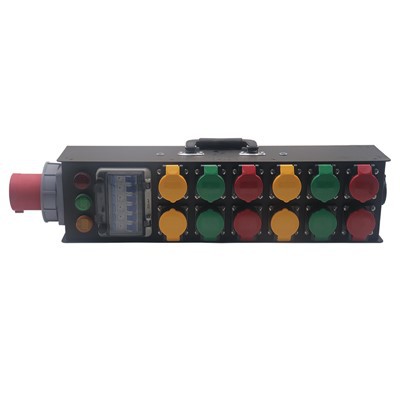
Now, if you’re an office manager, facilities director, or anyone in charge of outfitting office spaces and you’re looking for reliable, high-quality Schuko sockets—we’ve got stock, we ship fast, and we work with any budget, whether you need 100 sockets for a small team or 10,000 for a full office building. No middlemen, no hidden fees, just the good stuff. Hit us up to talk through your project, ask questions, or get a quote—no pressure, just help.
Panle Mount Industrial Socket References
- International Electrotechnical Commission (IEC). "Standard for Electrical Sockets and Plugs for Commercial and Residential Use." 2022.
- European Commission. "Electrical Safety Standards for Commercial Buildings in the EU." 2021.
- Schutzkontakt e.V. "Annual Report: Schuko Socket Usage in Commercial Spaces Across Europe." 2023.
- Global Facility Management Association (GFMA). "Power Solutions for Modern Office Environments." 2022.
Zhejiang Hefeng Electric Co., Ltd.
Address: Wenzhou Daqiao Industrail Park, Beibaixiang Town, Yueqing City, Zhejiang Province, China
E-mail: hefengplug@chinahfe.com
WebSite: https://www.hfcee.com/
