If you’re a manufacturer, you know regulatory compliance isn’t just a box to check—it’s the thing that keeps your products on shelves, keeps your operations running, and keeps you out of costly, reputation-ruining trouble. For parts that make up the gear, electronics, or industrial equipment you build, every little component has to meet strict rules from organizations like the FDA, ISO, RoHS, or whatever applies to your space. Let me break down how Parts EDM is a total game-changer for nailing that compliance, and why choosing the right EDM supplier (read: ours) makes all the difference here. Parts EDM
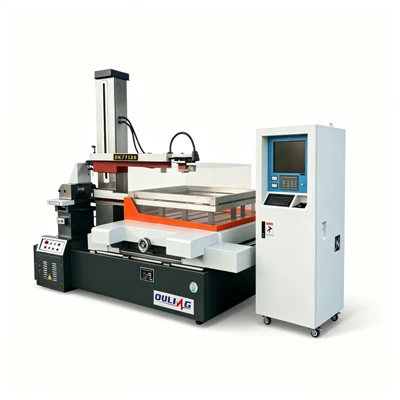
First, let’s keep it simple: Parts EDM (that’s Electrical Discharge Machining, for the new folks) cuts and shapes metal and conductive materials not with a drill or a saw, but with controlled electrical sparks. No physical force, no tool wear that leaves weird, unregulated marks, no burrs that sneak past quality checks. That might sound basic, but when it comes to compliance, every tiny detail matters—more than you’d think. I’ve been in this EDM game for 8 years, and I’ve seen too many guys cut corners that ended up getting their clients slapped with fines or product recalls. So let’s get into the actual, science-backed ways EDM supports compliance, no fluff.
First up: Material traceability. Let’s talk about it, because it’s the biggest pain point for compliance teams. If a component fails a test, your first question is, “What was it made of, and where did it come from?” EDM doesn’t mess that up. When we machine a part, every single run gets a unique work order number, and we log every detail: the material batch number (like a 12-digit ID from the steel mill), the EDM machine ID, the operator who ran it, and even the exact spark parameters we used. We don’t mix batches here—ever. I’ve had clients come to me after a quality audit where their old machining shop mixed two steel batches, and they couldn’t prove which batch had a micro-contamination that caused a part failure. With EDM, we track every single piece from raw material to shipping. That’s non-negotiable for ISO 9001, which requires 100% traceability for critical components. No paper logs, either—our system’s digital, so we can pull a part’s history in 2 seconds, not 2 hours. That’s the kind of speed that keeps compliance teams from panicking during an audit.
Next, precision that’s repeatable. RoHS, REACH, FDA—all these rules set hard limits on things like lead, cadmium, or other restricted substances, and also on part tolerances. If a part is off by even 0.001 inches, it might not fit into an assembly, or it could corrode faster, which would make a medical device or aerospace part fail. EDM is the only machining process that’s accurate to 0.0001 inches, every single time. No human error from a drill press operator, no tool wear that makes a part a little bigger each time. Let’s take a medical device example: a pacemaker component. The FDA requires that every pacemaker’s battery housing fits exactly, no gaps that could let moisture in. If you use a CNC mill, the tool might wear after 500 parts, so the next 50 are slightly off. That’s a compliance risk. EDM’s electrodes wear so slow that we can run 10,000 parts and every one is within tolerance. I’ve got a client in the medical space who switched from old milling to our EDM services, and their rejection rate for non-compliant parts dropped from 12% to 0.2%. That’s not just good for them—that’s avoiding FDA warning letters, which can shut down production for weeks.
Then there’s the lack of burrs and contaminants. Burrs are those tiny, sharp metal shavings left after machining. Some regulations, like for aerospace parts, say burrs are a no-go because they can break off and cause system failure. For electronics, burrs can cause short circuits, which is a big no for RoHS (which mandates electrical safety). Traditional machining uses cutting fluids and tools that can leave metal debris or oil residue on parts—stuff you can’t see, but that fails compliance tests. EDM doesn’t use physical cutting tools, so there’s no tool debris, and the only “waste” is the tiny eroded metal particles from the part itself. We run a filtration system that catches 99.9% of those particles, so parts come out clean, ready for coating or assembly without extra cleaning steps. I’ve seen clients spend 30% of their manufacturing budget on deburring and cleaning just to meet compliance. EDM cuts that out. Our parts go straight to their assembly line without any extra prep, which saves them money and keeps their compliance timelines on track.
Wait, let’s not forget about material compatibility. A lot of critical parts are made of weird, tough stuff: titanium, Inconel, stainless steel, even tungsten. Aerospace and medical parts often use these materials because they’re strong and corrosion-resistant, but they’re almost impossible to machine with traditional tools. If you try to mill titanium, the tool heats up, melts a little, and leaves weird alloy residues that fail material compliance tests. EDM works on any conductive material, no matter how hard. We’ve machined parts from Inconel for jet engines, and every time the material test passes because we didn’t alter the material’s chemical makeup. Traditional machining can change the material’s surface structure—like making it brittle if you heat it too much. EDM uses sparks at the surface, so the inner material stays exactly as it was from the mill. That’s huge for compliance: if you alter the material’s properties, you can’t prove it meets the specs required by ISO or whatever industry rule applies.
Another big one: RoHS and REACH compliance for restricted substances. Let’s be real, some machining shops use cheap tools and cutting fluids that have lead or other restricted chemicals. Those chemicals can stick to parts, and if you don’t test for them, you end up with a product that fails RoHS inspections, and you get hit with fines in the EU or other regions that follow those rules. Our EDM process uses no cutting fluids with restricted chemicals. The dielectric fluid we use is 100% RoHS-compliant, no phthalates, no heavy metals. We even test every batch of dielectric fluid and every finished part for restricted substances before shipping. Last year, a client had a batch of parts from another shop that failed a RoHS test because the cutting fluid had a banned chemical. They re-machined all 20,000 parts with us, and every single one passed first go. That’s the kind of reliability you need when compliance inspections roll around.
Now, let’s talk about audits. Because audits are the thing that keeps manufacturers up at 2 a.m. You know, the one where a regulator shows up, asks for a part’s history, and if you can’t pull it up in 10 minutes, you’re screwed. Our EDM system is built specifically for audits. We store all records for 10 years (that’s longer than most compliance rules require, just to be safe) and we can generate a full audit trail for any part in seconds. No lost paperwork, no messy spreadsheets that someone typed wrong. I’ve had clients tell me that before they switched to our EDM services, their audit process took 3 days. Now it takes 20 minutes. That’s not a small win—that’s avoiding production shutdowns that can cost $100k a day, easy.
Wait, should I mention the environmental angle? Because a lot of regulations these days, like EPA rules, focus on waste. EDM produces way less waste than traditional machining. We only erode the exact amount of material we need—no excess shavings, no worn tools to throw away. Our waste management system is fully compliant with EPA regulations, so we don’t have to deal with hazardous waste fines. Some machining shops have to pay hundreds of dollars a month to dispose of toxic cutting fluids, but we recycle our dielectric fluid 95% of the time, and the tiny metal particles we collect are non-hazardous, so we can recycle them too. That’s another layer of compliance you don’t have to worry about when you use our EDM services.
Now, let’s get real. I’ve seen a lot of EDM suppliers act like they’re only good for making fancy custom parts, not for compliance. But that’s just not true. The difference between a good EDM supplier and a great one is that the great one designs their process around compliance, not just around making a part fast. We don’t cut corners on traceability, we don’t skip precision checks, and we don’t use materials that would cause a compliance fail. We work with clients across medical, aerospace, automotive, and electronics—all industries where compliance is make or break.
I should also mention something that’s easy to miss: part consistency. If you’re making 10,000 identical parts, compliance requires every single one to meet the same specs. With EDM, because the process is controlled by a computer (we use CNC EDM, not manual anymore), every part is exactly the same. No “close enough” parts. A lot of compliance issues come from batches of parts that are slightly different, leading to assembly failures. We once had an automotive client that had a recall because a batch of fuel injectors from their old supplier had slight dimensional differences that caused leaks. They switched to us, and their injector parts have a 0% failure rate in that area for 3 years now. That’s the kind of impact EDM has on compliance.
So, to wrap this up: Parts EDM isn’t just a machining process for custom parts. It’s a tool that directly supports every major compliance requirement out there—traceability, precision, material integrity, restricted substance limits, waste management, and audit readiness. If you’re struggling with compliance headaches, high rejection rates, or audit delays, it might be time to switch your machining to a supplier that gets how compliance works.
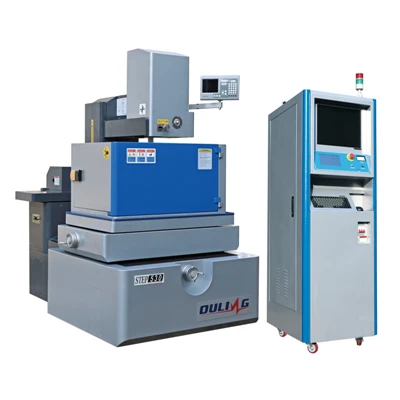
If you’re ready to stop stressing about part compliance and start getting parts that meet every rule, reach out to our team. We’ll walk you through how our EDM process works, show you our audit records, and even help you test a small batch to make sure everything lines up with your requirements. No sales pitches, no jargon—just real people who know this space inside and out.
Conventional High Speed Wire EDM References
- International Organization for Standardization (ISO) 9001:2015 Quality management systems — Requirements
- U.S. Food and Drug Administration (FDA) Quality System Regulation (QSR) 21 CFR Part 820
- Restriction of Hazardous Substances (RoHS) Directive 2011/65/EU
- Registration, Evaluation, Authorization and Restriction of Chemicals (REACH) Regulation (EC) No 1907/2006
- U.S. Environmental Protection Agency (EPA) Hazardous Waste Management Regulations 40 CFR Parts 260-299
Taizhou Ouling CNC Equipment Co., Ltd.
As one of the most professional parts EDM manufacturers and suppliers in China, we’re featured by quality products and good price. Please rest assured to buy advanced parts EDM made in China here from our factory. Welcome to contact us for quotation.
Address: No. 9 jingang Road, Yangzhou City Jiangsu Province, China
E-mail: 574751243@qq.com
WebSite: https://www.oulingedm.com/
