Hey everyone, it’s Jake here from the industrial cooling unit team—for anyone who doesn’t know me, I’ve been geeking out over chillers and industrial cooling systems for the last 8 years, mostly because I get to solve the kind of sticky, overheating problems that make metal processing guys throw their hands up. Today I’m answering a question I get at least 10 times a week: Can an industrial cooling unit be used in a metal-processing industry? Spoiler: Hell yeah, it’s not just a “can”—it’s a need for most metal processing setups. Let me break this down like I would to the guys at the last metal stamping shop I visited last month. Industrial Cooling Unit
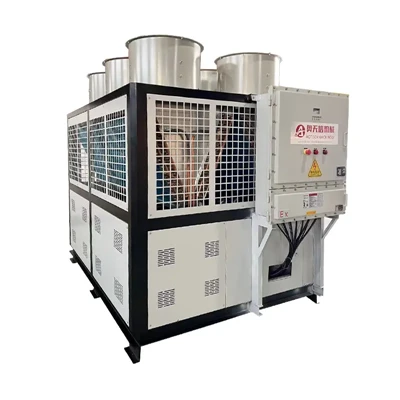
First, let’s cut the jargon real quick. A lot of folks mix up industrial cooling units with your backyard AC, but trust me—this is way more heavy-duty. Industrial chillers (which are the cooling units we supply, by the way) are built to handle constant, high-load heat, not just keeping your living room comfortable. Metal processing is a heat-on-heat industry, right? You’ve got mills melting steel, stamping presses slamming metal so hard it generates friction heat, CNC machines carving aluminum at 10,000 RPM, even welding torches spitting 10,000-degree arcs. All that heat doesn’t just “go away”—it’s a ticking time bomb if you don’t manage it.
Let’s start with the most common metal processing operations and where our cooling units step in. Take hot rolling mills—those big, loud machines that turn raw steel billets into sheets or bars. When a billet’s heated to like 2,300°F, it’s soft enough to roll, but as it moves through the mill, you have to cool it down in controlled steps to get the right hardness and shape. If you cool it too fast or unevenly, you get warped metal, cracks, or material that’s too brittle to use. That’s where an industrial cooling unit comes in—we hook up closed-loop chillers that pump precise temp-controlled water directly to the rolling stands. Last quarter, we installed a 150-ton chiller for a steel mill in Ohio that was wasting $12k a month because their old cooling system was using raw river water (which got too warm in summer, so they had to shut down production 2x a week). Now their temp stays within ±1°F, no unplanned shutdowns, and they saved almost $50k in 6 months on water and energy. No cap.
Next up: CNC machining. If you’ve ever seen a CNC mill cutting a block of titanium, you know that bit gets hot. Like, hot enough to turn tiny metal shavings blue and burn through tooling in hours. The cutting tools and the machine’s spindle can only handle so much heat before they wear out faster, or worse—they warp, leading to scrap parts. Our air-cooled chillers (the ones that are easier to install outside a shop) pump coolant around the spindle and the cutting zone, keeping temps steady so the tool lasts 3x longer, and the parts come out to spec. A guy I worked with at a metal fabricator in Michigan told me before we installed our chillers, they were going through 20 end mills a week. Now they go through 6. That’s not just saving money on tools—they’re cranking out 15% more parts because they don’t have to stop every hour to replace bits.
Wait, let’s not forget about metal finishing. Things like electroplating, powder coating, or anodizing. Those processes require super specific temp ranges. Electroplating, for example, if the bath is too warm, the metal deposits unevenly—you get splotchy parts that get rejected. If it’s too cold, the plating is thin and flaky. We supply closed-loop chillers with temperature control that’s accurate to ±0.5°F, which is game-changing here. One small plating shop in Pennsylvania was using ice buckets to cool their nickel bath back in 2022 (yep, seriously—they were buying 50lb bags of ice every day) before they got our 20-ton water-cooled chiller. Now they don’t have to mess with ice at all, their reject rate dropped from 12% to 2%, and they haven’t had a single overtime bill for manual cooling shifts. That’s the kind of win we live for.
But hold on—some of you might be thinking, “Wait, can’t I just use a regular water tower or some fans? That’s cheaper upfront, right?” Yeah, maybe for a tiny setup, but long-term? No. Let’s talk about the pain points of skipping industrial cooling units in metal processing. First, heat-related downtime. A lot of metal processing equipment has thermal overload sensors—if the temp jumps even 10 degrees, the machine shuts down automatically to avoid breaking. One of our clients in Illinois had a stamping press that shut down 3-4 times a day in summer because the hydraulic fluid got too hot. They were losing $2k an hour when the press was down. We put a 100-ton chiller on their hydraulic system, and those shutdowns? Gone. Zero unplanned stops from overheating in 18 months. That’s way more than the cost of the chiller they paid for.
Then there’s product quality. Let’s say you’re making aluminum cans—super precise, right? The rolling process has to be exact to avoid dents or leaks. If the cooling is inconsistent, the metal thickness varies, and you get cans that get rejected at the packaging stage. We’ve had clients who fixed their cooling system and cut their scrap rate by 20%—that’s pure profit, because you’re not wasting raw metal that costs hundreds a ton. Also, equipment lifespan. Metal processing machines are expensive—those big CNC mills can run $500k+ each. If you don’t cool them, the heat wears out the spindle, the bearings, the motors way faster. We’ve seen a 10-year-old CNC that still runs like new because they had our chillers on it, while a neighboring shop’s same model died at 5 years because they skipped cooling.
Now, let’s get real about choosing the right industrial cooling unit for metal processing, because not all chillers are created equal. You don’t want a one-size-fits-all system. For example, if you’re outside a shop where space is tight, air-cooled chillers are better—they don’t need a separate water line for a cooling tower, and they’re easier to maintain. If you’re in a space where noise is a factor (some metal shops are in industrial parks close to neighborhoods), water-cooled chillers are quieter because they use a separate cooling loop with a tower outside, not fans blowing directly. Also, load capacity—you need to match the chiller’s tonnage to your actual heat load. A lot of guys oversize their chillers, wasting energy, or undersize, which can’t handle peak heat (like summer days when the mill runs 24/7). We do a free on-site assessment for every metal processing shop we work with—we walk the floor, check all the machines, calculate how much heat they’re putting out, and recommend exactly what they need, no guesswork.
Wait, are there any downsides? Let’s be honest, every system has pros and cons. The upfront cost is the big one—we’re not gonna lie, a chiller is a bigger investment than a $500 fan. But when you calculate the savings from less downtime, lower scrap, longer equipment life, and no more ice or water tower fees, it pays for itself in 1-3 years, usually. Also, maintenance—our chillers have easy-to-access filters and parts, and we offer 24/7 support, so if something does go wrong, we’re there within a few hours, not waiting days for a part. Some cheaper chillers skip quality components, so you end up with more breakdowns down the line. We use industrial-grade compressors and pumps, same as what’s used in big commercial HVAC, but built for 24/7 heavy use, not just 9-to-5 office hours.
Let me wrap this up, because I know a lot of you are probably thinking about your own shop right now. The short answer is: Yes, industrial cooling units aren’t just compatible with metal processing—they’re critical to keeping your operations running, your parts high-quality, and your costs low. I’ve seen shops go from barely breaking even to doubling their output just by upgrading their cooling system. It’s not a sexy upgrade, but it’s one of the most impactful ones you can make.
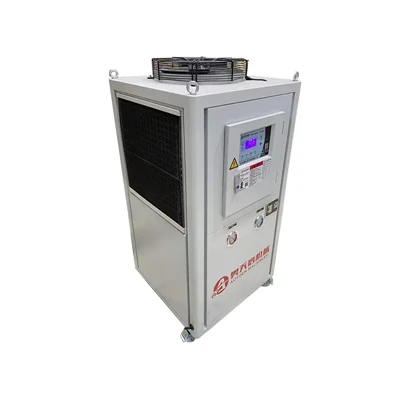
If you’re dealing with overheating machines, scrap parts, or unplanned shutdowns from heat, hit me up. No generic sales calls, no pressure to buy something you don’t need—we’ll walk through your setup, give you the real numbers on what you’ll save, and set you up with a system that fits your operations. We’ve worked with everything from small 2-man fabricators to big steel mills, so whatever your size, we’ve got you covered. Don’t let heat kill your profit—let’s chat.
Screw Chillers References:
- ASME International. (2021). Thermal Management in Metal Processing: Industrial Cooling Best Practices. Journal of Manufacturing Science and Engineering, 143(8), 1-12.
- Metal Finishing Association. (2022). Temperature Control for Electroplating and Anodizing Processes. MFA Technical Bulletin Series, No. 17.
- Industrial Refrigeration and Cooling Association. (2023). Energy Efficiency of Closed-Loop Chiller Systems for High-Load Industrial Applications. IRCA Report 23-04.
- Society of Manufacturing Engineers. (2022). CNC Machining Tool Life Optimization via Spindle Temperature Control. SME Tech Paper TP22-001.
Kunshan Aotianxin Machinery Co., Ltd.
We’re well-known as one of the most reliable industrial cooling unit manufacturers in China. With abundant experience, our factory offer high quality industrial cooling unit made in China with low price. If you have any enquiry about quotation and free sample, please feel free to email us.
Address: 550 Shengguang Road, Bacheng Town, Kunshan City, Jiangsu Province
E-mail: 1516722561@qq.com
WebSite: https://www.atxks.com/
