If you’ve ever sourced aluminum parts for automotive, aerospace, consumer electronics, or industrial equipment, you’ve probably come across two processes that show up constantly in specifications: aluminum casting and aluminum machining. As someone who’s run an aluminum alloy casting and machining supplier for over a decade, I hear this question all the time—from engineers who’ve only ever worked with one or the other, to small business owners who don’t know which process will work best for their part’s design, budget, and performance needs. It’s not just a matter of which is “better” either; each has strengths and tradeoffs that make them ideal for very different jobs. Let’s break this down, skip the jargon where we can, and talk about what actually matters when you’re choosing between them for your next project. Aluminum Alloy Casting and Machining
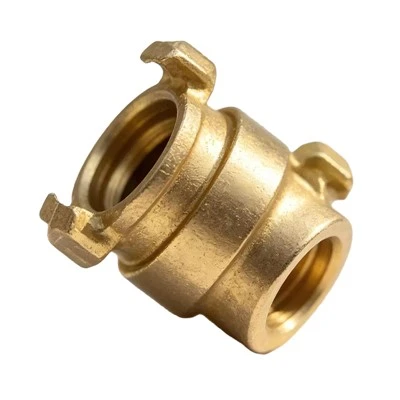
First, let’s start with the basics: what each process actually does, step by step, because that’s where most of the real differences come from. Aluminum casting is a process where you take molten aluminum alloy—we work with everything from common A356 for general parts to high-strength 7075 for aerospace components—and pour it into a custom-made mold, let it cool and solidify, then remove the finished part (or parts, depending on mold type) from the mold. The mold can be made of sand, for low-volume, complex parts, or metal (permanent molds, called die casting molds) for high-volume, consistent production. For our team, casting is about shaping aluminum when it’s liquid, so you get the part’s full shape almost right out of the mold. That means very little material is wasted upfront, because you only pour as much aluminum as you need for the part, and you rarely have to add big, complex features later.
Aluminum machining, on the other hand, is subtractive manufacturing. You start with a solid block or billet of aluminum—we use both cast billets (our own, for material consistency) and extruded bars—and then cut, drill, mill, or grind away excess material to shape it into the final part. Think of it like carving a statue from a block of marble, instead of molding clay into shape. There’s no custom mold here; instead, a computer numerical control (CNC) machine follows a digital design file to remove material layer by layer. That means you can make almost any shape from a solid block, no mold required, but you’ll end up with a lot of scrap material—often 30 to 70 percent of the original billet, depending on how complex the part is.
Now, let’s get into the key differences that affect your part, because that’s what you care about, not just how each process works. The first big one is material efficiency and cost, especially for high volume. If you’re making 10,000 identical parts, casting wins every time. When you cast, you make one mold, then you can pour part after part, with almost no extra material waste. The per-part cost drops dramatically as volume goes up, because the only ongoing cost is the molten aluminum and minimal labor for removing parts from molds. For machining, you’re starting with a solid block of aluminum that can cost 2 to 3 times more per pound than the molten aluminum you use for casting, and every pound you cut away is wasted. That means for high-volume projects, casting is usually 50 to 70 percent cheaper per part than machining. It’s why most automotive engine parts, housings, and brackets are cast—they run millions of parts a year, and casting is the only way to make that work economically.
But what if your part is low volume, or you need a custom design that’s hard to mold? That’s where machining shines. If you only need 10 or 20 parts, making a custom mold for casting would cost thousands of dollars in tooling alone—something most small projects can’t justify. Machining skips that entire tooling step; you just send a digital design file, and we can have your parts cut in a week or two, no mold needed. Also, if your design has complex internal features or tight tolerances that are hard to pull off with casting (like very small holes, precise grooves, or multi-step internal shapes), machining can get those right because you’re cutting to exact dimensions from a solid block. For example, a custom aerospace bracket that fits a specific, one-of-a-kind aircraft prototype is way easier to machine than to cast, because you don’t want to invest in a mold that you’ll only use once.
Next, let’s talk about part strength and consistency. This is a point that surprises a lot of people. Cast aluminum parts have porous areas (called shrinkage porosity) in them as they cool—when molten aluminum solidifies, it shrinks, and if the mold doesn’t feed enough molten aluminum to fill the gaps, you get small gaps or weak spots inside the part. That’s why high-pressure die casting (a type of casting we specialize in for high-volume parts) is popular: the high pressure forces molten aluminum into every nook of the mold, reducing porosity and making the part stronger. But even then, a cast part will rarely match the strength of a properly machined part from the same aluminum alloy. Machined parts are solid all the way through—you’re not pouring material and waiting for it to cool, so there’s no internal porosity unless you mess up the cutting process. If your part needs to hold high stress, like a race car engine component or a medical device part that goes inside the body, machining might be the better choice because the material is more consistent and less likely to fail under load.
Wait, but that’s not always the case. Modern casting processes, like lost-wax casting or centrifugal casting, can produce parts with strength that’s very close to machined parts, and for large parts that would be impossible to machine from a solid billet. For example, a large industrial pump housing that’s 3 feet wide would require a billet of aluminum that’s way too heavy and expensive to machine; it’s way more cost-effective to cast it, even with a slight strength difference, because a solid billet that big just doesn’t make sense for the project. Also, both processes get improved with post-processing: we can heat treat both cast and machined parts to boost strength, so that slight strength gap is smaller than it used to be.
Then there’s design flexibility, which boils down to what your part looks like. Casting is unbeatable for complex, organic shapes. If your part has thin walls, integrated ribs, curved surfaces, or multiple features that are all part of a single shape (like a gear housing that has ports, brackets, and a cavity all molded in), casting can do that in one step. Machining would require drilling and milling each of those features separately, which would take much longer and cost more. For example, a consumer electronics device housing—think of a smartphone frame, or a laptop chassis—has all kinds of curved, integrated features that are perfect for casting. You can pour the molten aluminum into a mold that gives you the entire shape, so you only need minimal machining to polish the surface. But if your design has very tight internal tolerances, like a 0.1mm gap between two internal parts, machining can hit that precision easier than casting can, because casting relies on mold accuracy, which can shift slightly when the mold cools.
Let’s also talk about lead times, because speed to market matters for so many of our customers. If you need parts in a week, machining is almost always faster. Making a mold for casting can take 2 to 4 weeks, depending on the complexity of the mold—for example, a sand mold for a simple bracket takes a few days, but a precision die mold for a automotive part can take 6 weeks or more. Once the mold is ready, though, you can get parts in days or hours. Machining skips that mold-making step, so you can go from a design file to finished parts in as little as 5 days, even for complex parts. That’s why prototype projects almost always use machining—engineers need to test a part quickly, before they invest in a mold. For production, if you have time to wait for the mold, casting is faster in the long run, because you can produce hundreds of parts per day once the mold is set up, whereas machining can only produce a few parts per day, depending on complexity.
Now, let’s get real about waste. I mentioned this earlier, but it’s worth repeating as someone who’s seen the environmental and cost impact of both processes. Aluminum is a valuable material, so waste matters. For casting, most of the waste is just the gating and risers— the extra aluminum you pour into the mold to feed the part as it cools. We can remelt those gating and risers and reuse them, so casting waste is almost all recyclable. The only waste is a small amount of scrap from mold cleanup. For machining, though, that 30 to 70 percent of excess material is actual, hard-to-recycle scrap, unless you have a machine that can chip the scrap into small enough pieces for recycling. Even then, machining waste is way higher than casting waste. For example, if you machine a part from a 10-pound billet, and end up with 6 pounds of scrap, that’s 6 pounds of aluminum you have to pay for and then dispose of as scrap. For casting, you might use 1.5 pounds of molten aluminum, and only have a few ounces of gating and risers to recycle.
But here’s the thing: there’s no one-size-fits-all answer, and a lot of projects actually use both. For example, we often work with customers who cast a large, complex housing, then machine the critical surfaces of that housing to get the tight tolerances they need. That combines the strength and cost efficiency of casting for the main shape, with the precision of machining for the parts that will mate with other components. It’s a hybrid approach that gives you the best of both worlds, and we do that all the time for industrial equipment and automotive parts.
Let me give you a real example that illustrates this. A few years back, a customer came to us needing 500 engine mounts for a new line of electric trucks. They initially thought to machine them, but when we ran the numbers, casting was 60 percent cheaper per part, and the strength of the cast A356 aluminum after heat treatment was more than enough for the load the mounts would carry. But they needed a very precise bolt hole pattern on the mount to fit the truck’s frame, something that was hard to get perfectly consistent with casting. So what we did was cast the mounts, then machine only the bolt holes and the mating surfaces, combining the low cost and speed of casting with the precision of machining. The customer saved almost $20,000 on their total order, and got parts that performed exactly as they needed.
Another example: a medical device startup had a prototype for a small, lightweight implant component. They only needed 25 parts, so making a mold for casting would have cost them $8,000 in tooling—way more than the total budget for the prototype. We machined the parts from a solid billet of medical-grade 6061 aluminum, delivered them in 10 days, and they were able to test their device and move to production a month earlier than they would have if they’d waited for a cast mold. When they move to production next year, they’ll switch to casting once they can justify the mold cost, since they’ll need 5,000 parts a year after launch.
So when do you choose which? Let’s break it down simply, to make it easy for you:
- Choose aluminum casting if you: Need 50+ parts, want to minimize material waste, have a complex or organic shape, don’t need ultra-tight tolerances on every surface, and want the lowest per-part cost for volume. We work with all types of casting here—sand casting for low-volume prototypes, die casting for high-volume production, and investment casting for very high-precision, small parts.
- Choose aluminum machining if you: Need fewer than 50 parts, need a prototype quickly, have a very precise design with tight internal tolerances, or need the maximum material strength for high-stress applications. We offer CNC machining with 0.01mm tolerances, and can work with any aluminum alloy from 5052 to 7075.
- Consider a hybrid approach if you need both cost efficiency and precision, which is what most of our mid-volume customers do.
At the end of the day, the difference between aluminum casting and machining isn’t about one being better than the other—it’s about matching the process to your project’s specific needs. Too often, engineers or small business owners default to one without considering the other, which can lead to overpaying for parts that are too expensive, or choosing a process that can’t meet their design needs.
If you’re not sure which process is right for your next aluminum part project, or you have questions about material selection, tooling costs, or lead times, feel free to reach out to discuss your requirements.
Copper Alloy Castings and Machining References
Kalpakjian, S., & Schmid, S. R. (2019). Manufacturing Processes for Engineering Materials. Pearson.
Degarmo, E. P., Black, J. T., & Kohser, R. A. (2020). Materials and Processes in Manufacturing. Wiley.
American Foundry Society. (2021). Aluminum Casting Handbook. AFS International.
Sanming Hongfeng Machinery Manufacturing Co., Ltd.
As one of the most professional aluminum alloy casting and machining manufacturers and suppliers in China, we’re featured by quality products and good service. Please rest assured to wholesale customized aluminum alloy casting and machining made in China here from our factory. Welcome to contact us for quotation.
Address: No.2 Gaoyuan Industrial Zone, Chenda Town, Sanyuan District, Sanming City, Fujian Province, China
E-mail: smhfjxzsq@163.com
WebSite: https://www.smhfmachinery.com/
