Hey everyone, let’s cut to the chase—if you’ve ever been deep into a home reno, a small commercial build, or even a quick refresh, you’ve probably stared at wall panels wondering: is MDF board actually worth it, or is it just that cheap, flimsy stuff the big box stores push to move inventory? I’m a MDF board supplier, and I hear this question like, every single week. Folks get so hung up on the “fake wood” stigma that they miss how solid, versatile, and actually great MDF can be for wall panels—if you know when and how to use it. Let’s break this down, no jargon, no fluff, just the real stuff I tell every customer who walks through (or DMs) my shop. MDF Board
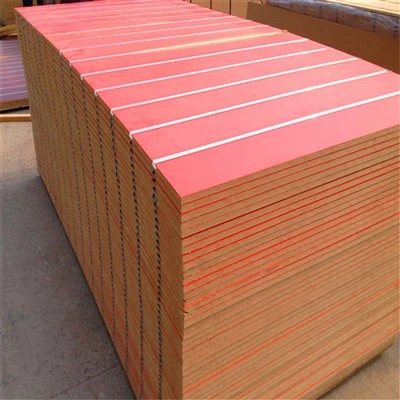
First, let’s get one thing straight: MDF stands for Medium-Density Fiberboard, and no, it’s not just sawdust and glue squished together. It’s made by breaking down hardwood or softwood residuals—like sawmill offcuts, branch scraps, even wood chips that would otherwise go to landfill—into super fine fibers, mixing ’em with wax and resin, then pressing ’em under massive heat and pressure. The result is a material that’s way more consistent than solid wood, no knots, no warping, no random weak spots that pop up out of nowhere. For wall panels, that consistency is a big deal. Solid wood will expand and contract with humidity—you know, those gaps that show up between planks in winter, or the cupping that makes a wall look uneven? MDF barely does that. It’s super stable, especially when it’s sealed right. That’s why I’ve had a ton of contractors come to me for accent walls, wainscoting, even full room paneling for basements, which are notorious for fluctuating humidity. Solid pine or oak would start twisting within a year down there, but MDF? It holds shape way better, as long as you don’t leave it soaking wet.
Now, let’s talk about the pros, because that’s what most people care about. First up, workability. If you’re a DIYer or a contractor, you know how annoying it is to fight with solid wood when you’re cutting, drilling, or routing. MDF cuts like a dream—no splintering, no tear-out, especially when you use a fine-tooth blade. I see so many new homeowners who try to do a feature wall themselves, and they switch to MDF halfway through because cutting solid wood for those custom angles was a nightmare. It also takes paint like it’s nobody’s business. The super fine, uniform surface means the finish is smooth as glass—no grain peeking through, no splotchy spots, no sanding for hours to get it ready. A lot of my customers use MDF wall panels for kitchen backsplashes, powder room accent walls, even home theater panels because they can paint them to match literally any color, from a matte neutral to a high-gloss pop. And if you want to do a wood-grain finish? You can easily apply a veneer or even laminate over it, no problem. It’s like a blank canvas for whatever look you’re going for.
Another pro that surprises a lot of people: cost. Let’s be real, solid hardwood wall panels are expensive—like, $10 to $20 a square foot, sometimes more, depending on the species. MDF? It’s a fraction of that, usually $2 to $5 a square foot, which is a game-changer if you’re doing a big space. If you’re paneling a whole living room or an open-concept office, that difference adds up fast. I’ve had small business owners come to me because they wanted to give their café a warm, paneled look but didn’t have the budget for solid wood, and MDF let them pull that off without breaking the bank. It’s also way easier to source in large quantities, which is a huge plus for commercial projects that need multiple batches of the same material—no waiting weeks for a specialty wood shipment, no inconsistent color from different logs.
Wait, but I can’t just sugarcoat it, right? I’m a supplier, but I’d send a customer to solid wood if MDF isn’t the right call. Let’s talk about the cons, because transparency matters. First, moisture is MDF’s kryptonite. If you leave it exposed to standing water or really high humidity for long periods, it absorbs water and swells up—like, crumbles at the edges kind of swelling. That means it’s not great for full bathroom walls, outdoor walls, or any space that gets splashed a lot or has constant dampness. But here’s the fix: if you really want MDF in a bathroom, just seal the heck out of it—use a marine-grade primer and multiple coats of paint or waterproof sealant, and you’re good for years. I’ve installed MDF bathroom panels for a few clients with great results, as long as they’re not leaving the shower door open 24/7.
Another con: MDF is heavier than it looks? Wait, no, actually it’s denser than particleboard, so it’s heavier than particleboard but lighter than solid wood. That means it’s a bit harder to hang on your own if you’re doing big panels, but not impossible—just use sturdy wall anchors. The bigger issue for some folks is that it’s not as “natural” as solid wood. If you’re going for that rustic, reclaimed barn wood vibe, MDF will never have the character of real oak or cedar. It doesn’t have the same texture or the subtle color variations that come with solid wood. But if you’re going for a modern, sleek, uniform look—like a minimalist accent wall, or a polished wainscoting—those “flaws” of MDF are actually benefits.
Now, let’s get into when MDF is actually the best pick for wall panels, because that’s what most people are actually searching for. Let’s start with DIY projects. If you’re a beginner who’s never done wall paneling before, MDF is your go-to. It’s forgiving—if you cut a board a little short, you can fill the gap with wood filler that sands down seamlessly, no grain mismatch. Solid wood would show that mistake instantly. Next, modern or minimalist interiors. If you’re going for that seamless, matte black accent wall, or crisp white wainscoting in a entryway, MDF’s uniform surface is perfect. No knots, no grain, just a clean, consistent finish that highlights your design, not the material itself. Then, budget-conscious projects. If you’re paneling a rental space you don’t want to sink tons of money into, or a basement you’re using as a home gym on a tight budget, MDF checks all the boxes. It’s also great for commercial spaces—offices, retail shops, cafes—where you need a consistent, durable (when sealed) look that can be installed quickly without blowing the budget.
Wait, I also get a lot of questions about durability. “Is MDF wall panels going to scratch easily?” Yeah, it can scratch if you’re banging a chair or a door into it, but same with solid wood! The key is to apply a good, durable topcoat—like a satin or semi-gloss polyurethane, or even acrylic enamel. That adds a layer of protection, so small scratches are easy to touch up, and spills wipe right off. I had a customer last year who did MDF wall panels in her kid’s playroom, and she said two years later, the only mark was a crayon line that she sanded and repainted in 10 minutes. Way easier than fixing a scratch on solid oak.
Another thing people don’t talk about: customization. You can get MDF in any size, right? If you need custom-length panels for a high ceiling, or panels with routed edges for that decorative wainscoting look, you can order it cut to size, no extra hassle. I do custom cuts all the time for customers who don’t have a big saw at home, and that’s a huge perk over solid wood, which often has limited dimensions at big box stores.
Now, let’s address the elephant in the room: the “toxic MDF” myth. A lot of people say MDF gives off bad fumes, formaldehyde, whatever. Listen, old MDF from decades ago might have used resin with higher formaldehyde levels, but modern MDF is held to super strict standards here in the US and most places. Most suppliers, me included, offer low-formaldehyde or no-formaldehyde MDF that meets CARB Phase 2 or EPA TSCA Title VI standards—those are the strictest regulations for emissions. So if you’re worried about air quality, just ask your supplier about their certification, and you’re good. I make a point to only stock MDF that’s third-party tested for low emissions, because I’d never sell something that makes a customer’s home smell weird or is unsafe for their family.
Wait, let’s wrap this up with some real, actionable advice. If you’re wondering if MDF is right for your wall panels, ask yourself three questions: 1) What space is this going in? If it’s a bathroom, outdoor area, or somewhere with constant high humidity, MDF probably isn’t the best. If it’s a living room, bedroom, home office, playroom, or basement, go for it. 2) What vibe are you going for? If you want rustic, reclaimed, or heavily textured, solid wood is better. If you want modern, sleek, uniform, or painted to a custom color, MDF is perfect. 3) What’s your budget? If you want to save money, MDF is the clear choice. If you have a big budget for high-end solid wood, that’s cool too, but MDF will give you almost the same look for way less.
At the end of the day, MDF isn’t a “cheap alternative” that’s inferior—it’s a specialized material that’s great for specific jobs. I’ve seen it turn empty rooms into beautiful, functional spaces, and I’ve sent people to solid wood when MDF wasn’t a fit. The stigma around MDF is just that—stigma—from old, outdated materials and bad advice from people who don’t actually use it regularly.
If you’re currently planning a wall panel project, whether it’s a small accent wall or a full room refresh, and you want to talk through whether MDF is right for you, or you need custom-sized panels, sealants, or paint recommendations, feel free to reach out. I’m always happy to answer questions, no pressure, no sales pitches—just real advice from someone who works with MDF every single day.
Wpc Flooring Spc Flooring References:
- American Wood Council. (2022). Medium-Density Fiberboard (MDF): Characteristics and Applications.
- U.S. Environmental Protection Agency. (2021). Formaldehyde Emission Standards for Composite Wood Products.
- National Association of Home Builders. (2020). Wall Paneling Options for Residential Construction.
- Wood Industry Manufacturers Association. (2023). Performance Properties of Medium-Density Fiberboard for Interior Applications.
Lisen Wood Industrial Shouguang Co., Ltd.
Lisen Wood Industrial Shouguang Co., Ltd. is one of the most professional mdf board manufacturers and suppliers in China, featured by quality products and low price. Please rest assured to buy discount mdf board from our factory. Welcome to contact us for quotation and free sample.
Address: Nongsheng road, shouguang,shandong province, china
E-mail: lucia@lisenboard.com
WebSite: https://www.sglswood.com/
