Hey everyone, it’s Jake from your go-to link fittings supplier, and today I’m diving into a question I get at least a dozen times a week: Are there any actual rules for using these things? Short answer? Yeah, there are—and skipping them doesn’t just lead to headaches, it can be straight-up dangerous. I’ve been in this game for 12 years, so let me break this down like I would over a coffee at my loading dock (no stuffy jargon, promise). Link Fittings
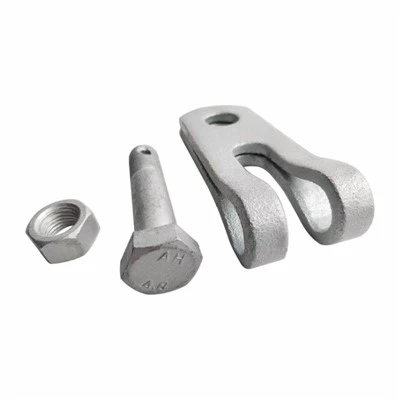
First off, let’s get real—link fittings aren’t just random metal bits. We’re talking about the stuff that connects chains, slings, cables, all that gear people use for lifting, rigging, securing heavy loads. Think construction crews hoisting steel beams, landscapers moving big boulders, even farmers hauling hay bales. If a link fitting fails mid-lift? That’s no joke. OSHA (you know, the US workplace safety cops) has super clear rules, but a lot of guys I talk to on job sites either brush ’em off or have no clue they exist.
Let’s start with the basics: load limits. Every single link fitting we sell has a Working Load Limit (WLL) stamped right on it—usually in pounds or kilograms, sometimes both. OSHA says you can’t exceed that, no exceptions. But I’ve seen it happen a hundred times. Last year, a small construction company guy came to us panicking because he’d used a 5,000-lb WLL link to lift a 7,000-lb concrete slab. He thought “it looked strong enough” until the link started bending mid-lift. We ended up selling him a higher-rated one, but he could’ve gotten hurt. Here’s the thing: that WLL isn’t a guess. It’s calculated by engineers after testing the metal’s tensile strength, fatigue resistance, all that nerdy stuff. Ignoring it is like driving a car with no oil—you’re just waiting for something to break.
Then there’s inspection rules. OSHA requires that you check every link fitting before every single use. No exceptions. That means running your eyes over it for cracks, bends, rust, scratches, or that weird “squishy” feeling when you press on it. I once had a customer tell me he only inspects once a week for his big rigs—newsflash, that’s a safety hazard. A small hairline crack can turn into a full break in seconds under a heavy load. If you see any damage, you toss the fitting. Don’t “fix” it with a hammer or weld it yourself—most of the time, that messes with its load rating and makes it weaker. We do replacement parts, but we don’t advise patching up broken stuff.
Wait, what about different types of link fittings? Because not all are created equal, and that changes the rules. For example, we sell both chain links and quick-connect links (the ones with the little latch). OSHA says quick-connect latches must be fully closed and locked before using them. I can’t tell you how many times a guy’s latched a link halfway because he “didn’t want to fight it” and then the latch pops open mid-lift. That’s a recipe for a load falling. Also, alloy steel link fittings (the ones we use for heavy lifts) have different rules than carbon steel ones—alloy is stronger, but you still can’t mix load ratings between different parts. Like, if you have a link rated for 10,000 lbs, don’t pair it with a chain that’s only rated for 8,000 lbs. The whole system is only as strong as its weakest link (pun intended, sorry, couldn’t resist).
What about international rules? If you’re working outside the US, you’re looking at stuff like ISO standards or EU directives. For example, in the UK, the HSE (Health and Safety Executive) has almost identical guidelines to OSHA for load limits and inspections. I’ve shipped link fittings to guys in Germany and Australia, and they all ask for proof of compliance with ISO 9001 or whatever, which is why we only sell fittings that meet those standards. You can’t just buy a random link from a random website and call it compliant—trust me, I’ve seen those cheap imports that bend when you hang a 2,000-lb load. They skip safety tests to cut costs, and that’s a problem for everyone.
Now, let’s talk about what a lot of people get wrong: misuse. OSHA bans using link fittings for anything other than their intended purpose. That means don’t use a link fitting as a tow hook (even if it looks like it works), don’t use it to secure a load that’s swinging sideways, don’t use it as a pulley anchor. I had a guy once use a link fitting to hang a speaker from a ceiling—turns out the vibration made it snap, and the speaker crashed through a light. He was lucky no one was under it. Each link is made for a specific type of stress, usually straight tension. Sideways stress (that’s called “shock loading” or “bending load”) can weaken it way faster than you’d think.
Oh, and storage! I know, storage sounds like it’s not related, but it is. If you leave your link fittings out in the rain, they’ll rust, and rust eats away at the metal, lowering the WLL. OSHA recommends storing them in a dry place, maybe on a rack, not just tossed in a corner where they can get banged up by other gear. A dented link is a damaged link, plain and simple. We always tell our customers to label their fittings too—write the WLL on it with a marker if the stamp wears off, so no one accidentally uses the wrong one.
Wait, what about temporary vs. permanent use? Is there a difference? Not really. OSHA doesn’t cut you slack if you’re using a link fitting for a one-time lift vs. a daily rigging job. Every use needs an inspection, full WLL compliance, all that. I had a landscaper come to me last spring needing a link fitting for lifting a big oak tree—he’d borrowed one from a buddy that was marked “for temporary use only.” Turns out the temp use rating was half the regular WLL, and he would’ve crushed the link if he’d used it as-is. We swapped him out for the right one, and he was grateful, but that’s the kind of mistake that costs money (or worse).
Let’s be real, some guys think “rules are just red tape.” But I’ve been doing this long enough to have seen the alternative. A few years back, a customer of mine ignored load limits on a link fitting, and it broke while lifting a steel beam. The beam hit a tool on the ground, and the tool flew up and hit a guy’s shoulder—he was out of work for three months. All because someone skipped a rule. That’s why we don’t just sell link fittings—we try to teach people how to use them right. That’s why I’m writing this blog, not just shilling product (though I do think our fittings are the best on the market, obvi).
Now, I know what you’re thinking: “Okay, but how do I find the right rules for my job?” Start with OSHA or your country’s workplace safety agency website—they have easy-to-read guides for rigging and link fittings. Always buy from a reputable supplier (that’s us, fyi) that can give you test reports for their products. Don’t be afraid to ask questions—if you’re not sure what WLL to use for your load, just hit us up, and we’ll help you figure it out. We’d rather you ask now than call us later to replace a broken fitting or, worse, handle an injury claim.
A quick recap, so you don’t forget: 1. Never exceed the WLL stamped on your link fitting. 2. Inspect every fitting before every use for damage. 3. Use each fitting only for its intended purpose. 4. Store them properly to avoid rust or dents. 5. Follow local safety rules (OSHA, HSE, ISO, whatever applies where you’re working).
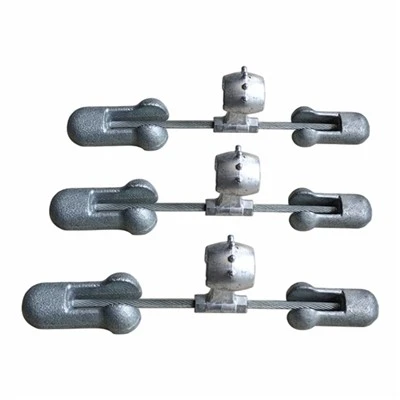
If you’re in the market for new link fittings, or you need clarification on which one works for your specific job, feel free to reach out to our team. We’re here to help you stay safe and get the job done right—no confusing jargon, no pressure to buy more than you need, just good advice and quality gear.
Protective Fittings References: Occupational Safety and Health Administration (OSHA) 29 CFR 1926 Subpart CC; International Organization for Standardization (ISO) 2408; Health and Safety Executive (HSE) Guidelines for Rigging Equipment.
Hebei Tongchuang Power Fittings Co., Ltd.
With abundant experience, we are one of the most professional link fittings manufacturers and suppliers in China. Please feel free to buy advanced link fittings for sale here from our factory. Good service and quality products are available.
Address: Houxiaohan Industrial Zone, Xingbieying Town, Hejian City, Hebei Province, P.R. China
E-mail: tongchuangepf@gmail.com
WebSite: https://www.tongchuangpower.com/
